

The World's First Smartphone Was Too Advanced For Its Time
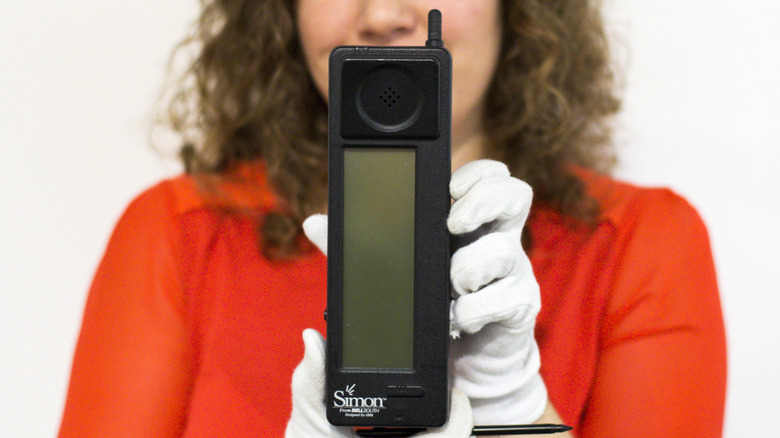
The iPhone is poised to turn 20 next year, and it's easy to assume that the iconic device was the first smartphone to ever hit the market. After all, many people naturally view the arrival of the iPhone as the beginning of the smartphone era. Even those old enough to remember the debut of the Apple icon might have only foggy recollections of any smartphones that came before it. And with good reason, as many of those phones have long since faded into obscurity, with the Palm Pilot and BlackBerry being notable exceptions. But the story of the original smartphone goes back even further than those devices.
More than a decade before Apple introduced the iPhone, IBM released the IBM Simon, a hefty hunk of tech that many experts consider to be the first smartphone ever. The phone debuted in 1992 at COMDEX, a once-popular computer trade show whose run ended in 2003. COMDEX may be a relic of the past, but it was a huge deal in its day, often serving as a launching pad for world-changing products. For example, Microsoft showcased the first version of Windows at COMDEX in 1983.
The IBM Simon made an immediate splash among tech enthusiasts. After its debut in 1992, the device became available for purchase in 1994. As a quick aside, IBM chose the name because they wanted the public to think their phone was easy to use, just like playing the Simon Says game.
What types of features did the IBM Simon have?
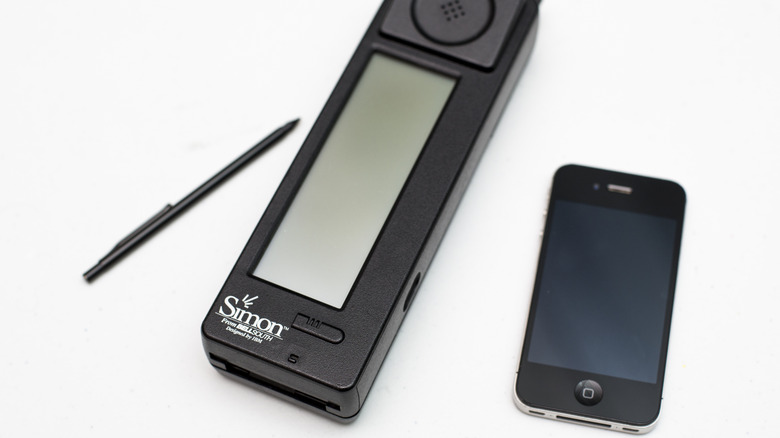
For its time, the IBM Simon had an impressive array of features. The device could make calls, check email, and send faxes, and it shipped with a number of built-in apps, including a calculator, address book, and calendar. In terms of design, the IBM Simon was about as clunky as you might imagine a mobile phone released in the early 90s would be. The Simon was 8 inches tall, 2.5 inches wide, and 1.5 inches thick. As a point of interest, the original iPhone was 4.5 inches tall, 2.4 inches wide, and a mere 0.46 inches thick. What's more, the Simon weighed in at over a pound, more than three times as much as the original iPhone.
The Simon user interface boasted a backlit LCD touchscreen display that users could access with the included stylus. Apple enthusiasts might recall that the iPad Pro brought back the stylus in 2015, years after Steve Jobs famously trashed stylus-based interfaces when introducing the original iPhone. Somewhere, the Simon was having the last laugh on that one.
It's also worth mentioning that the battery life of the Simon was far from ideal. During regular use, the battery would last for only about an hour before needing a charge. In light of all that, and a starting price of about $900, it's probably not too surprising that the IBM Simon didn't live to see the birth of the iPhone — it lasted just six months on the market.
Who came up with the idea for the IBM Simon?
The idea for the IBM Simon came from an IBM engineer named Frank Canova. By the time the 1990s rolled around, Canova was working on ways to incorporate touchscreen technology into the next generation of PCs. He was already using a cell phone by that point, too, and one day, inspiration struck. Why not combine the functionality of a phone and a computer in one device?
The higher-ups at IBM at the time were excited by Canova's idea and gave him the green light to develop it. That's usually a slow process, but he made enough early progress that the company decided just a few weeks out from COMDEX that they wanted to unveil Simon at the show. It was a mad dash to the finish line to introduce a product idea that wouldn't go mainstream for over a decade.
Upon its 1994 release, the IBM Simon failed to make a splash. This was in part due to the device's hefty price tag. It's also fair to say that the Simon was simply ahead of its time. It arrived just as the internet was starting to become a mainstream phenomenon. People at the time were still wrapping their heads around the basic staples of online life, like email and web browsing. The notion of using a mobile phone for these tasks was simply premature. Due to lackluster sales, IBM eventually gave up on the idea. Canova, meanwhile, eventually went on to work at Palm, where he was an instrumental engineer on the Palm Pilot team.