

Denmark's Red Streetlights Look Strange, But There's A Smart Reason For Them
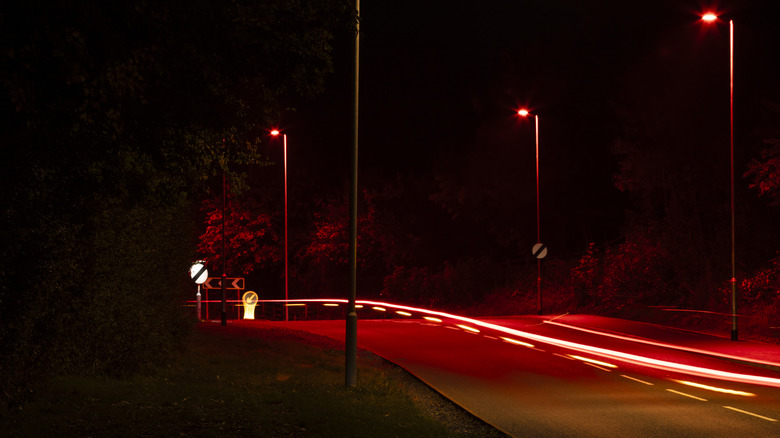
If you ever find yourself in Gladsaxe, Denmark, you might notice something unusual about some of the roads. This Danish municipality has installed red-spectrum LED bulbs in about 5,000 streetlights along Frederiksborgvej. While the lights lend a rather moody look to the area, the change isn't about aesthetics. It's intended to help the local ecosystem while keeping nighttime drivers safe. Though bright white light is good for visibility on the roads, its harshness can adversely impact surrounding wildlife. White lights aren't always bad for flora and fauna, though; one 2024 study published in Frontiers in Plant Science actually linked streetlights to more resilient tree leaves. However, white light has a particularly negative impact on bats, which are essential for maintaining healthy ecosystems in ways you may not realize.
To make sense of these red Danish streetlights, you first have to understand the crucial role that bats play in the environment. These often misunderstood creatures are vital to pest control by consuming insects like disease-spreading mosquitoes. Bats even play a part in agriculture, as they can pollinate plants by dispersing seeds while feeding on nectar or fruit. Unfortunately, they're currently threatened by human activity, and they're sometimes killed by those who don't understand their importance.
Frederiksborgvej is home to seven bat species, the most common one being the soprano pipistrelle, which is especially sensitive to white light. With that in mind, Gladsaxe's red streetlight project — and others like it — are smart, environmentally conscious initiatives that more neighborhoods could stand to adopt.
Red light is better for both drivers and nature
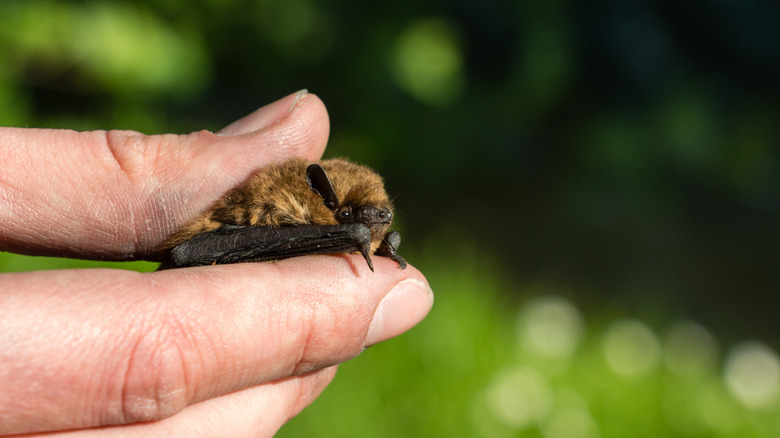
A 2009 study published in Current Biology was among the first to show that traditional streetlights impact bat behavior. Scientists have observed the animals avoiding well-lit areas when traveling to feeding grounds, potentially forcing them to fly farther away or into hazardous areas. More recent research, including a 2024 study published in the journal Science of the Total Environment, suggests that red light has a lesser impact on bat and insect activity patterns than white light does, which supports the use of red streetlights. While turning off all lights is best for the bats, doing so would be impractical and unsafe for nighttime drivers. Red bulbs offer an excellent compromise by catering to the local wildlife's needs while still allowing drivers to see the road.
Gladsaxe Municipality isn't the first place to install red streetlights to benefit bats. That honor goes to a small town in the Netherlands called Zuidhoek-Nieuwkoop, which began installing red streetlights in 2018. The following year, Worcestershire County in the United Kingdom installed red streetlights on a stretch of road frequented by local bats, citing the Dutch project's success as a motivator.
Similarly, parts of Florida and Australia have used red lighting to benefit sea turtles, which can struggle with both nesting and reaching the ocean after hatching under harsh white streetlights. Gladsaxe's red streetlight program is the most extensive yet, though; it's sure to provide helpful data to scientists, and ultimately, it could serve as a model for cities worldwide seeking to implement ways to balance human safety with environmental protection.