

Recycling Plastic Will Never Be The Same After New Chemical Reaction
A "new chemical reaction" might not automatically sound like the subject of an attention-grabbing scientific headline. However, in this case, the discovery made by researchers from Australia's Flinders University is worth paying attention to. Summarizing their findings in a paper recently published in the academic journal Nature Chemistry, the team highlights several potential applications for a new sulfur–sulfur bond process. At least one of these applications could have significant implications for the future of recycling plastic.
Triggering a sulfur–sulfur bond has historically required exposing trisulfides to "heat, light, or other stimuli." This new method bypasses that step. The research team found that the process of "trisulfide metathesis" could occur spontaneously by exposing trisulfides to particular solvents. According to a Flinders University press release, triggering the process via this method allows it to occur efficiently and easily. A new form of recyclable plastic could be just one innovation the discovery yields.
Professor Justin Chalker of Flinders University is a senior author of the study detailing the research team's discovery. He explains that it's "rare to discover an entirely new reaction, and even more rare for it to be useful in so many fields and applications." Those applications may include pharmaceutical development, advances in biotech science, and, again, plastic recycling.
New chemical reaction could be the key to developing easy-to-recycle plastic
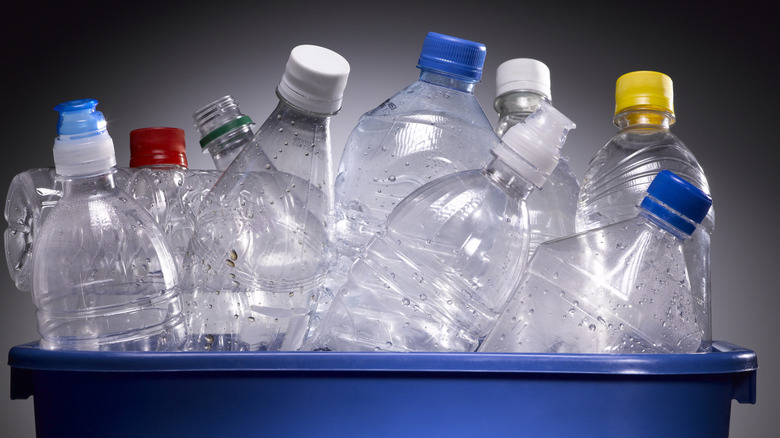
Harshal Patel, a research associate, is another of the study's authors. Discussing how the new chemical reaction may affect the way we recycle plastic, Patel said the team was "also able to make analogs of polyethylene that can be made, used, and then un-made so the plastic can be converted back to the original building blocks. Closed-loop chemical recycling is an important capability in supporting a circular plastics economy."
Developing new forms of plastic for easy recycling isn't the only potential mini-revolution this scientific discovery could trigger. Patel also explains how the process has allowed researchers to modify anti-cancer drugs, in particular calicheamicin, which is used to treat leukemia and contains trisulfide as part of its molecular structure.
The research which led to this innovation started as a collaboration between Professor Chalker and Tom Hasell of Liverpool University. During their research, they were initially surprised by the way sulfur–sulfur bonds occurred via the previously mentioned solvents. The Flinders University team took up the research, developing a model to explain the reaction.
In other words (like this self-shaping liquid), this scientific discovery occurred accidentally. That doesn't mean it's not significant. If this chemical reaction reliably allows for the synthesis of easily recyclable plastic, its impact may be truly global. Similar innovations, like a method for breaking plastic down into soap, can play very real parts in saving the planet.