

Before USB-C, Phones Used These 5 Weird Charging Ports
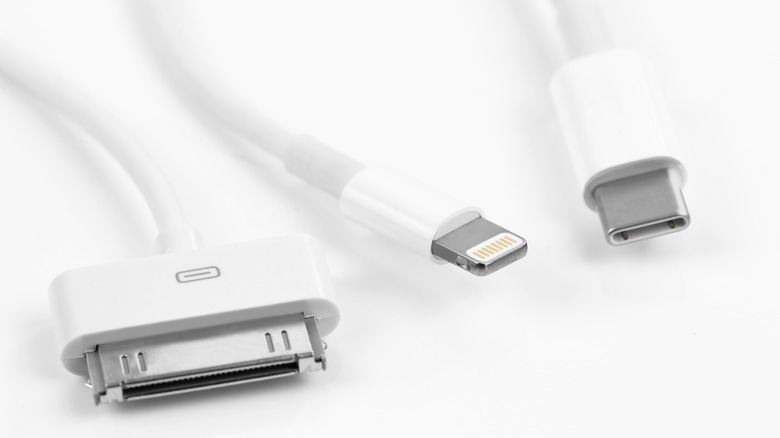
With a push from the European Union and wider adoption among Android smartphone makers, USB-C is now the standard charging port you'll find on any modern smartphone. It's a good thing because the USB-C connector is pretty capable, and smartphone makers can add everything from fast wired charging, video output support via DisplayPort Alt mode, and even fast data transfer capabilities into a single port, which is also reversible and has found itself a solid footing on a plethora of gadgets, including non-smartphone devices.
However, the road to USB-C charging ports in smartphones wasn't easy. From Apple's Lightning port to the Micro-USB port in many early Android phones, there have been quite a few connectors that have been used to charge phones over the years.
A number of these charging ports, which are relatively rare these days or have completely disappeared, can seem weird and quirky because of their shapes and sizes. Let's have a look at some of these weird charging ports that were seen in phones before USB-C.
Apple 30-pin connector
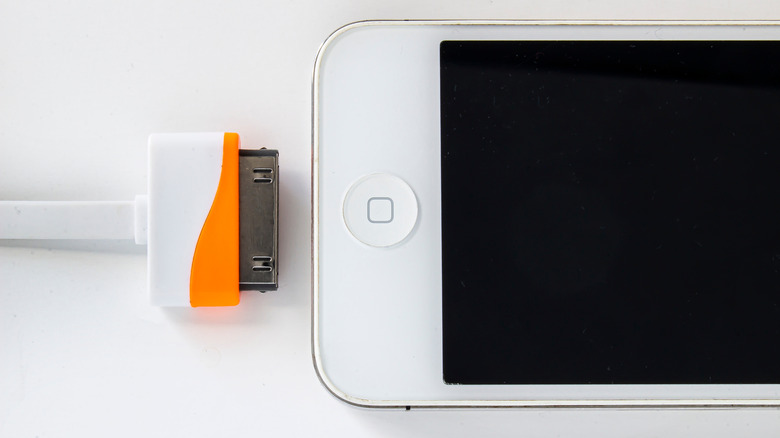
Designed in 2003, Apple's 30-pin connector was commonly found across the company's mobile devices, including the first few generations of the iPhone. It had a flat and wide design and included 30 pins, as the name suggests, and was pretty capable and versatile. It outperformed the Micro-USB and Mini-USB ports of its time and could handle everything from analog audio and video output to FireWire data/power and USB data/power. The connector could assign different tasks to each of the 30 pins, and specific pins could be used with specific devices — such as pins to send color and luminance information from the iPod photo.
Thanks to this connector, the first iPhone supported charging via both FireWire (12V) and USB (5V) protocols. However, FireWire charging support was dropped with the iPhone 3G. In addition to charging, it allowed the early iPhones to send analog audio signals, and with the iPhone 4, it even added 1080 video output support.
The 30-pin connector was replaced with Apple's Lightning port in 2012, first appearing on the iPhone 5. Some of the reasons cited for the demise of the 30-pin connector include its larger size, lack of reversibility, durability, and the move towards completely digital signals. The Lightning Port was significantly more compact and reversible than its former port, much closer to the dimensions of today's USB-C port. However, in 2023, Apple replaced the Lightning port with USB-C, which has appeared from the iPhone 15 series onwards.
HTC ExtUSB connector
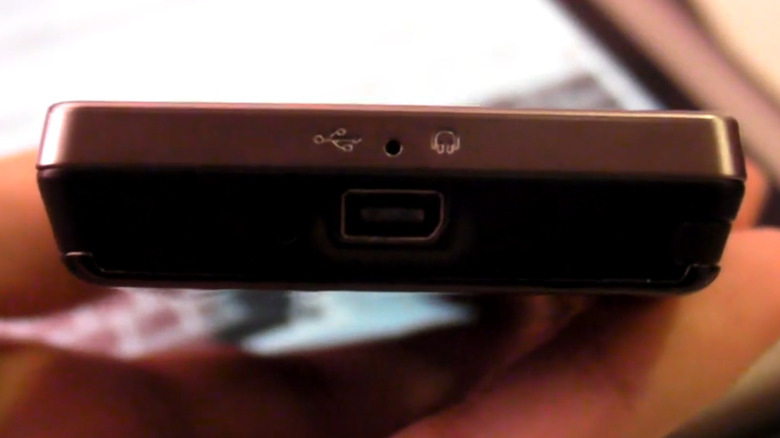
If you used early HTC phones, including the T-Mobile G1/HTC Dream (the first commercially available Android phone), you may remember the ExtUSB or Enhanced USB port. Also sometimes referred to as an Enhanced Mini-USB port, it was essentially a beefed-up Mini-USB port that included extra pins for audio input and output. It had a rectangular shape, except for one slanted corner. As it was based on the Mini-USB port, it was fully compatible with Mini-USB connectors.
This port was exclusive to HTC devices and was basically designed as a single port to handle data, power, and audio. It was most commonly seen in HTC's Windows Mobile devices, but also appeared in some of the company's early Android phones. It was one of first commonly used ports, but had a rather short lifespan. After its introduction on HTC smartphones in 2006, it was replaced by Micro-USB ports in 2010. One reason for its disappearance from HTC phones was the EU-led push towards standardization, which heavily favored the Micro-USB connector.
Sony Ericsson FastPort
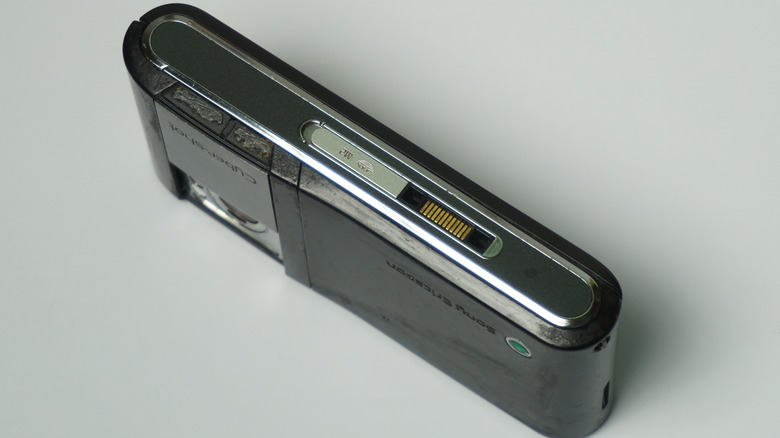
Around 2005, Sony Ericsson started including its proprietary FastPort connector in all its mobile phones. It was designed as an improvement to Nokia's Pop-Port; however, unlike the Pop-Port, it could handle power for charging. It succeeded Sony Ericsson's T28 connector in the company's mobile devices. Besides charging, FastPort was also good for data transfers and audio signals, and included 12 pins and two hooks for keeping the connector in place. It was significantly bigger than modern USB ports and had a rectangular shape. It appeared in dozens of Sony Ericsson phones.
Although FastPort was reasonably versatile and sufficiently fulfilled the needs of mobile phones at the time, its proprietary nature was likely a concern, and as the industry was moving towards standardization. FastPort was replaced around 2010 with a Micro-USB connector for data and charging and a 3.5mm audio jack for audio input and output.
Motorola CE Bus connector
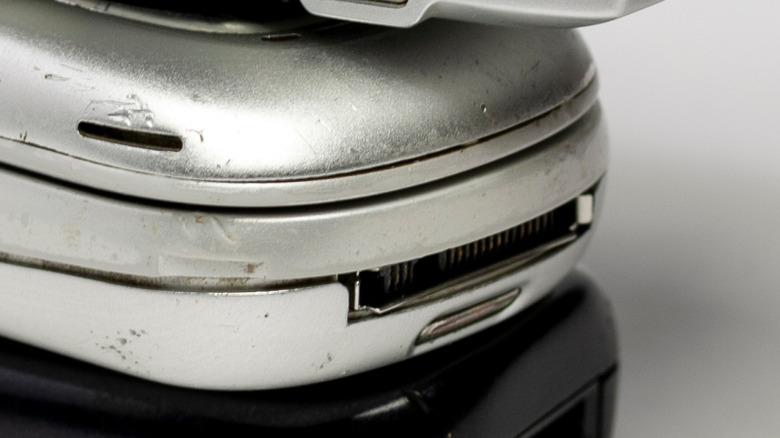
Motorola's CE Bus connector was featured on the company's mobile phones from 2000 until 2005. Found on some of the most popular phones of the era, such as the Motorola V60, the CE Bus was a massive, multi-pin connector that nearly covered the entirety of the phone's bottom. It featured 17 pins and was one of the earlier implementations of having a single connector to carry data, power, and audio signals. It wasn't a reversible port as it included hooks to keep the connector in place.
As Motorola started making thinner phones, like the Razr V3, the CE Bus connector was simply too thick to fit in the phone's chassis, resulting in the company moving away from it to a more standardized Mini-USB connector. The manufacturing cost of the CE Bus connector was also likely higher as it was a proprietary and more complex connector compared to a standardized Mini USB, which could also have tilted the odds in favor of the latter.
Micro USB port
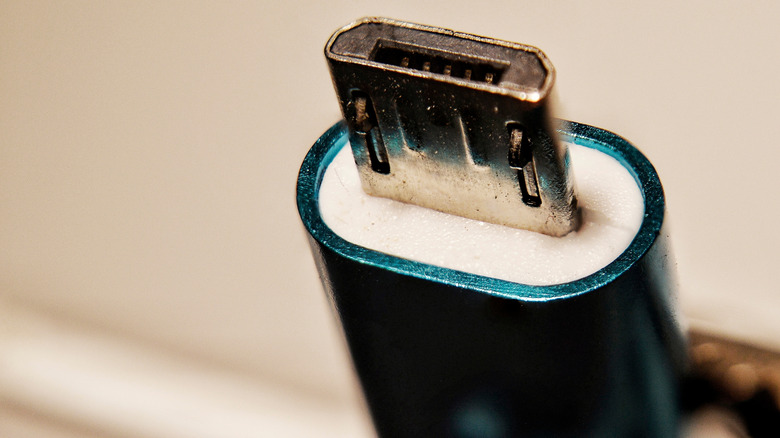
Designed to be the connector of choice for mobile devices, Micro USB was introduced in 2007 by the USB Implementers Forum (USB-IF). Although it comes in three varieties, its Micro B variant, which sports five pins and a tapered-rectangular shape, became popular on mobile devices. It is more durable than Mini-USB and offers faster charging and USB 2.0 data transfer rates. As a result, within a few years of its introduction, it became almost ubiquitous on Android smartphones and remained so until its replacement by USB-C.
One of the reasons for its adoption among Android smartphone makers was the support from major manufacturers like Samsung, LG, and Nokia, and the GSM Association. Plus, the cell phone carrier group Open Mobile Terminal Platform (OMTP) supported the port. Its adoption was also pushed by the EU in an effort to standardize and reduce e-waste. However, with the arrival of a significantly more capable and versatile connector than the Micro USB in the form USB-C, phone makers had little reason to stick with Micro USB.