

What Happens When A Pilot Ejects From A Fighter Jet At High Speeds?
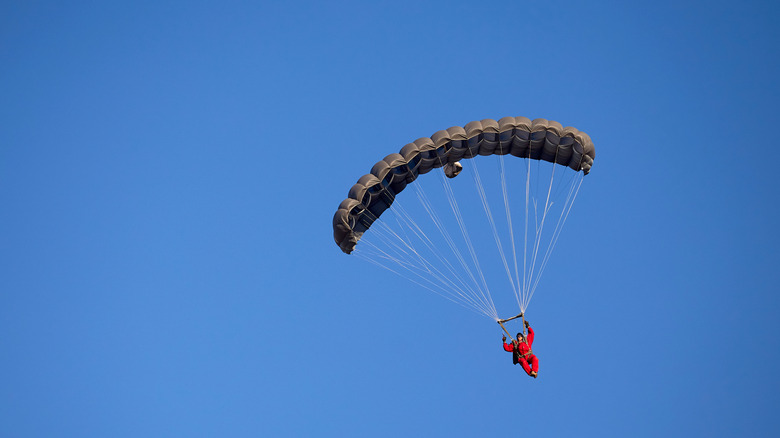
Action movies usually depict ejecting from a fighter jet as a badass way to escape certain death at the hands of an airborne enemy. Sure, "Top Gun" reminded us that ejecting can involve danger, but usually, pulling the eject lever will leave a pilot perfectly able to taunt an alien invader like Will Smith in "Independence Day," right? Unfortunately, that movie's depiction of the fighter plane ejection experience is about as realistic as its take on uploading a computer virus to an extra-terrestrial mothership. In reality, ejecting from a fighter plane is a complex mechanical process that involves relatively significant risk of injury.
That's why pilots typically reserve ejecting from a fighter plane moving at high speeds for situations when doing so is the only option. After all, jumping out of virtually any moving vehicle is risky. The potential risks certainly don't decrease when that vehicle is a fighter plane barreling along at Mach 2 or higher.
The specifics of the ejection procedure can vary based on factors like the type of fighter jet a pilot is flying. According to Popular Science, ejecting from a fighter plane usually involves pulling a loop handle on the seat. This sets in motion a process requiring literally thousands of moving parts to function as intended.
On some planes, the glass canopy over the seat is launched off the vehicle. In others, it shatters, leaving space for the seat to eject. There are also planes in which the seat breaks through the canopy during the ejection process. However, it's the actual ejection from the vehicle that primarily exposes a pilot to potential danger.
Ejecting from a fighter jet involves fairly high injury risk
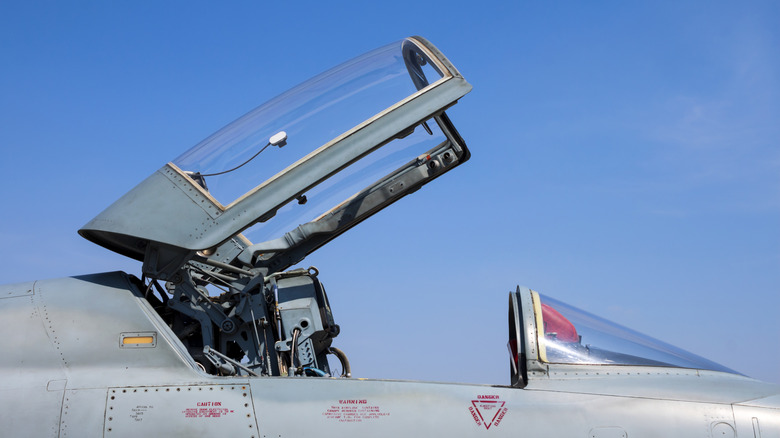
Ejecting from a fighter jet can leave a pilot vulnerable to 18 Gs of force. As The Conversation notes, the average person, lacking a pilot's specialized training and equipment, will usually pass out when exposed to just 5 Gs. A pilot may also be ejecting at an altitude where oxygen levels are low, meaning sensors must detect when they've reached a safe altitude before deploying a parachute. Freezing temperatures at high altitudes can also put pilots and passengers at risk when they eject.
During ejection, rockets launch the seat away from the moving plane. If both a pilot and copilot eject, the system (ideally) ensures they eject away from each other. The back seat must also eject first, otherwise the rockets from the front seat could burn it.
The rockets launch the seat far enough away from the vehicle to safely deploy the parachute. Again, the specifics may vary from one vehicle to another. For example, in the case of the Mk16 ejection seat from British company Martin-Baker, a "drogue" parachute will deploy before the main one. The drogue parachute helps to stabilize the seat before the main parachute can be deployed. In the case of this particular ejection seat model, panels also open up on either side of the seat to ensure it remains straight. Despite these safety features, injuries can and do happen during fighter plane ejections.
Ejecting from a fighter jet is not like the movies
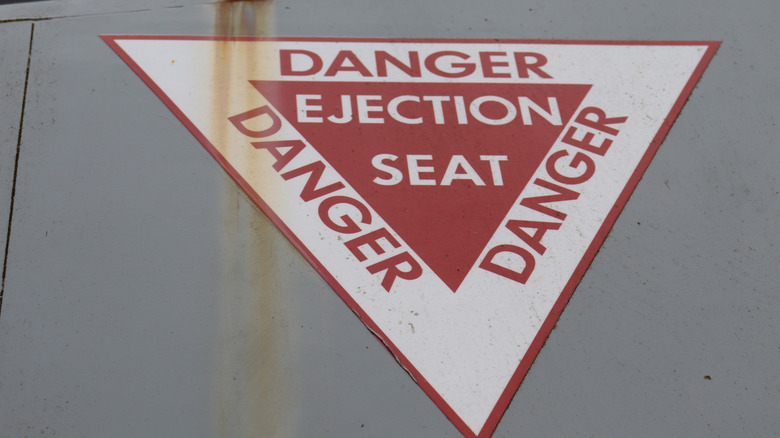
According to an analysis published in the academic journal Injury, almost 30% of fighter jet ejections result in major injuries to those involved. Common examples of such injuries include spinal fractures and head trauma, both of which can lead to pain and other complications. Speaking to Popular Science, those who've directly experienced ejecting from a plane describe it as everything from "inconvenient" to "out of control."
There's a reason fighter pilots only consider ejecting when they absolutely have to: It's neither a pleasant nor safe experience. Along with ejecting to escape from enemies, a pilot may eject when they realize their plane is going to crash. Unfortunately, although not exactly common, it's not unheard of for the ejection process to be triggered accidentally. That said, any time a pilot does successfully eject from a fighter jet, it should serve as a stark reminder of just how sophisticated these vehicles really are.