

5 Pokémon With (Somewhat) Scientifically Plausible Moves And Abilities
Pokémon has been around in the U.S. since 1998. The franchise became popular, with content adapted into TV shows, movies, and games — it's even become a major selling point for buying or upgrading to a Nintendo Switch 2.
It turns out that Pokémon are interesting and resilient, fictional creatures. And many of them are based on real animals, inanimate objects, or mythical beings from popular folklore. But did you know that some of the abilities a Pokémon can learn or inherit are based in science? It isn't always a perfect comparison, since the fictional Pokémon have physiological characteristics that amalgamate or differ from those of animals, elements, or other living species, while others have fantasy traits that only make sense in their universe. But some fundamental concepts and inspirations are still there. You can see it with some Pokémon typing. Qwilfish, for example, are based on pufferfish, which, if indigested incorrectly, can kill you. In the world of Pokémon, Qwilifish have several poison moves that share a similar level of toxicity. And that's just one example among a number of Pokémon with science-based abilities. Here are a few more.
Corsola's Regenerator ability
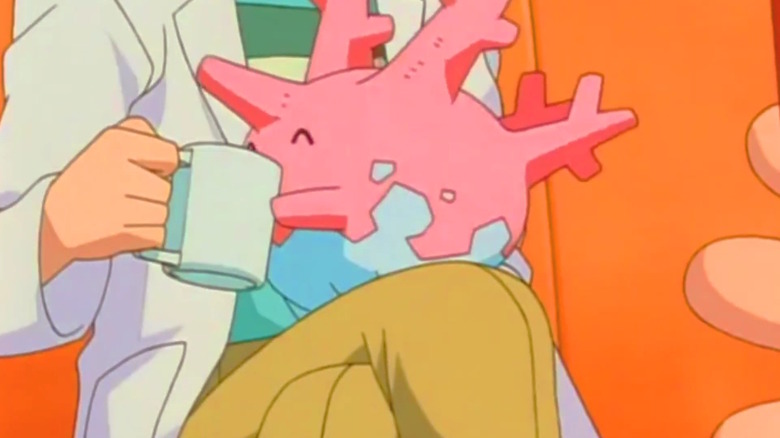
Pokémon Corsola is an interesting example of how coral reefs can restructure themselves after being damaged in their primary ecosystem. The Johto form of Corsola is based on coral polyps (phylum Cnidaria). The second form, the Galarian-Corsola, represents white or bleached corals damaged by ocean acidification. Coral bleaching is a widespread issue among coral reefs, reaching catastrophic levels and happening due to climate change.
Interestingly enough, the Regenerator move learned by Corsola has some scientific bindings to how coral bleaching recovery works. It turns out that dying coral colonies can regenerate tissue while repairing skeletal damage. That's very similar to how Regenerator, a Pokémon move learned by Corsola, works. Regenerator is a healing-based passive that heals 33% of the Pokémon while switched out/withdrawn from the battle. This is entirely survival-based, reflecting the inner workings of coral: it can survive harsh environments and predatory attacks because it can regrow its skeletal framework — though the process is not immediate. In this example, only the Johto version can learn this move, since it represents a living coral. In contrast, the Galarian Corsola species cannot learn it, since it represents a dead coral.
Qwilfish's Toxic capability
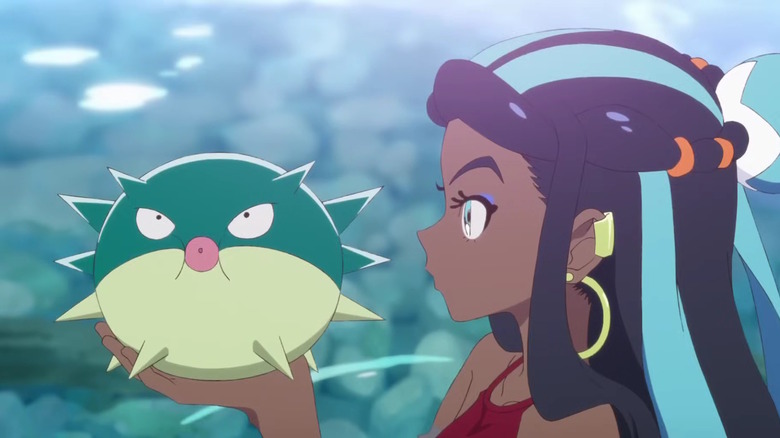
Qwilfish, a water/poison type Pokémon introduced in Generation II, is an easy one to identify. This Pokémon, as we mentioned earlier, resembles a pufferfish, which is known to be highly poisonous if mishandled. The difference is in the fact that pufferfish produce a neurotoxin called tetrodotoxin. It's said that this neurotoxin is 1,200 times more toxic than cyanide. It can kill you because it can cause respiratory failure and also paralyze you. It's also a defensive mechanism, meaning that it's rarely used to attack anything or anyone head-on unless threatened. However, pufferfish are inherently poisonous by nature since this toxin is stored directly in their organs.
In Japan, a delicacy known as "fugu" is made from pufferfish, which is carefully prepared to avoid its lethal toxins. While in the world of Pokémon, you're typically not eating a Qwilfish, you can still see where the influence originates. For example, Qwilfish has a few poison-based moves: Poison Sting, Poison Jab, Toxic, Toxic Spikes, and Gunk Shot. In this case, since pufferfish rarely use the toxin offensively, it's more of the poison effect that you get from the moves, like Toxic, that makes it similar. That's because it can happen on contact. In Generation VI and onwards, when a poison-type Pokémon uses Toxic, it never misses, similarly to how if you're affected by the pufferfish's neurotoxin, and you can't fight it once it is in your system.
Sandshrew's Defense Curl ability
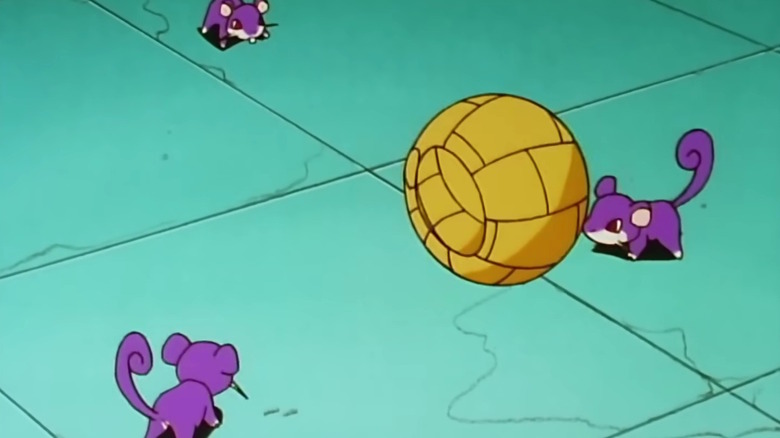
Sandshrew, specifically the Generation I ground-type Pokémon, has a physical characteristic that makes it almost immediately recognizable: its distinctive geometric scales. That's what connects it to the pangolin, a scaly, insectivorous mammal native to Asia and Africa. The scales on a pangolin, made of keratin, are similar in shape to the Sandshrew's physical form. Sandshrew has a few moves that use its body. One being Defense Curl. Defense Curl raises the Pokémon's Defense stat by one stage, but if the Pokémon uses Rollout or Ice Ball right after it, the attack becomes more potent.
In this case, we look at the physical form of how Defense Curl is used: generally, the Pokémon curls up into a ball or assumes a position to protect its weak points. That's similar to how pangolins behave. Pangolins are known to roll into a ball, using their scales as armor. They do this because they want to protect themselves from threats or predators. Despite their rough scaly exterior, the underbelly is actually soft, which could be exploited as a weakness. That's similar to how Defense Curl works, since it's a move that can help a Pokémon, like Sandshrew, survive an incoming attack.
Petilil's and Sunflora's Synthesis ability
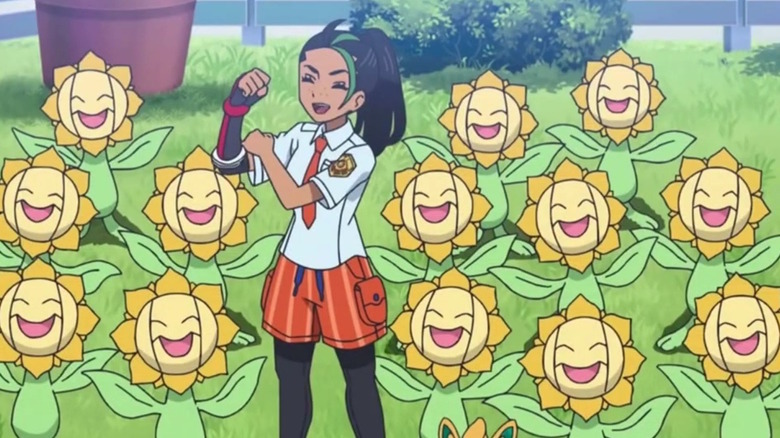
Like Corsola's Regenerator, Synthesis is a healing-type move. But the neat part is that the potency of this move depends on prevailing weather conditions, much as photosynthesis affects vegetation. Petilil and Sunflora are classic examples of grass-type Pokémon that resemble flowers; Petilil is a small plant bulb that looks sort of like an onion, and Sunflora is sunflower-based. Both botanical species depend on photosynthesis to live, which provides important energy they need to develop. Photosynthesis is so important for fueling biological processes for plants, that even scientists have tried to artificially reproduce it for limitless energy.
But the effectiveness of this biological process can be severely hampered by the weather; if there's no sunlight, there's no light for the chlorophyll to absorb to start the reaction, which happens when it's rainy or cloudy and worsens under harsher temperature conditions. The Synthesis move learned by Petlilil and Sunflora also depends on the weather. For the move to be most effective, it requires sunny conditions, which heals the most at two-thirds of the max HP; clear and normal weather yield half max HP restoration, while rain, sandstorm, and hail restore only one quarter.
Vileplume's Aromatherapy and Sweet Scent ability
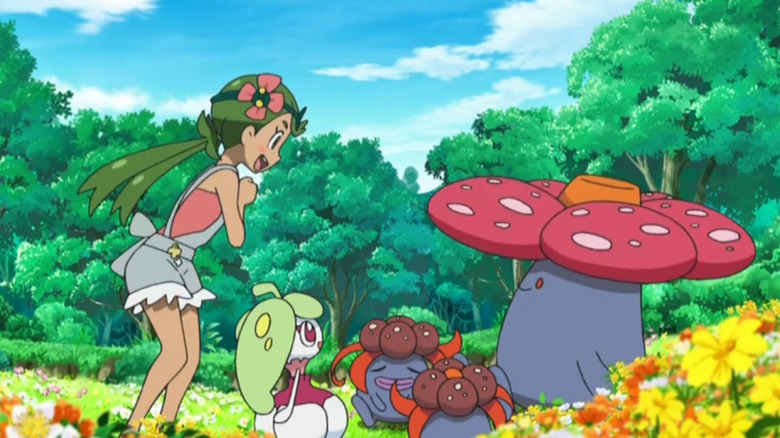
The Generation I Pokémon Vileplume is based on the Rafflesia flower, which is known for its repugnant odor that attracts prey and pollinators. Based on Pokémon media, it is hinted that Vileplume has a similar scent issue like the Rafflesia flower, and so does its predecessor, Gloom, which is also known for having a foul scent. Moreover, Vileplume does have a few scent-filled moves that interact with opponents. One ia Sweet Scent (Generation II move), and this move lowers the opposing Pokémon's evasion in battle and also attracts wild Pokémon. That's similar to how the Rafflesia flower uses its odor to perform a similar act of attracting other creatures around its ecosystem. Aromatherapy is another example. It's another scent-based move that cures the Pokémon and their team of any status effects.
Rafflesia flowers are parasitic; they basically only live inside the host vine until it grows out of its host. For Rafflesia flowers to survive, they use their smell to attract pollinators. The pollinators then carry viscous pollen between the male and female flowers. And once the female flower pollinates, it produces smooth, potato-like fruits, which are eaten and carried by other wild animals. It's a survival and propagation move, much like the one Vileplume can use to keep itself and the Pokémon around them alive.