

The Idea For QR Codes Came From A Popular Board Game
QR codes, or Quick Response Codes, might have boomed in popularity in recent years, but they've actually been around for quite some time. Introduced in Japan in 1994, the QR code is now seen everywhere from restaurants to industrial settings. As ubiquitous as they are, not many people know that the QR code is actually derived from the iconic board game "Go."
The grid-based game was the inspiration for QR codes, which hold much more data than barcodes and offer significant benefits over scanning systems that were in place. Now, with every modern phone having a method of scanning them, QR codes have transcended their original purpose. They were originally conceived by Japanese automotive part manufacturer Denso Wave to replace UPC barcodes. Barcodes didn't lend themselves well to the production line, with too little data available to properly track inventory on projects.
An employee of Denso Wave, Masahiro Hara, used the board game "Go" as the basis of the QR code, with the system eventually superseding barcodes within the plants. Denso Wave saw the potential in QR codes and made them free to the world, but sold the scanning equipment. The company has since moved on from that, as phones can now scan them.
What is Go? The board game that inspired QR codes
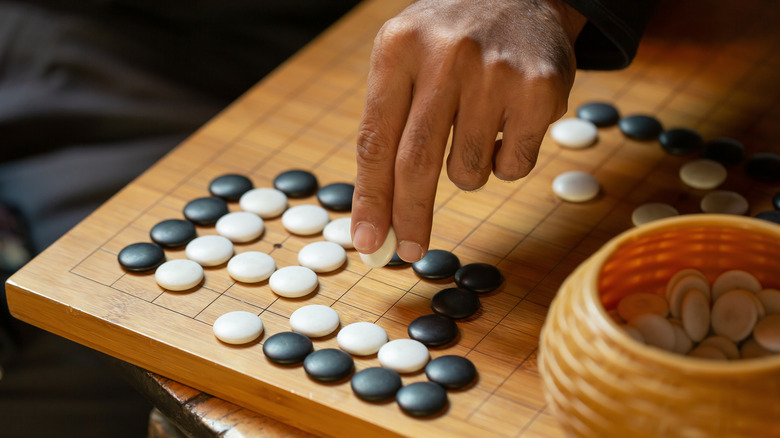
"Go" is an ancient game, similar in scope to chess or checkers. The earliest reference to it is from China, circa 548 B.C., and it eventually found its way to Japan and Korea, where it's remained popular ever since. With the game being around for thousands of years outside of Asia, it didn't get introduced to the West until the 19th century, where it's never really taken off, thanks to the popularity of games like chess.
So how do you play? Two players duke it out on a 19-by-19 grid, trying to capture as much space as possible. The game is traditionally played with black and white stones, which are placed on intersecting lines. The opposing player then needs to build their stones around these units, and once they're surrounded, captures them, removing the units from the board.
The more you dig into the game, the more "Go's" endlessly complex spiral appears. For instance, it wasn't until 2016 that Google's AlphaGo was able to beat a human player. For comparison, DeepBlue beat chess champion Garry Kasparov in 1997.
Why are QR codes better than UPC barcodes?
Outside of physically being easier to scan when stuck onto products in an industrial setting, QR codes actually hold significantly more data than UPC barcodes. This is thanks to them being built in modules, the name given to the black and white pixels. Each subsequent version adds four more modules on either side, with QR codes now up to version 40, which can support 177 modules. Version 1, a 21-by-21 QR code, can hold a maximum of 152 bits, while version 40 can hold 23,648 bits. In alphanumerical terms, a UPC can store 12 numbers via the vertical bars, while QR can go horizontal, with version 40 supporting up to 4,296 alphanumerical characters at once.
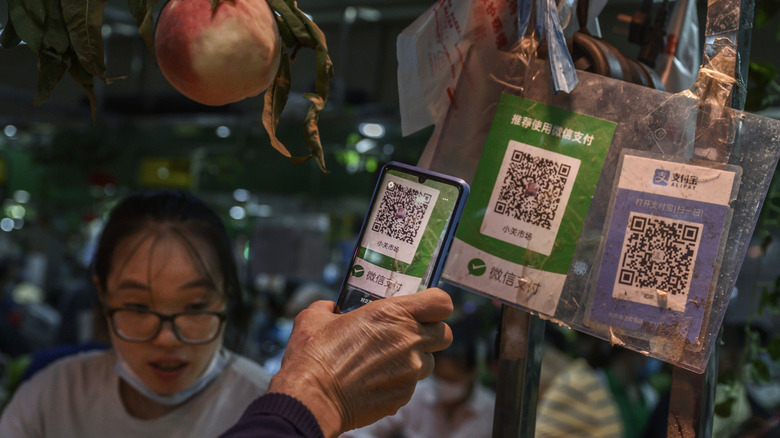
This huge amount of data to play with allows for QR codes to be far more flexible than UPC barcodes. Links, images, and much more can be embedded within the QR code to send the end-user to something like a menu at a restaurant or a webpage from a poster. It's become a staple of Chinese public transport, found on train tickets across the country, and has become a crutch for businesses to avoid forcing customers to type URLs into their web browsers before visiting a promotional site.