

Intel Is Reportedly Selling CPUs It Would Normally 'Scrap' Due To Overwhelming Demand
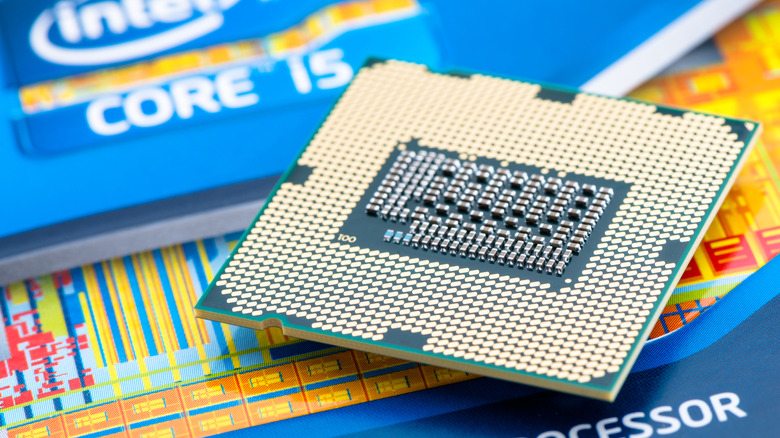
Intel is doing quite well according to its recent financials, and, thanks to reporting from one insider, we may now have insight into why. Ben Bajarin, an analyst at market research firm Creative Strategies, Inc., recently posted on social media that the tech giant was selling lower quality chips, chips which may normally have been scrapped, and that customers were snapping them up regardless of their shortcomings.
That ravening demand is due in large part to AI. It started with GPUs, with data centers requiring startling numbers of them to run the massive number of parallel calculations AI relies on. Storage supply began showing signs of strain shortly thereafter, with prices spiking hundreds of percent in some cases.
Now CPUs are struggling beneath the weight AI demand has placed on supply chains. CPUs compete for the same wafer space as the aforementioned GPUs, and prioritizing GPU production has slashed CPU supply. Simultaneously, as AI has become more sophisticated, demand for CPUs themselves has grown to coordinate advanced AI workloads like independent observation, learning, and action.
Transforming scrap into profit

To understand exactly what Intel is doing, let's drill down on the chipmaking process. Intel produces its processors on big silicon wafers, each of which accounts for hundreds of CPUs. Because of imperfections in the manufacturing process, chips that lay at the very edge of those wafers are more likely to have small defects. These can include slight variations in transistor size or minor distortions during pattern transfer. Even on the scale of nanometers, these defects can lead to lower clock speeds or higher power consumption.
After dies are cut, they're binned based on their performance. The least-flawed peak performers get pulled for premium CPUs, while weaker ones are selected for mid-and low-tier processors. The worst are scrapped; or at least, they were.
Instead of tossing edge chips that failed to reach even the lowest spec threshold, Intel is now packaging them as budget SKUs and shipping them. Rather than cutting costs or improving yields in traditional ways, Intel is leaning into "found" revenue — monetizing output it would've previously written off. The results have been substantive: in Q1 2026, the firm reported $13.6 billion in revenue, more than $1B in excess of an expected $12.36 billion, at least in part due to this new salvage strategy.
An economy of lowered expectations

Why are customers willing to accept these lesser chips? Previously, lower-end chips were a tough proposition for manufacturers. They would often sit in storage while consumers waited on sales for high-end models or saved for mid-tier upgrades. The explosive spike in demand driven by AI has completely changed that dynamic. Shortages mean that the chip a consumer wants may either be completely unavailable, or much more costly.
Those rising average selling prices (ASPs) are the other factor contributing to Intel's profit lift. In fact, in its Q1 2026 Q-10 filing (its quarterly financial report to the SEC), Intel cited rising ASPs as its main driver of revenue growth. Server CPU ASPs alone jumped 27%, and 16% of the company's data center revenue growth came purely from these price increases.
Whether this is a short term exploit or a broader shift in the industry is unclear, though it's hard to imagine Intel backtracking on such a profitable revenue vector. This is especially true considering expert predictions that AI's computational demand will likely continue to grow as it enters the next phase, with less focus on training and more on practical use.