

How The Friday The 13th Franchise Influenced Marvel's Iron Man Movies
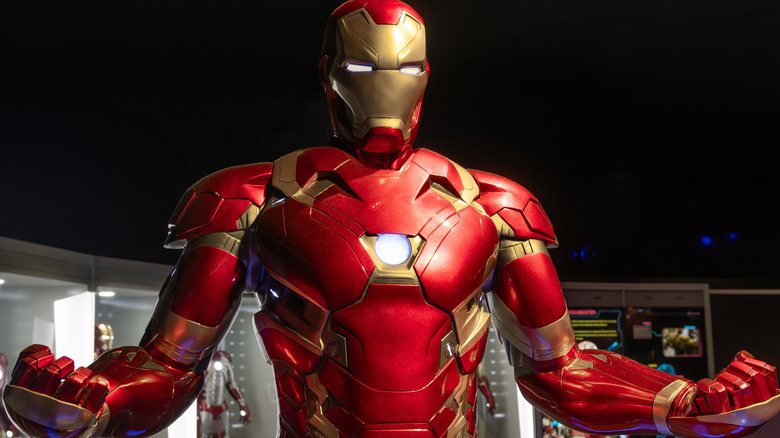
It may seem strange to compare the MCU, specifically "Iron Man", to the "Friday the 13th" franchise, but the MCU was actually influenced by the iconic slasher franchise. Marvel only introduced horror elements to the MCU much later with properties like "WandaVision" and "Werewolf by Night," but Marvel President Kevin Feige saw something in the "Friday the 13th" franchise that he wanted to replicate for "Iron Man 3," and, by extension, the entire MCU.
So what did Feige see? "Friday the 13th" was able to reinvent the franchise mid-story, keeping the audience entertained with unexpected character developments. In a 2018 interview with Rotten Tomatoes, Feige explained how his approach to making the third parts of superhero trilogies, like "Iron Man 3," was influenced by "Friday the 13th."
"It could be very easy by part three to fall into a trap of being too familiar or too similar or just more of the same. I looked back at my favorite film series, and the ones I love the most are the ones that did unique things in part three," Feige said at the time. "Those were also the ones that would often continue to four, five, six, seven, eight. [Look at] the 'Friday the 13th' movies. Jason Voorhees didn't get the hockey mask until 'Friday the 13th Part III,' [but] you think of one thing when you think of 'Friday the 13th' — Jason Voorhees in the hockey mask."
How Marvel changed Tony Stark
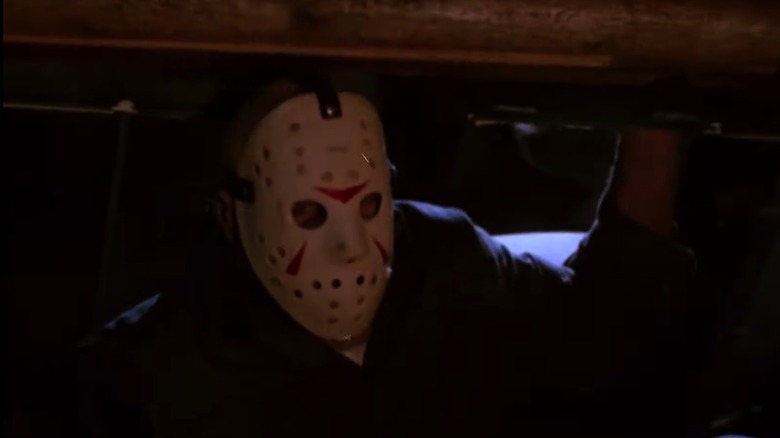
Marvel didn't go for a development quite as obvious as Jason's hockey mask, and Feige acknowledged that the comparison was a "weird example," and his point was that he wanted to continue a franchise "in unique ways." "With 'Iron Man 3,' we really wanted to take Tony [Stark] to new places. We had a great advantage in that 'The Avengers' had been released between 'Iron Man 2' and 'Iron Man 3,' so suddenly Tony had a whole other level of anxiety that he had to deal with," Feige said.
By "Iron Man 3," Tony Stark already had a well-known presence in the MCU. Building off the character's near-death experience in "The Avengers" and its ensuing trauma, Marvel added complexity to the character and additional internal struggles that would define the following years of his story arc, setting Tony on an anxiety-driven path that would not bring him peace until the events of "Avengers: Endgame." In "Iron Man 3," Tony was just starting to come to terms with his new reality and his growing need to try to protect everyone. The burden Tony carried after "The Avengers," which was evident in the following MCU movies, is just as recognizable as Jason's hockey mask.
Marvel repeated the Iron Man 3 playbook
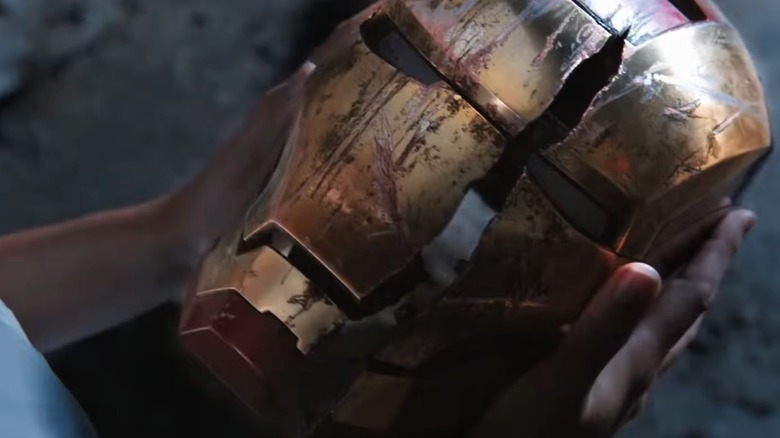
Feige went on to explain that Tony's new anxiety following "The Avengers" motivated him all the way through "Avengers: Infinity War." "This man who had this wonderful redemption arc, who doesn't sell weapons anymore, and doesn't want to contribute to the ills of society, and suddenly being exposed to aliens and other worlds and other threats from beyond in the 'Avengers,' and how that affects a man who is a futurist, and who is constantly looking for ways to solve problems," Feige said.
While Marvel did not make new "Iron Man" movies after the third film, Tony Stark continued to appear in various MCU crossovers. Marvel kept refining the "Iron Man 3" playbook in other films, like "Captain America: Civil War," which built a rift between two Avengers factions, one led by Captain America and the other by Iron Man.
"Thor: Ragnarok," easily one of the most entertaining MCU movies and a highlight of the "Thor" franchise, is also the third installment, giving fans a reinvented version of Thor. There's also "Avengers: Infinity War," the third "Avengers" film, which brought about a massive change that stunned audiences, seeing Thanos successfully erase half the universe, including many Avengers. Similarly, "Spider-Man: No Way Home" saw Spider-Man losing everything, including his family, girlfriend, and close friend.