

This Cool AirPods Health Feature Works Like A $3,000 Device
We may receive a commission on purchases made from links.
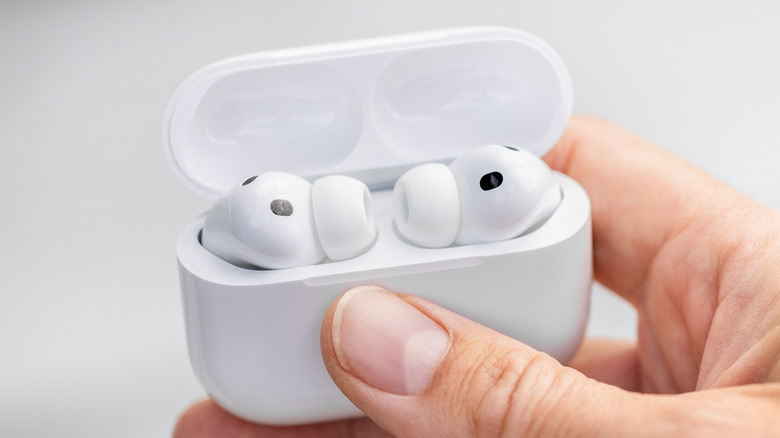
The average price of a pair of hearing aids is $2,694, according to a January 2026 survey from HearingTracker, a significant drop from $4,672 in 2018. Over-the-counter (OTC) hearing aids, priced at an average of $502 per pair, may be one factor behind this decrease. But people with mild to moderate hearing loss can pay about $160 for refurbished Apple AirPods Pro 2 or $249 for a new set of AirPods Pro 3, and use a U.S. Food and Drug Administration (FDA)-approved Apple hearing aid solution that can be set up at home.
Interestingly, the AirPods Pro models do not appear in HearingTracker's report, even though Apple's Hearing Aid Feature (HAF) was authorized in 2024. The authorization came about two years after the FDA announced a new OTC hearing aid category, which is intended to make hearing devices more accessible. According to the agency, some 30 million American adults have various degrees of hearing loss, but only about a fifth of them may use hearing aids. This AirPods Pro health feature was the first FDA-authorized OTC hearing aid software when it was released.
The AirPods Pro retain features such as Active Noise Cancellation (ANC) and media playback while working as hearing aids. They offer a customizable fit thanks to various included ear tip sizes, and ANC can isolate background noise when listening to content or when the earphones are used as hearing aids. Comparatively, background noise reduction isn't a guaranteed feature for medical-grade hearing aid models, which tend to be more expensive than the AirPods Pro.
Testing your hearing with AirPods
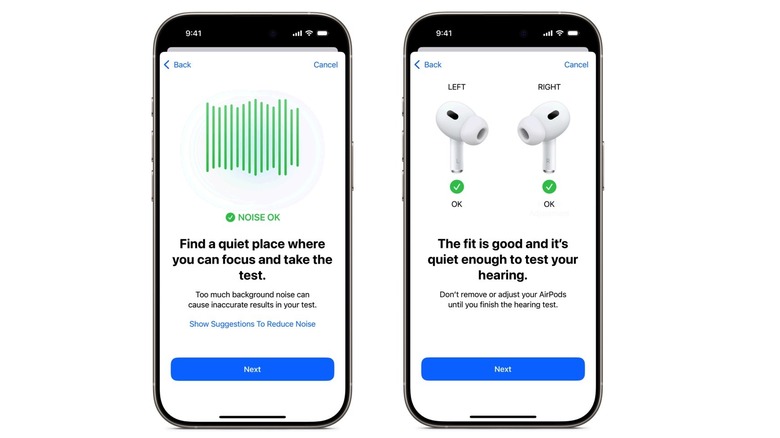
Apple's Hearing Aid Feature is intended for people over 18 who have mild to moderate hearing loss, and requires an iPhone or iPad paired with the AirPods Pro 2 or AirPods Pro 3. Users have to wear their AirPods Pro to perform the hearing test, which requires going into Settings on the iPhone or iPad, tapping the AirPods Pro model, and selecting Hearing Assistance. There is a Take a Hearing Test option in here, or users can upload an audiogram from a previous test via the Use a Prior Test Result option.
The AirPods hearing test can be performed at home, without medical supervision, and repeated as needed. Medical-grade hearing aid products, on the other hand, typically require an appointment with a medical professional for this test. Then, hearing aid providers will perform fittings for the affected ears. The devices may need adjustments and tuning in the future. As for estimated costs, HearingLife notes that the average price of its professional hearing aids ranges between $1,500 and $4,350 over the course of three years, a period that matches the product's warranty.
Apple recommends performing the AirPods Pro Hearing Test in a quiet environment to reduce external noise. The iPhone or iPad display uses moving visuals to indicate that the test is in progress even if you don't hear sound. Users are asked to tap the screen when they do hear tones, and at the end, will receive hearing scores for each ear, an audiogram, and suggested next steps.
How to use the AirPods Pro as hearing aids
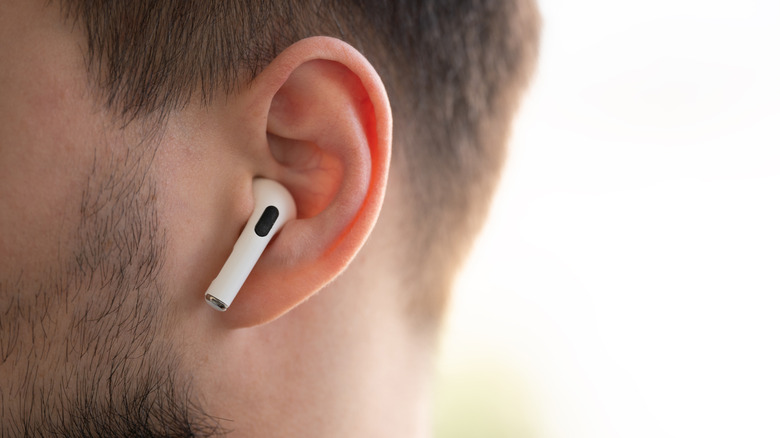
Once enabled as hearing aids, users can adjust the audio parameters on their AirPods to improve the listening experience, including amplification, tone, and balance, in the AirPods Pro settings or Control Center on other Apple devices. Conversation Boost is another AirPods health feature that helps detect face-to-face conversations and focus on the person speaking to you. It can found in the Settings menu on iPhones, iPads, and Macs under AirPods Pro.
There is also a Media Assist feature that leverages your hearing test results to improve listening experiences with music, video, calls, and FaceTime. With the Hearing Aid Feature, you can expect up to 10 hours of battery life in Transparency mode on the AirPods Pro 3. Apple does note that people with more severe hearing loss should see a doctor, and if the AirPods Pro can't improve hearing, you may need to buy more expensive hardware.
Medical hearing aids may not be as easy to set up as AirPods, but they do have a few advantages, like all-day battery life, behind-the-ear designs — versus the in-ear style of the AirPods Pro — and the ability to work with Android phones. In addition to improving hearing, professional hearing aids are often setup to assist with tinnitus. The iPhone's Background Noise feature minimizes distractions to help with tinnitus, but it's unrelated to the AirPods hearing aid functionality.