

5 Secrets Only Apple Store Employees Know
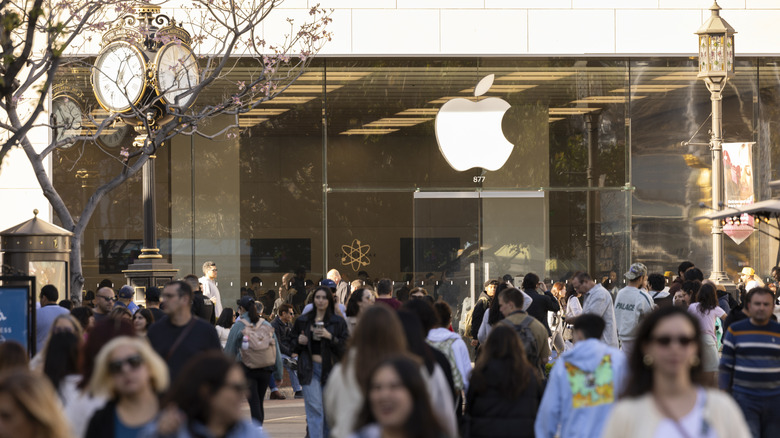
Some people treat Apple almost like a cult. More than a company trying to sell its hardware and services, there are several customers who literally engrave the company's logo, its processors, and famous phrases by its founder, Steve Jobs, on their skin. While Apple tries to keep its users more and more in its ecosystem, a big part of it is also offering a great experience through its Apple Store. After all, the Apple Store is the main entrance for Apple's world, and it's only natural that customers want to know what happens behind the curtains. Do they know what Apple is launching next? Can they buy Apple products at a discount? Do they treat us differently from other stores?
There are a few secret answers to these questions that only Apple Store employees know. Every once in a while, a former employee goes on social media or talks to a journalist to offer a glimpse of what it's like to work for Apple and how it's the connection between them and their customers. Even though Apple itself won't acknowledge these details publicly, they can be found through leaked material and some reported stories.
The following are some secrets customers shouldn't know about Apple, its stores, and more, but they will give you a better understanding of what it's like to be part of one of the most valuable companies in the world.
You should buy Apple products elsewhere
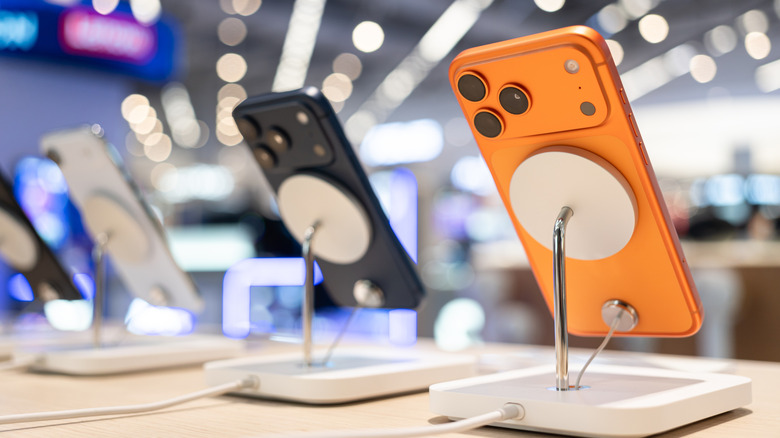
If you live in a region where the Apple Store is available, it's possible that this is where you go shopping for your new iPhone, new MacBook, accessories, and more. While Apple itself has expanded its presence on marketplaces like Amazon and is widely available through third-party sellers, many people still go to Apple to shop for their tech products. According to this former Apple Retail employee, if you're looking for an iPad or MacBook, you should check Best Buy and other third-party marketplaces, as they have better prices, especially ahead of new releases.
For example, if you're planning to upgrade your iPhone but aren't interested in the latest version, third-party sellers offer the best trade-in values in September due to the new iPhone's launch. So, if you're planning to get an existing model like the iPhone 16 or iPhone 17 ahead of the iPhone 18 release, taking a look at the deals by the end of August or early September could save you a few hundred dollars, as you can still choose the different colors and storage options while Apple hasn't announced its shiny new device.
Apple employees have a special discount
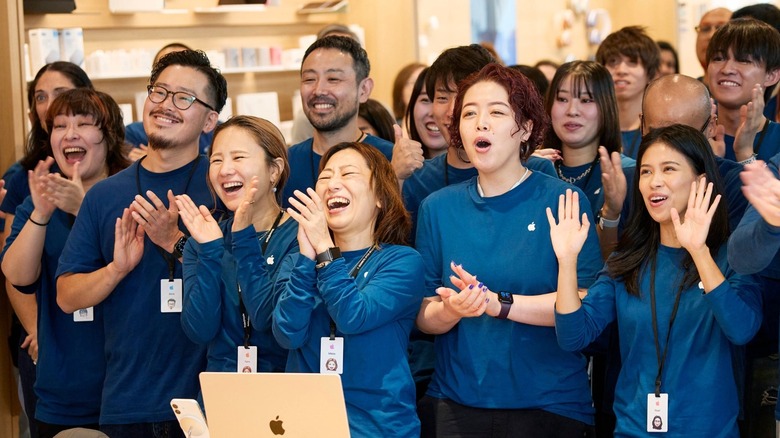
Apple products are expensive, and Apple very rarely offers discounts or promotions. While the best way to get an Apple product at a discount is to buy from third-party sellers, the company does offer a special price to its employees. According to this former Apple Retail employee, Apple gives its workers 25% off, and they can get one product from each category.
This means you could get a new iPhone, iPad, Mac, Apple TV, or AirPods at 25% off every year. Since most people don't upgrade all their gear every year – and employees still have to pay for the devices out of pocket – many Apple employees use this perk to give or gift some of the nicest products to friends and family at a lower price.
If you don't have a friend or family member working for Apple, your best shot to get a product at a lower price is to use Apple's education discount, which gives 10% off for college students, or take a look at third-party sellers, such as Best Buy, Amazon, Target, and more, which usually have current and old Apple prices at a better value than Apple itself.
They go hands-on with products before you do
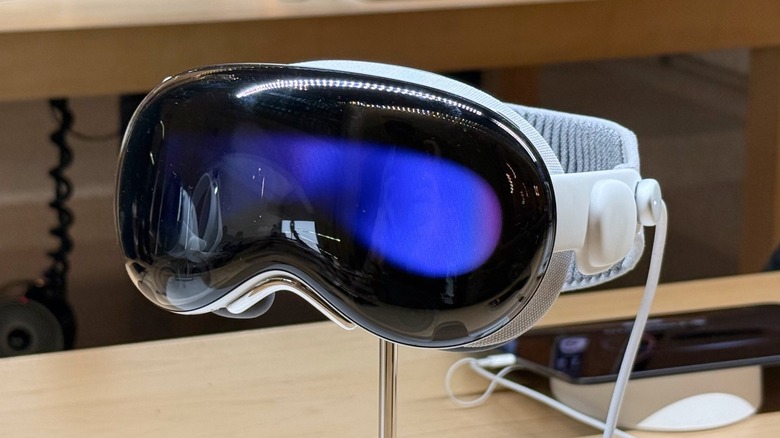
Like us, Apple employees only know about new products when Apple officially unveils them. However, depending on the occasion, they do get access to these devices before us. In the case of the Apple Vision Pro, Apple's latest push into a new category since the AirPods, several retail employees flew to Cupertino for hands-on training to understand the product and then reported back to their colleagues to help sell it. This has been reported by Bloomberg's Mark Gurman, and a former Apple Retail employee also said they were trained on the device weeks before people could try it.
Even though this doesn't happen with every release, especially when the change is minimal, like the iPad Air M2 getting the M3 chip and then the M4 processor, some product releases deserve a bit more hands-on training, especially a device as complex as the Apple Vision Pro. With Apple executive John Ternus set to become the CEO later this year, he will be responsible for unveiling several products in new categories. This means that, most likely, Apple Retail employees will also have to go hands-on with these devices ahead of time, like the iPhone Fold, Apple's smart glasses, new smart home products, and perhaps even the MacBook Pro with touchscreen support.
They won't correct your mispronunciation

Imagine you go to the Apple Store and you tell the retail employee that you want the new "colored MacBook" or even call the iPad Air the "iPad light." Instead of immediately correcting you so you learn that Apple sells the MacBook Neo and the iPad Air, employees are instructed never to correct customers' mispronunciations. After all, this doesn't discourage customers from buying the product, nor make them feel patronized.
While Apple tries to be as clear as possible with its branding, there are times when, even with lots of marketing campaigns, people will just call their devices by whatever name they like. For example, the tenth-anniversary iPhone, the iPhone X, is still called "X" to this day, not "Ten." Apple is also very strict about how it refers to parts of its products. For years, retail employees were instructed never to refer to the top of the iPhone's display as a "notch," but simply as a "cutout." Then, with the iPhone 14 Pro and onwards, the company addressed it by creating the "Dynamic Island."
Another curious thing about properly naming parts of an Apple product is that employees shouldn't call the iPhone's Camera Control a button. They can call it a function, a capability, or a feature of the iPhone, but they're instructed not to call it a button, as it can do more than a regular button. Classic Apple.
No is not an answer

Last but not least, Apple Store employees are also trained never to say "No." According to ex-employees, they are always required to respond affirmatively. So if a customer asks whether Apple can fix their iPhone display for free, instead of saying they can't, they would say they can and would love to help replace the display, and that it costs X.
More interestingly, a 2007 manual includes an acronym for the company name that still appears to be used today. "A" as "Approach customers with a personalized warm welcome," P as "Probe politely to understand all the customer's need," P as "Present a solution for the customer to take home today," "L" as "Listen for and resolve any issues or concerns," and "E" as "End with a fond farewell and an invitation to return."
Ultimately, unlike most other retail stores, Apple employees are trained to act in a very specific way, very politely, and also to make the customer familiarize themselves with the product they might buy. But, most importantly, Apple Retail employees aren't there to sell you something for the sake of selling you a product, but to give you an experience that will make you come back.