

Samsung Smartwatches Might Be Able To Help Prevent Muscle Loss From GLP-1s Soon — Here's How

Working in league with the Massachusetts General Hospital (MGH) Diabetes Research Center, Samsung is testing how wearables like the Galaxy Watch 8 can help prevent critical muscle loss spurred by the use of GLP-1 weight-loss drugs. The goal is to investigate the feasibility of using biometric and body composition data, collected by smart wearables, to manage GLP-1 muscle loss. To understand why this is promising and why it matters, we have to back up a little.
While GLP-1s like Ozempic and Wegovy have been successfully helping people manage their diabetes and weight loss, we still don't have enough data on the long-term effects of using these drugs. A KFF poll reveals that about one in every five adults have taken a GLP-1 drug to help with a health condition. That's a lot of people — and the use of GLP-1s, in general, has quadrupled since 2021. Naturally, we might want to learn more about residual use. It's even more relevant with the discovery of new natural alternatives to Ozempic and similar GLP-1s.
Researchers from the University of Virginia might have discovered a way the drug might undermine health over long-term use, specifically by leading to excess muscle loss. Their study suggests people aren't just losing fatty tissue, but also fat-free mass, made up of 40% to 50% muscle. The significance here is that fat-free mass is important for metabolic rate regulation, the preservation of skeletal integrity in the body, and the successful long-term maintenance of functional capacity, especially during weight loss regimens. In other words, fat-free mass provides many benefits, and losing that lean body mass can be a net negative. Samsung's study aims to help medical professionals accurately measure the loss of said muscle mass during GLP-1 weight loss treatments to better optimize the results.
How will the Samsung and MGH research study work?
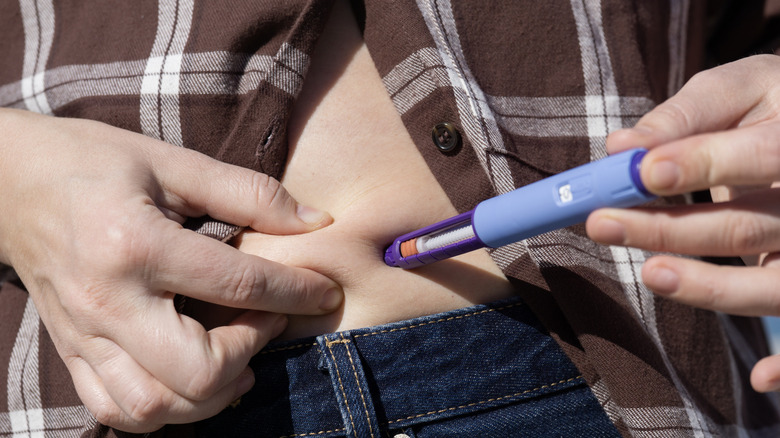
According to Samsung's official announcement, the study will involve 100 adults, separated into two groups, who will begin weight-loss treatments at the same time. One group will receive "the standard guidance and care" of GLP-1RA therapy, while the other will use the Galaxy Watch 8 to monitor their body composition. During the study, researchers will also use clinical-grade DXA scans, a "gold standard for body composition analysis," to track physiological changes. The data will then be compared to see if participants are actually able to build healthier daily habits with the smartwatch to preserve muscle mass. The idea is that those with the Galaxy Watch 8 will receive actionable readings of how the drugs and weight loss are affecting their bodies so they can better steer things in the right direction with the help of doctors.
Director of the MGH Diabetes Research Center, Dr. Melissa Putman, says the center is interested in how wearables can provide enough data to give "clinicians a more holistic view of treatment impact, [thereby] allowing for more timely, data-driven adjustments to their care plan." The muscle mass loss that can result from GLP-1 use is a common side effect that can increase the risk of cardiovascular disease and lead to "a drop in basal metabolic rate." That can eventually result in "future weight regain," making the entire process less successful over the long term for some patients.
This isn't the first time Samsung has teamed up with a research team to assess its wearables' potential impact on real health problems. It also collaborated with a team from Stanford to improve sleep apnea functionality. The Galaxy Watch 6 was also used by researchers in Korea to develop a high-accuracy monitoring technique for fainting.
Muscle loss isn't the only concerning effect of GLP-1s
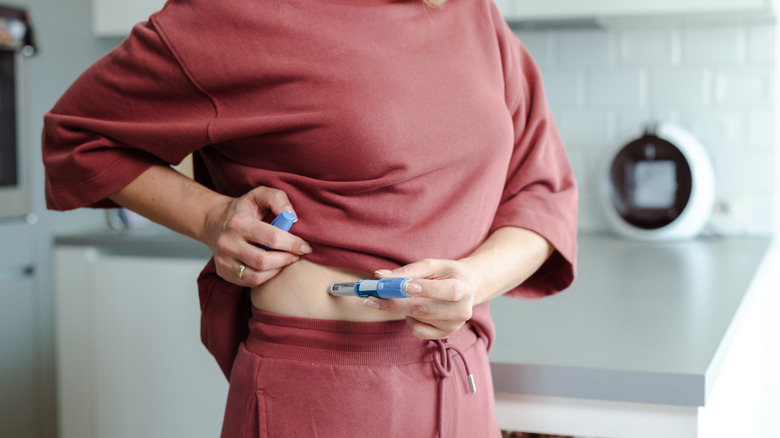
Did you know that taking Ozempic or Wegovy could make you hate meat because of how the drugs affect the flavor receptors in your body? They don't just change your appetite, making you feel satiated sooner, but also influence how flavors are perceived. This change most commonly presents itself in women taking the drug, but more studies will be necessary to understand what's happening. More importantly, we don't yet know the long-term effects of that change, either.
The so-called "Ozempic face" is another potential concern, where skin on the face sags and wrinkles because of the rapid weight loss the drugs catalyze. Then, there are gastrointestinal issues that may appear, like nausea, vomiting, diarrhea, stomach pain, and bloating. Rare side effects have been linked to acute kidney damage, pancreatitis, gastroparesis, and gallbladder problems.
The drugs have been largely beneficial for many, so the overarching message here is not that they are inherently bad. But it is important to recognize that these drugs have not been around long enough to understand some of the long-term and potentially permanent effects they might cause. That's why studies like the one between Samsung and MGH are so important, even if they aren't directly tied to the medications: They introduce new ways to assess and understand the changes the body is dealing with while taking these medications. The medications are also moving into new formats. A new pill may soon replace weight-loss injections, with providers like Ro offering early oral Foundayo (orforglipron) access.