

Aircraft Carriers Are Becoming Nuclear Power Plants For US Naval Bases
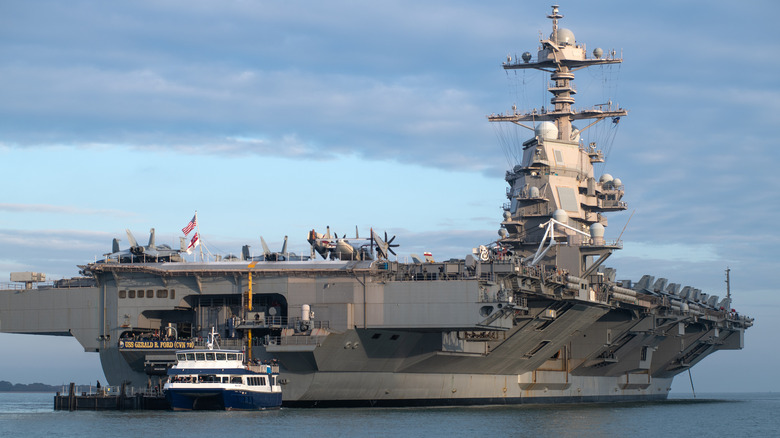
Aircraft carriers are floating cities that carry thousands of sailors and provide aerial strike and defense capability anywhere in the world. The latest series of aircraft carriers operated by the U.S. Navy, the Gerald R. Ford class, are over 1,000 feet in length and boast crews of over 4,000 sailors. Powering such an immense platform out at sea for months at a time requires huge power-generation capability, and this class of ship has that in the form of two A1B nuclear reactor plants.
The Navy intends to use these ships' nuclear-generating capacity to power Naval Station Norfolk as part of a test this summer, to demonstrate the utility of using a nuclear-powered aircraft carrier as a mobile power station in the event that a base's power sources are compromised. The test was explained at a House Armed Services Committee meeting on May 14. The Gerald R. Ford (CVN-78) recently returned from a record 11-month deployment, setting new standards for deployment endurance.
The concept of a naval vessel powering land-based infrastructure isn't new. The USS Lexington provided electricity to Tacoma for a month in 1929, after the city's main power sources were rendered ineffective. The city relied mostly on hydroelectric power through rivers, which dried up that year due to unprecedented drought. While the event didn't see sustained usage of this method of power generation, it served as a proof of concept.
Challenges with providing power in disaster zones
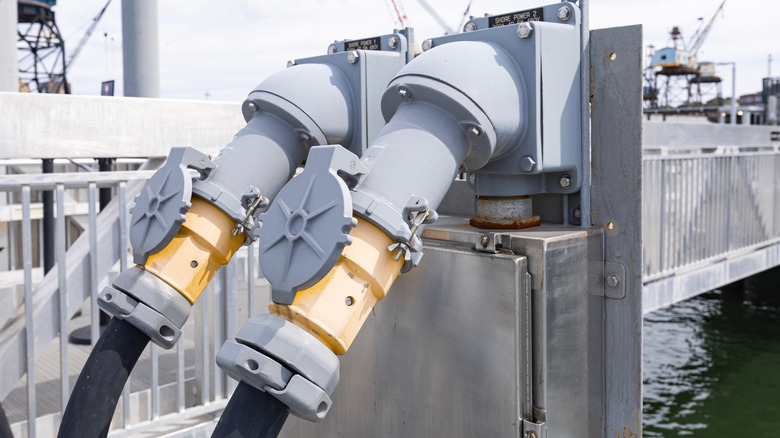
The Navy's test at Norfolk will lay the foundation for modern emergency power generation applications not only back home, but in disaster zones as well. While this seems like a good proof of concept, it remains to be seen whether or not this would work in active operation. Depending on the location of the disaster, mooring a U.S. Navy aircraft carrier in a dangerous harbor could present risk factors that the Navy simply wouldn't be willing to accept. The carrier would be exposed to potential damage if operating in unfamiliar ports, or could become subject to opportunistic attack by enemy forces.
Providing power to land-based infrastructure in a disaster zone is by no means a plug-and-play situation. The carrier would need to connect to an electrical interface that would allow power generated onboard to be synchronized with a land-based power system. Relaying, fault-management, and isolation equipment would also have to be introduced to ensure the safe transfer of electricity. Distribution infrastructure like power cables can also be damaged or compromised, requiring alternative means of distribution.
Commercial efforts to deliver floating nuclear power plants
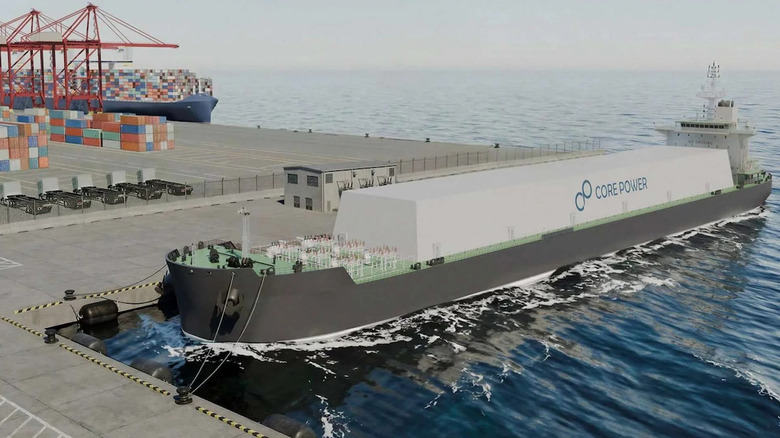
Considering the risks and challenges with using nuclear-powered aircraft carriers to provide power to ground-based infrastructure, dedicated nuclear-powered, floating power stations may become a reality in the future thanks to efforts in the commercial sector. Core Power and Glosten have partnered to bring ship-based nuclear power production to life. The Core Power startup intends to deliver floating nuclear power plants to ports around the world, with power delivery and interface with ground-based systems built into its design.
Part of Core Power's initiatives also focuses on regulatory alignment and approval for civilian maritime nuclear power. While the Navy has been operating nuclear-powered ships for some time, civilian deployment of nuclear reactors at sea would require separate licensing and oversight from national nuclear regulatory bodies, along with international maritime safety assurances. The company's Liberty operation aims to address these issues, aiming to ensure the operational approval of nuclear and environmental regulators.
Core Power is planning to offer its floating nuclear power plants to the U.S. for the same application being tested at Norfolk, and is aligned to president Trump's executive order to accelerate the development of advanced nuclear technology for the country. While Core Power focuses its efforts on landing opportunities in America, Denmark's Seaborg Technologies has also recently signed a memorandum of understanding with Thailand to develop the same technology to aid the country's goal of achieving net-zero emission generation.