

Shovelware: What Is It, And Why Did The Nintendo Wii Have So Much?
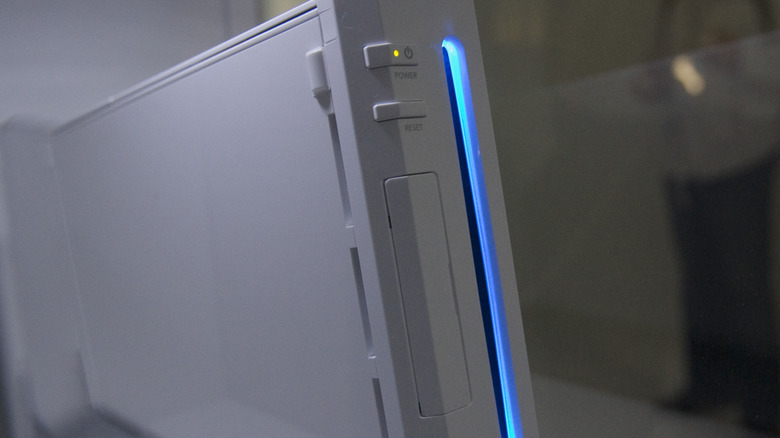
Shovelware is a term that comes from the era when the Nintendo Wii reigned supreme, and game development wasn't so expensive. Without the overhead ofmassive teams and skyrocketing real world costs, or the need for HD graphics (we've got the solution to bad looking Wii games on an HD TV), and with a huge amount of Wii and DS consoles on the market, it led to the rapid development of cheap games and a lot of licensed titles hitting the consoles. Some of them would make you wish the Wii would crash with that horrid noise.
Shovelware came in multiple flavors, but would commonly be party games, riddled with poorly designed or executed minigames. Other commonly effected genres included puzzle, platformer, or other casual-friendly experiences. Notable shovelware games on the Wii include "Ninjabread Man," "Carnival Games," and even an M&M's kart racing game.
These games would launch on the cheaper side, and with a massive casual audience on the Wii in particular, would sell decently, regardless of quality. With such a huge audience, and total figures putting the Wii's sales at 101.63 million units, it's no wonder that shovelware was ultimately so prevalent. That all said, shovelware sales still pale in comparison to Nintendo's first-party game numbers, which are in the tens of millions.
Shovelware as we knew it died in 2012
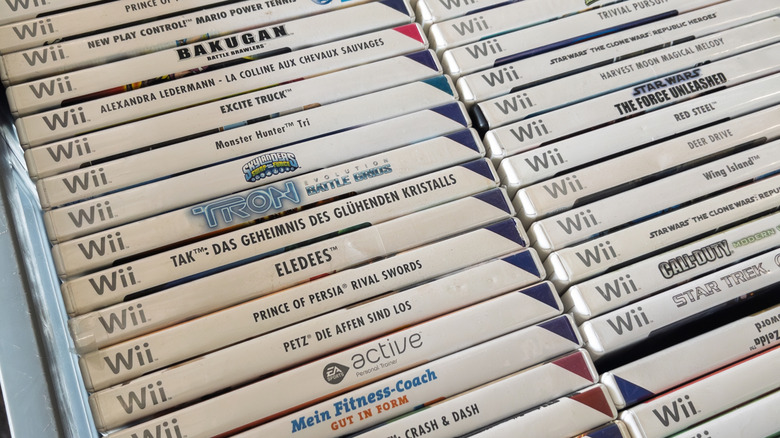
As the console generation died off and games became more expensive to develop, partially owing to the need for more complex HD graphics, shovelware largely died off. The Wii's follow-up, the Wii U, was not a hit and is considered a huge failure for Nintendo, ending up unceremoniously killed in 2016. People also became more astute about what they were purchasing, with a rise in online game streaming culture and an abundance of personalities covering games since the Wii launched in 2006.
Meanwhile, the Wii U still saw some cheaply made games in the same vein hit the console, but it never had the market share the Wii had. Games like "Funky Barn" and "Wipeout" arrived on the console, but outside of some party games at launch, shovelware as we knew it sort of evaporated.
It was during the Wii's lifetime that the rise of the smartphone happened. Tablets also followed, with the iPad now being the sidekick of a lot of children. Shovelware developers adapted to the times, and with the rapid pace of development on mobile devices compared to that on console being a boon, soon the Google Play Store and Apple App Store became inundated with vast amounts of cheap or free, ad-powered games that slotted into the gap left by the Wii's shovelware epidemic.
Shovelware turned into slop

Of course, the concept hasn't been abandoned entirely on consoles and PC. The idea to develop cheaply, and turn some kind of profit by self-publishing on the Nintendo E-Shop, PlayStation Network, or Xbox Store, or on PC with Steam, has become a notable pain point on these platforms. No longer beholden to discs or the limited storefronts of yesteryear, these developers can go entirely digital with a deluge of asset flips and AI-generated software.
In February 2025, January, and June 2026, Sony removed a glut of shovelware from its store. One developer had published over 1000 games, including "The Jumping Taco." It's suspected in reports that these are geared towards Platinum Trophy collectors, who want to boost their numbers. The February case was related to suspected usage of generative AI to plug up the store with cheap titles to lure in unsuspecting players.
The Nintendo E-Shop is littered with similar fare, with developers grasping for the 155 million Switch 1 and nearly 20 million Switch 2 owners. Shovelware has also adopted cloning games, with Roblox developers egregiously lifting whole titles and concepts and mobile developers transforming original ideas, like "Threes" into the more commonly known "2048."