

Michael Keaton's Post-Batman Sci-Fi Comedy Left Critics Conflicted
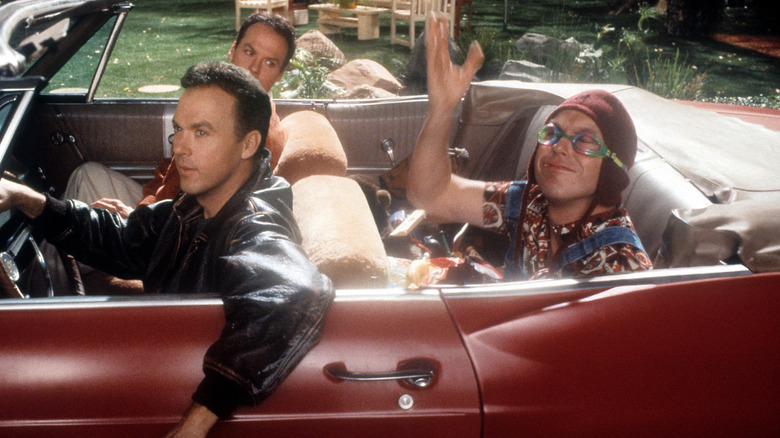
Once Michael Keaton became Batman in 1989 (arguably one of the best actors to ever put the cape on), his comedic chops that defined his work pre-Dark Knight were slightly dismissed. He moved toward picking darker and more dramatic roles (even villainous ones like his baddie in "Spider-Man: Homecoming"), but didn't entirely abandon his roots and continued to appear in comedies like "Much Ado About Nothing," "The Paper," and "Speechless."
His first flirt with sci-fi also came in that era with Harold Ramis' "Multiplicity," an underrated farce comedy that gave audiences several Michael Keatons due to its comical gimmick of cloning. Ramis' movie follows Doug Kinney (Keaton), an extremely busy construction head and family man so slammed at work that he neglects his wife Laura (Andie MacDowell) and their children. Running into scientist Dr. Leeds (Harris Yulin) one day at a construction site, Doug finds just what he needs to solve all his problems. Dr. Leeds tells him that he invented a successful method of cloning, and after showing him his very own duplicate, Doug has no doubt it's the remedy for his time management troubles.
He gets his first clone, Two, aka Lance, who can take over at work while Doug spends more time with his wife. The experiment works out so well that he requests another duplicate, Three, aka Rico, who can do the chores around the house and be romantic with Laura so Doug has time for himself. Before long, the two clones make a third one, Four, aka Lenny, who's a little slow mentally, and that's when the whole operation begins to crumble in a hilarious way.
Multiplicity never really got its due, but it's way more fun than critics and audiences gave it credit for
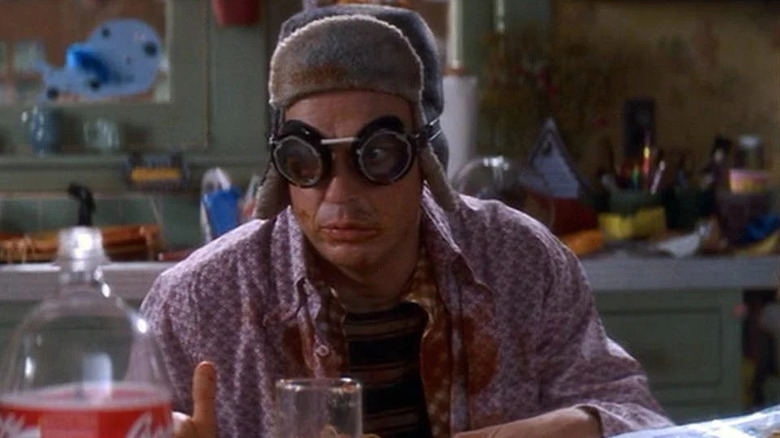
"Multiplicity's" concept is every married man's dream. On paper, it's the perfect solution to avoid working to death, satisfying your spouse's every need, and finding the time to look after your mental and physical health by enjoying the hobbies you otherwise couldn't possibly do. Its drama is silly, implausible, and totally lightweight since it never goes the route that many movies about cloning usually do. The script isn't interested in all the science, moral quandaries, or God-complexes that typically come with such a premise; just the comical underpinnings. And there's no one better to drive this home than the best everyman actor of his generation, Michael Keaton.
He has a lot of fun playing exaggerated versions of himself, inviting viewers to the party to have a blast with him every step of the way. "Multiplicity" is never serious, totally old-fashioned, and adheres to plenty of clichés that come with binge-worthy rom-coms and marriage dynamics. It's also joyfully immature and hilarious in a '90s family movie fashion that's charming and endearing more than anything else.
Unfortunately, critics and audiences didn't care for it back in '96. 'Comedy Keaton' was old news once moviegoers realized his potential as a dramatic actor, and "Multiplicity" perhaps felt like a lukewarm throwback to his '80s comedies that they no longer wanted at the time. To be fair, its reviews were split down the middle (currently standing at 46% on Rotten Tomatoes), but its poor box office performance (grossing $21 million worldwide against a $45 million budget) sealed its fate rather quickly. However, over the decades, it earned a minor cult classic status as one of the underrated '90s comedies it truly is.