

A Samsung Galaxy Watch Detected AFib Before Doctors Discovered Serious Heart Problems
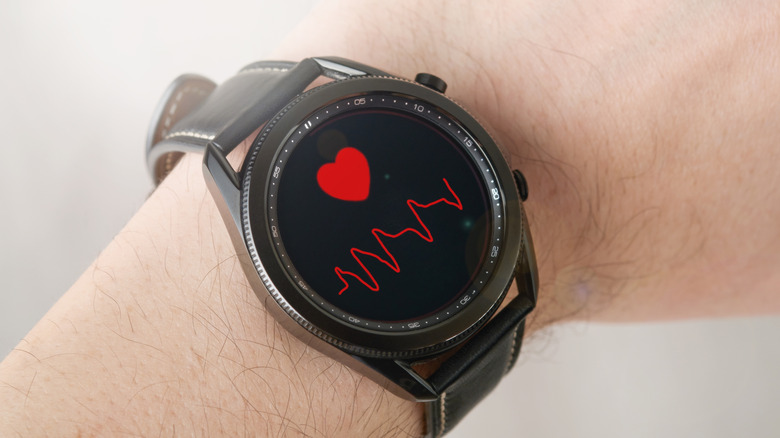
A disclaimer you'll find with every wearable piece of consumer tech, including smartwatches, is that they are not medical devices. They are designed to monitor vitals and health stats. They can also detect anomalies that might prompt you to visit a health care professional and investigate further. But for one young man, his Samsung Galaxy smartwatch played a role in literally saving his life. Joseph Holycross was not feeling well, and when he checked the data on his Galaxy Watch, the reading prompted him to head straight to the hospital where he ended up requiring open-heart surgery.
It's not the first time we have heard such stories — Apple often shows similar personal stories from Apple Watch users during its product and software launch events. You'll hear users talk about how various types of alerts helped them realize something was wrong long before they had confirmation from a medical professional. But Holycross' story will hit you right in the feels, given how urgent his situation was and how critical the smartwatch was to helping him address it. The story gives credence to the fact that, while features like ECG and AFib detection in smartwatches are not replacements for medical devices, they do serve a worthwhile purpose.
How the Galaxy Watch helped Holycross
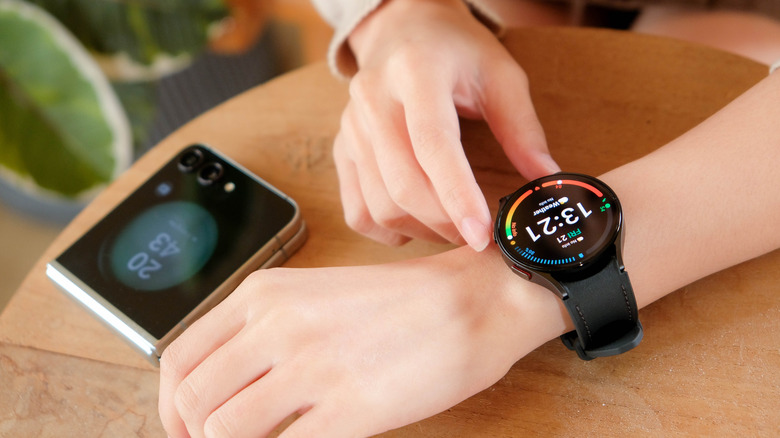
Holycross says he was feeling off, but he chalked up his racing heart rate to being exhausted from work, raising four kids, and consuming too much coffee. But at his wife's urging when she noticed that he also seemed short of breath, he took an ECG reading with his Samsung Galaxy Watch 4 Classic. That's an older model of Samsung's smartwatch for which, ironically, software support only just ended. A warning popped up indicating that he was experiencing atrial fibrillation. From there, the 39-year-old repeated the test a few times before heading to the ER. After a week of testing, he learned he required surgery. What's more, he was also told that had he not gone, he could have had a stroke or heart attack, and might not have lived to 45 without timely intervention to correct the issue.
Holycross says the doctors were impressed by how accurate the watch was in detecting AFib, an irregular heart rhythm that can lead to stroke, heart attack, and even heart failure. Samsung's Galaxy Watch is one of many smartwatches that can check heart rate 24/7 and send warnings if abnormalities, like AFib, are detected. To take a reading, open the Samsung Health app, go to the ECG section, and place your finger on the watch's sensor. Hold still for about 30 seconds. The process is similar with other models as well. The watch uses electrical signals to record your heart rhythm and advanced algorithms to look for irregularities. In Holycross' case, it determined that something was off.
ECG is a feature worth using
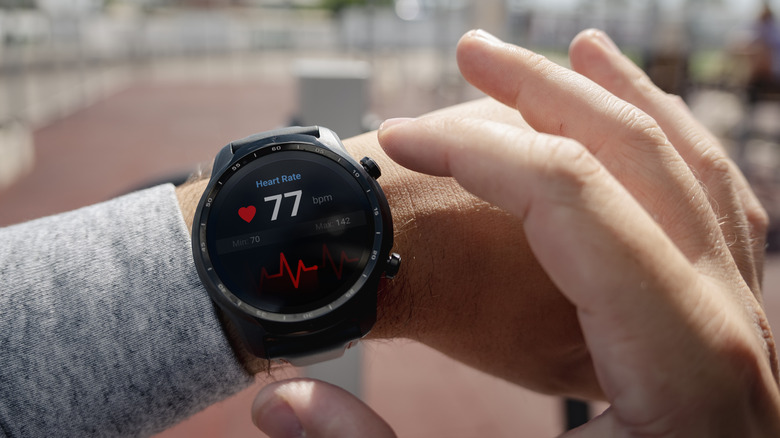
ECG readings are supported on Samsung Galaxy Watches dating back to, interestingly enough, the very Galaxy Watch 4 Holycross owns. His was the first device in the line to receive this feature. The Samsung Galaxy Watch Active 2 also received this update in 2020, and all the latest Galaxy Watches released since then feature it. You won't find ECG in every smartwatch from every brand. Most entry-level models have optical heart rate sensors rather than ECG heart rate monitors. But virtually every premium model today includes ECG among their features, provided it has received regulatory approval for the countries in which it's sold.
Given the requirement for regulatory approval, ECG in smartwatches is typically pretty accurate, as evidenced in Holycross' experience. That said, the feature still has limitations. It may not always be accurate, and it cannot detect all heart conditions since it's a single-lead ECG with one electrode under the face versus a 12-lead one that is more precise. It may also misreport data. Luckily, in Holycross' case, he made the right call taking into account both the data and the symptoms he was feeling.
Smartwatches are not, to emphasize once more, intended for diagnosis. But as this situation proves, the ECG feature in smartwatches can be an invaluable tool. While you might enjoy a smartwatch for notifications and tracking workouts, it can do so much more. That includes tracking metrics and sending alerts that may prompt you to dig deeper and see if there's something wrong.