

Not Wind, Not Waves: These Unlikely Local Residents Are Reshaping California's Coasts
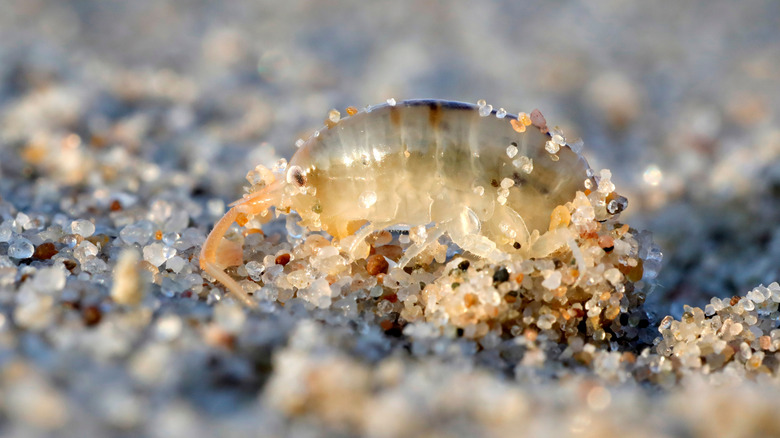
The world's coastlines have a story to tell, one you can read all the way from space. As geography, weather, and wildlife make their moves, they can shift the sands and literally reshape the coast. We typically associate this change with erosion and rising sea levels, which are causing the gradual sinking of America's east coastline. However, on the west coast, there's another force shifting the sands that you probably haven't heard of. It's a tiny crustacean, only an inch long at most, known as a sand hopper, and it can move more sand than you'd imagine.
There are many kinds of sand hopper found all over the world, but the ones most prevalent on the California coast are members of the biological group Megalorchestia. Historically understudied, researchers from the University of California, Santa Barbara, decided to give these critters a closer look, and published their findings in the Journal of Geophysical Research: Earth Surface.
To measure the amount of sand the crustaceans can move, researchers set up a series of square plots in the sand of a Santa Barbara beach and left them overnight. As the researchers slept, the nocturnal sand hoppers went to work, and, in the morning, the plots were re-measured. The sand hoppers had moved up to 50 kilograms (110 pounds) of sand per meter of shoreline (three feet). In volume, that's about eight gallons of sand per meter, all moved in one night. The big question is, why do the sand hoppers do it?
The curious habits of sand hoppers
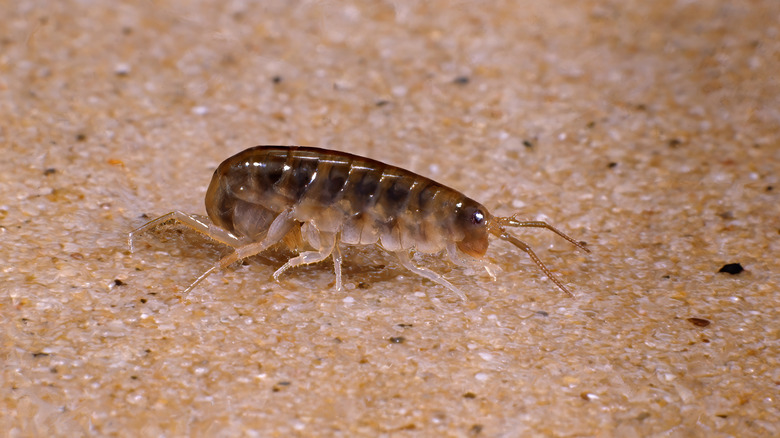
It's important to note that those 110 pounds of sand aren't all moved by one sand hopper. It's a group effort. The research team took samples of beach sand to determine just how many individuals are involved. It turns out that for every three meters of shoreline, there are approximately 21,450 sand hoppers. The act of moving sediment is scientifically known as bioturbation. Sand hoppers do it better than just about any known animal, even famous diggers like golden moles. It's all part of an effort to stay safe from predators.
Sand hoppers are nocturnal, emerging from their burrows at night to feed on seaweed and other organic matter that washes up on the beach. During the day, they shelter from danger in their sandy burrows. What makes them unique from other burrowing creatures is that they dig new burrows every night instead of reusing them. That's because, as the research team uncovered, sand hoppers are very particular about the sand they dig in. If it's too wet or too dry, the burrow will cave in. The moisture level of the sand changes over the course of the day with the tides, so each night when they finish feeding, the sand hoppers have to search again for that perfect spot in the sand.
How sand hoppers benefit the beach
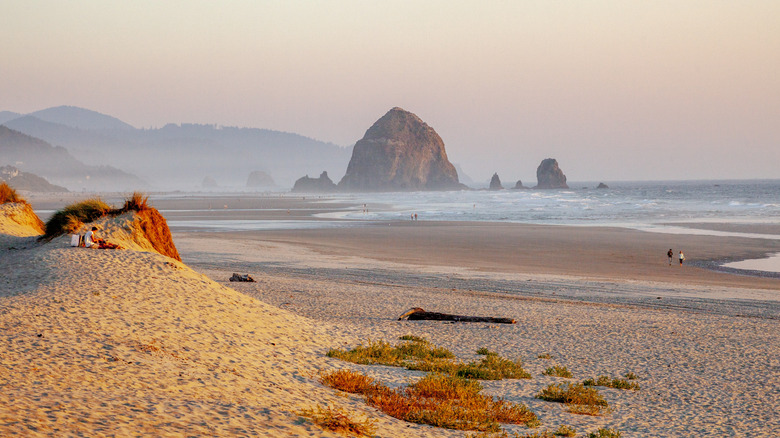
Sand hoppers clearly change the landscape of a beach, something you've probably seen if you've ever noticed sandy mounds near the shore. Every day these pop up in different places, and each fresh burrow adds to a total sediment shift that rivals some of California's major rivers. This movement has a profound effect on the local ecosystem, one with a reach that surprised even the scientists studying them. As sand hoppers dig, some of the loose sand that piles up behind them gets blown further up the beach by winds. This is a notable factor in the formation of dunes.
By constantly digging new burrows, sand hoppers mix elements from the air into the sand, a vital process shared by other burrowing creatures like worms and crabs, although they don't work on nearly as grand a scale as the sand hoppers do. This is a key part of maintaining oxygen levels in beach climates. Sand hoppers also push detritus like seaweed and dead animal tissue into the sand where it can feed other lifeforms as well. It's a truly outsized impact for such a small crustacean.