

Chinese Scientists Cloned This Endangered Species - Then They Made 10 More
It seems like only yesterday that cloning was little more than a plot device for science fiction stories, reserved for explaining how scientists recreated dinosaurs and drama over which character is the real deal and which is the evil doppelganger. However, scientists have seemingly cracked the code to successful cloning and are using it to heal the populations of vulnerable animals.
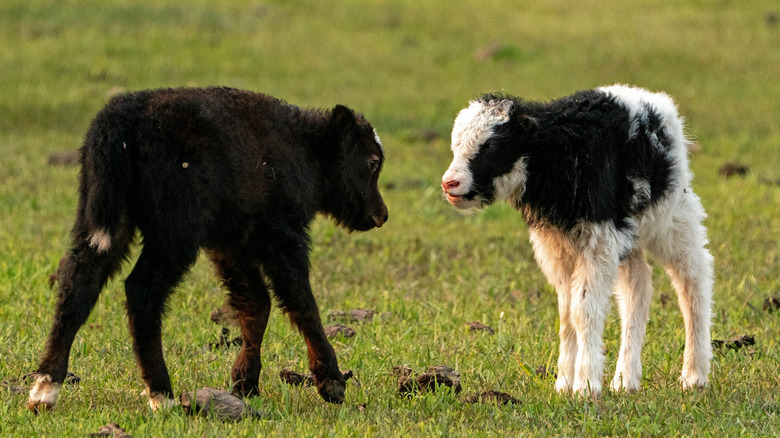
Earlier this year, a team of scientists from the Xizang Autonomous Region, the Institute of Plateau Biology of Xizang, and Zhejiang University announced that they had successfully cloned 10 Tibetan yaks. This landmark achievement came several months after the team cloned its first yak last July. The first attempt was to prove it could be done, and then the team showed it could be done en masse.
You might wonder what makes this such an accomplishment. After all, Chinese scientists cloned "super cows" back in 2023 — the same year researchers started work on their yak cloning program. Unlike your average bovine, yaks are hardier animals and can survive high-altitude, low-oxygen and low-pressure conditions. However, these evolutionary traits affect their metabolism and the cloning process, so researchers had to invent new techniques to help egg cells mature outside the body, as well as grow correctly inside the womb. Yes, all the yaks were cloned, but they were delivered typically; once the embryos were implanted, the female yak hosts carried them.
Yaks could use a hand
Last year, the company Colossal Biosciences claimed it revived the dire wolf. While the idea of bringing extinct animals back to life is enticing, you can't truly clone them as there aren't living cells to clone, only ancient DNA. This is a plot point in the "Jurassic Park" films (where even the most iconic dinosaurs in the movies don't exactly resemble their real-life counterparts). And while all yaks aren't dead yet, they're not doing too hot either.
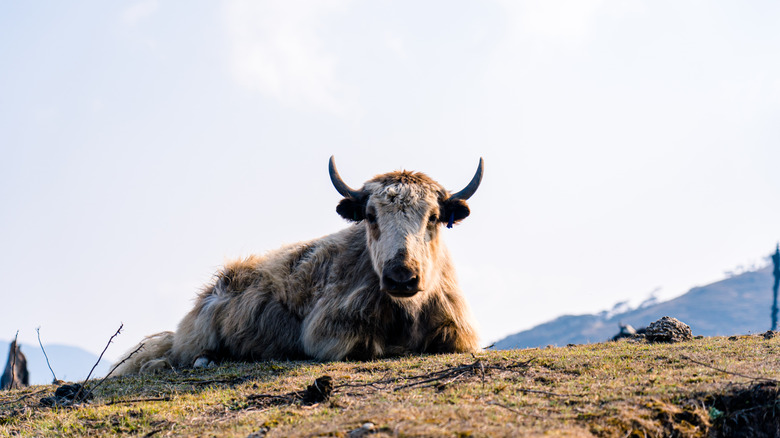
Currently, yaks are divided into two populations: domestic and wild. While domestic yaks are plentiful, the latter, specifically the golden wild yaks (or Tibetan yaks) of the Qinghai-Tibet Plateau, are critically endangered, numbering no more than 300 living. And as if that wasn't bad enough, researchers found that the surviving population has become more vulnerable. Body weight and mass are down, as are immune system strength and reproduction rates.
In order to produce the clones, researchers sequenced the genomes of 8,971 yaks from Xizang. Scientists then selected genotypes that emphasized traits such as size, growth, and resilience, creating what is known as a "cell line" ("a population of cells maintained in a culture for extended periods of time," according to an article in Science Direct) for subsequent cloning attempts. Sure, that may sound like eugenics, but we are talking about a population of barely 300 animals that could suffer protracted extinction without intervention.
Yakkity yak, do come back
In the world of science fiction, cloning is often used as the focal point of a parable, asking the question of whether or not we should do something just because we can do it. In real life, cloning is a question of whether or not we can do something followed by asking why we would do it.
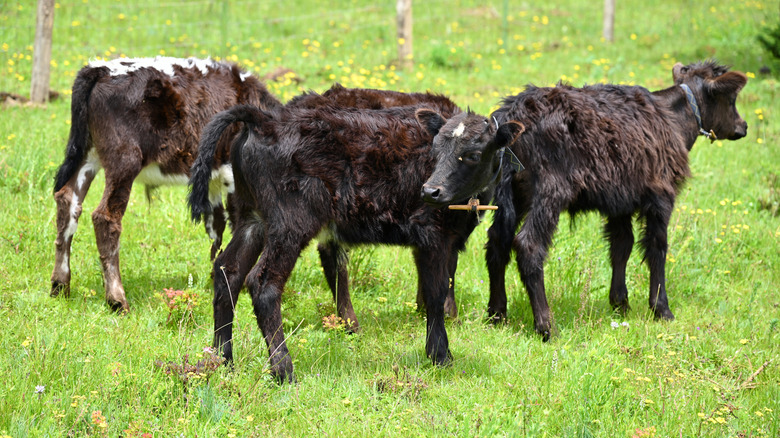
Like some large animals, yaks are slow at reproducing. Under natural conditions, female yaks give birth to single calves only every one to two years, and only after they reach maturity. The cloning process could potentially slash the breeding cycle of the yak, vastly speeding up the number of calves. If things go according to plan, the team behind the project plans to amass well over 100 cloned yaks by 2028 — they already have over 200 viable embryos ready for use.
Of course, the benefits extend further than the immediate yak population. The golden yak is a crucial lynchpin not just in the Qinghai-Tibet Plateau's ecosystem but also for the livelihoods of local herders. The more scientists can stabilize the golden yak population, the better the Qinghai-Tibet Plateau.