

How Much Would It Cost To Buy A Nokia Phone In 1996 Vs. 2026?
The Nokia 9000 Communicator, what many consider to be the first-ever smartphone, was released in limited quantities back in August of 1996. It included a keyboard, a lengthy LCD panel, and the ability to browse the internet, giving power-lunching executives easy access to their email. The sticker price at launch was $800. That same $800 30 years ago when adjusted for inflation comes to just over $1,700 in 2026. That's enough to buy a top-of-the-line smartphone, or the product's presumed successor, like the foldable iPhone Duo or a slightly more affordable Samsung Galaxy Z Fold 8.
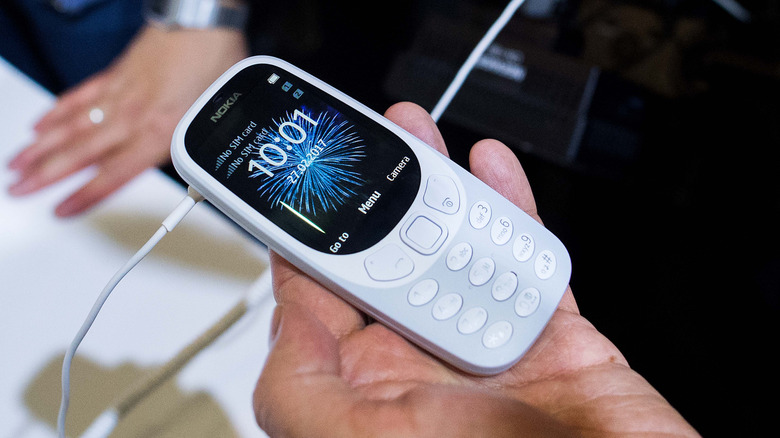
Nokia phones haven't been on the frontier of mobile communications for decades now. In fact, new models aren't sold in the U.S. anymore. A Nokia 3210 4G candybar feature phone from 2024 on Amazon will only set you back $70. In India, you'll find the Nokia Asha 305, an entry-level smartphone, for the equivalent of $85. Of course, cellphones have been commoditized multiple times over as new capability and speeds have released, but there's also been a clear shift in focus at this company over the years that has led a lot of nostalgic folk to ask if Nokia still makes smartphones in 2026. If you're wondering how these affordable phones compare to some of the more budget-conscious options back in 1996, the answer itself is complicated.
A small rabbit hole into the Nokia of 1996
Nokia was on top of the world in 1998 — a commercial survey estimated the Finnish brand sold more than 37 million units in the U.S. that year, an 82% increase from the year before and enough to claim top market share against its chief rivals back then, Motorola and Ericsson. That kind of rapid ascent does betray the fact that the company didn't have much standing in America just two years prior. Most Nokia phones were being sold in Europe at that time.
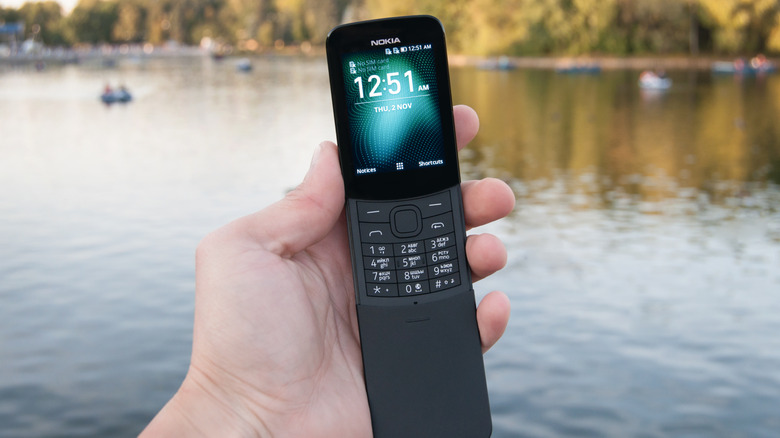
That said, the seeds of its massive success were still there as wireless carriers on the continent were offering Nokia phones on subsidy with service contracts in 1996. In the United Kingdom, an unlocked version of the basic Nokia 1610 was reportedly selling for £210, excluding VAT (just over $700 after contemporary conversion and inflation), while a refreshed version of the rugged-looking Nokia 2110, the Nokia 2110i, went for £385 (~$1,300) and the flagship 8110 that appeared in 1999's sci-fi hit "The Matrix" costed £465 (~$1,570). Nokia licensee HMD Global would go on to release a remastered version of the Nokia 8110 in 2018 for €79 ($131).
Sure, Nokia might have made a niche hit with its early smartphone-like Nokia 9000 Communicator way back in 1996, it would take lots more sales volume and the popularity of its "candybar" phones for it to truly become a household name.