

NASA Voyager 1 Is About To Break A Huge Record — Here's When
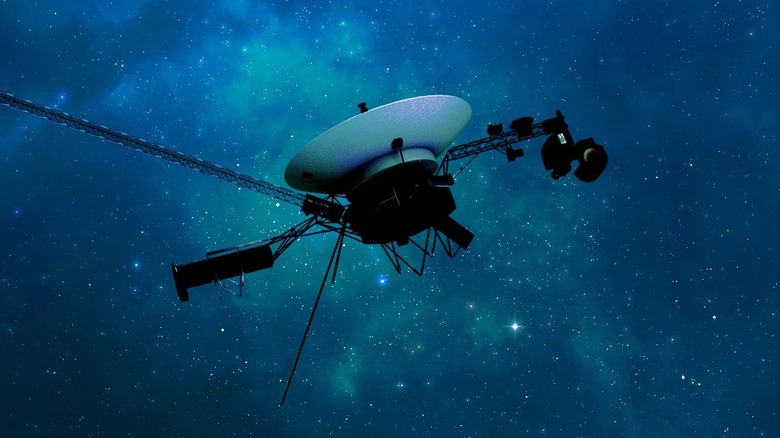
When NASA's Voyager 1 launched from the Kennedy Space Center in Florida on September 5, 1977, the mission was only designed to last five years. But in 2026, the spacecraft is still flying and sending back data, and it's about to reach an incredible new milestone.
On November 18, 2026, Voyager 1 will make history when it becomes the first human-made object to reach one light-day from Earth. A light-day is the distance it takes for light to travel in 24 hours, equal to about 16.1 billion miles (25.9 billion km). To put that distance into perspective, light from the sun takes just over eight minutes to reach Earth, traveling at around 186,000 miles (300,000 km) per second. So a light-day is a colossal distance, equivalent to about 173 times the expanse between Earth and the sun.
But the milestone is about more than just distance. It also highlights the increasing communication delay between mission controllers on Earth and the Voyager 1 spacecraft as it continues to race away from its starting point. Radio signals, which travel at the speed of light, will take 24 hours to travel between Earth and Voyager 1 on November 18, 2026, with the transmission time increasing a little each day as the spacecraft moves even further away. It means that even a simple exchange of information will take at least 48 hours to complete. The milestone is a striking illustration of the challenges involved in exploring the outer reaches of our solar system, and a reminder of the astonishing distances involved.
Voyager 1 achievements
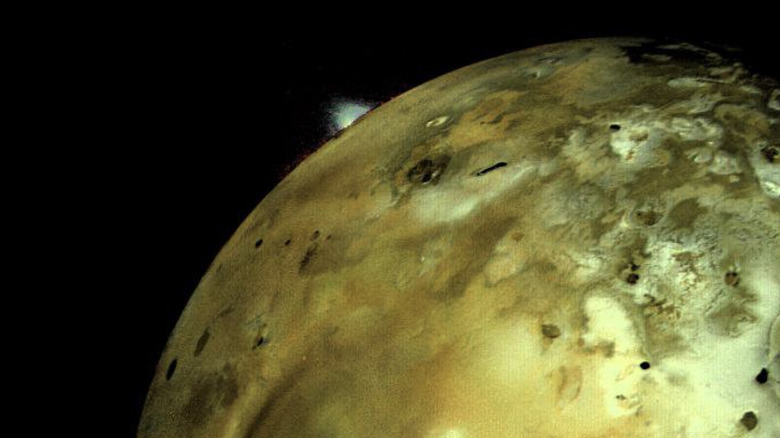
Voyager 1's original objective was to study Jupiter and Saturn, as well as their moons and Saturn's rings. During its flyby of Jupiter in 1979, the spacecraft discovered two additional moons and even spotted active volcanoes on Io, another of Jupiter's moons, marking the first discovery of volcanic activity beyond Earth. The following year, as it made a close pass of Saturn, Voyager 1 discovered three new moons and revealed previously unknown details of the planet's ring system, while its encounter with the Titan moon revealed a thick, hazy atmosphere. From there the spacecraft continued on, in 2012 becoming the first human-made object to enter interstellar space, the vast region beyond the boundary of the sun's solar wind. Since reaching interstellar space, Voyager 1 has been measuring magnetic fields, as well as recording plasma waves and tracking changes in the density of interstellar gas.
For most of the time, the mission has run remarkably smoothly, but its increasing age has led to technical issues in recent years. In November 2023, for example, Voyager 1 suddenly began sending back unreadable data due to a faulty memory chip in one of its onboard computers. Engineers spent months developing a workaround, eventually restoring the flow of scientific data in 2024. More recently, in October 2026, contact was lost again for 48 hours, after which the signal returned.
Looking ahead, Voyager 1's biggest challenge is its dwindling power supply. The spacecraft's plutonium generator is gradually producing less electricity, forcing engineers to switch off instruments and other systems to conserve energy. The aim is to have the spacecraft sending back scientific data for as long as possible, but an eventual loss of contact is inevitable. When that finally happens, Voyager 1 will continue its lonely journey through the galaxy, very much alone.
How about Voyager 2?
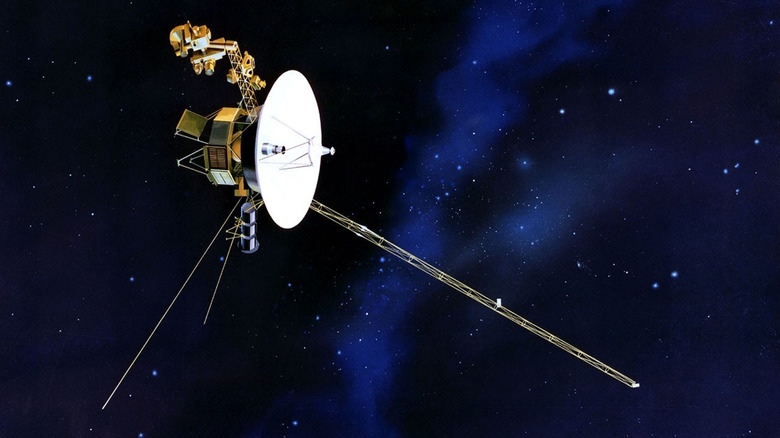
Voyager 1 is about to make history once again, but let's not forget that its twin spacecraft, Voyager 2, has also been making waves. Voyager 2 actually launched 16 days before Voyager 1, but was assigned the number 2 because it followed a slower, longer trajectory. The mission goal was similar to Voyager 1, focusing on Jupiter, Saturn, and their moons. And like its twin, Voyager 2's success enabled NASA to extend the mission, sending it further into the outer solar system.
In 1986, Voyager 2 became the first spacecraft to visit Uranus, discovering 10 previously unknown moons and two new rings. Three years later, it achieved another historic first, becoming the first spacecraft to fly past Neptune. There, it discovered five new moons and four rings, while revealing a planet with surprisingly powerful winds. To this day, Voyager 2 remains the only spacecraft to have visited both Uranus and Neptune.
Like Voyager 1, Voyager 2 continued on to the edge of the heliosphere, entering interstellar space in November 2018. It's now more than 13 billion miles (20.9 billion km) from Earth, from where it continues to collect data in the region beyond the sun's influence. But unlike its twin, Voyager 2 won't reach a distance of a light-day from Earth until 2035.
As with Voyager 1, the spacecraft's power supply is gradually draining away, prompting engineers to turn off various instruments to keep the mission going. A power-saving operation in 2026 enabled its three remaining science instruments to continue operating for at least another year. It's not clear for how much longer Voyager 2 will be able to keep sending data back to Earth, but its pioneering exploration of the outer planets has ensured that it will never be forgotten.