

GameSir G7 Pro 8K Review: Does 8K Polling Matter?
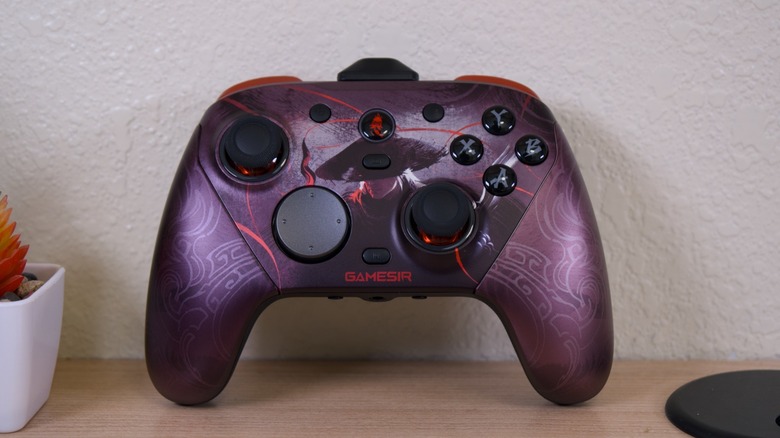
GameSir seemingly wants to bring its gaming controllers to the next level of accuracy. The company has launched an 8K version of the GameSir G7 Pro, which comes in at $89.99 with a variety of colors and designs — including the "Phantom Blade Zero" Edition version that I'm reviewing.
The controller is mostly designed to be a PC gaming controller, but it can also work on the Nintendo Switch and Switch 2, though not on the Xbox. The appeal of it is pretty simple: The headline 8K figure is the main draw, and the pad keeps rumble at a price that's easy to justify. But 8K polling brings compromises in battery life, the controller loses the Xbox compatibility found on its cheaper sibling, and its best features depend on GameSir's software.
So, at this price, is the G7 Pro 8K worth buying? Or should you skip it and go for something else? Does 8K polling even really matter? I've been using the GameSir G7 Pro 8K to find out.
Design
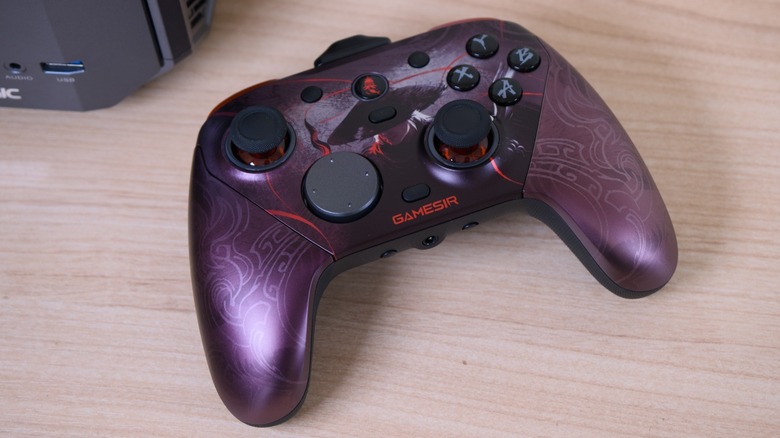
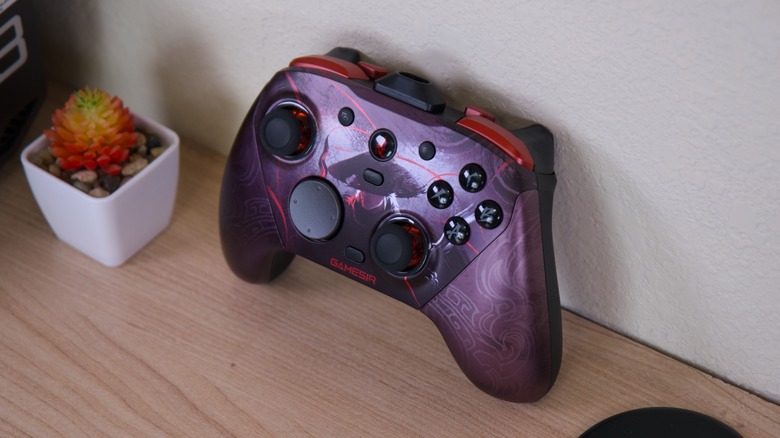
GameSir builds the G7 Pro 8K PC on the same basic chassis as the G7 Pro Tri-Mode, with dimensions of 152x103x58mm. It weighs around 270g, which isn't super lightweight, but not overly hefty either. It's perfectly comfortable to hold for longer gaming sessions, weight-wise. The overall look of it is quite nice. It has a relatively premium design, and while there is some cheaper plastic used in some parts of the construction (like the switch on the back), it didn't feel overly cheap as a whole. In fact, as a whole, it felt premium and well-built.
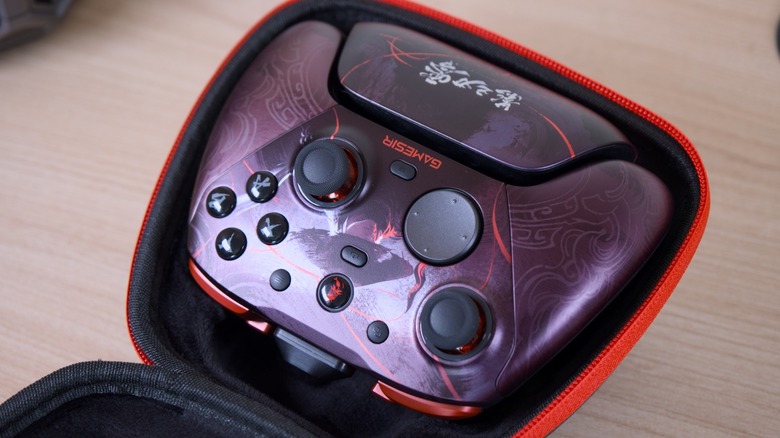
The "Phantom Blade Zero" Edition in particular looks cool. It's not overly bright, but the red and bronze color scheme looks great. I haven't played the game, so I don't know much about it, but from an aesthetic point of view, it looks cool. Its faceplate has an image of the main character "Soul," the grips carry glowing blade-shaped patterns with red details, and the home button swaps GameSir's logo for the game's checkpoint bell. Even the charging dock is printed to match. If you have no attachment to the game, the standard black or white versions offer the same hardware with a more subtle look.
In the box, you'll get a fair bit: There's the controller and dock, along with a receiver, USB-C cable, and spare D-pads. This edition adds a hard case, which looks and feels high-end.
Comfort and controls
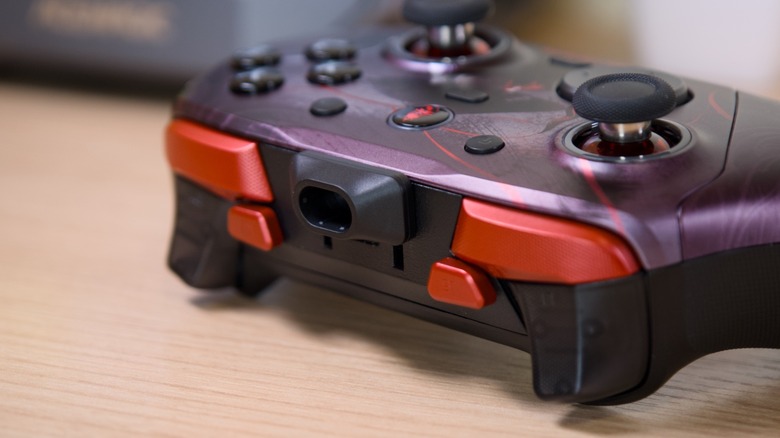
The controller doesn't just look premium — it also feels comfortable to hold. It doesn't reinvent the wheel in terms of shape, of course, but there are plenty of additional controls and buttons that could impact overall comfort. Thankfully, they don't: They're all relatively easy to reach, and while you will have to get used to them if you're used to more traditional controllers — once you do, they could help your gameplay. We'll get into those a little more later.
The angled grips give my fingers plenty of room behind the controller, and the back buttons sit flush and in easy reach. I found them easy to press despite how recessed they were. The handle shape reminds me of the Switch Pro Controller, which makes the asymmetrical stick layout easy to get used to. The ABXY buttons have a nice click, too. I didn't have a strong opinion about using the textured versus non-textured grips, but some might. It does change the feel a little, but I never found the non-textured grips to be too slippery or impact my gaming much.
The pad has three connection options: The 2.4GHz receiver and wired USB-C both support polling rates up to 8,000Hz, while Bluetooth offers broader device compatibility. Standard mode runs at 1,000Hz. In my testing, Bluetooth was stable enough, though that connection isn't the reason to buy a controller built around 8K polling. The controller is compatible with PC, Switch, and Android devices. There's no Xbox support, unfortunately, so if you're looking for a controller you can use with an Xbox, you'll need to buy a different model/brand. The $79.99 G7 Pro Tri-Mode, for example, does support Xbox over a wired connection, though you won't get the 8K polling rate.
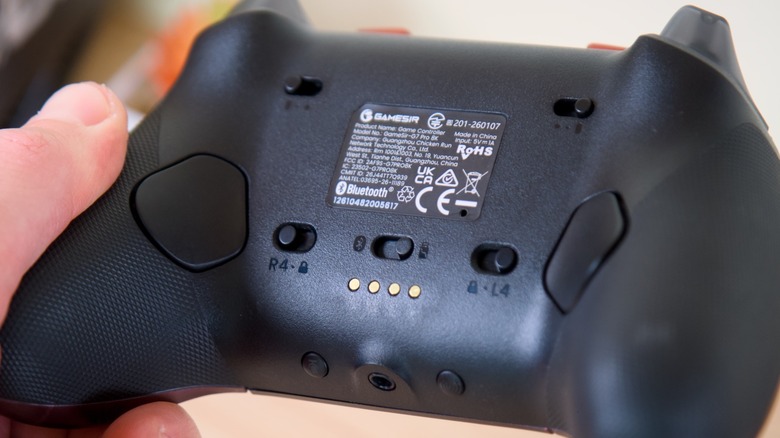
Beyond the sticks, the controls are where this pad feels most different from a standard gamepad. On top of the typical gamepad controls, you'll also get two rear paddles, two small buttons on top near the bumpers, a hardware lock switch on the back that disables the paddles, and a toggle on the back for each trigger that switches between analog travel and a short microswitch click. The extra inputs take some adjusting. The two rear paddles are easy to find, but the two top buttons are positioned close to the bumpers and are easy to forget about. They only became useful once I'd remapped them to something I actually needed.
The hardware lock on the back is the part I liked most, since it lets me turn the rear paddles off when I don't want them. Each trigger also has a toggle on the back that switches between a longer analog pull and a short, clicky microswitch press. I found the microswitch setting better for shooters, while the analog setting suits racing games.
Performance and battery
GameSir advertises a 0.25ms wired response time and up to 8,000Hz polling over wired and wireless connections. I wasn't quite equipped to test that. In practice, the difference over 1,000Hz is likely to be subtle outside competitive play. Reaching this number at this price is a real achievement on paper. I just wouldn't claim my hands can actually detect it while in use.
The Hall Effect triggers, along with their toggle to switch to short microswitch actuation, felt great overall, and made a difference in plenty of scenarios. The optical microswitch face buttons register presses with light, while the mechanical microswitch D-pad uses clicky switches beneath its swappable tops. Frankly, these controls are the better reason to consider the pad if 8K polling does little for you.
There are four remappable inputs in total, split between two rear paddles and two additional top buttons. GameSir Connect adds repeating turbo inputs, and macros for recorded input sequences. Four remappable inputs is a fairly modest count for this price. GameSir's own wired-only Tarantula 8K PC goes further with nine, for example. A hardware lock can disable the rear paddles to prevent accidental presses. Elsewhere, six-axis gyro aiming lets you aim by tilting the controller, an RGB ring surrounds the home button, and dual asymmetric grip motors provide three rumble strength levels.
On paper, the polling figure leaves most competitors behind. Valve's Steam Controller tops out at 250Hz, while the $149.99 8BitDo Ultimate 3E and $59.99 EasySMX D10 offer TMR-style input, but reach only around 1,000Hz on PC. Again, though, the vast majority of gamers probably won't notice the difference.
The 1,200mAh battery lasts roughly 10 hours at 1,000Hz, which is perfectly fine, but not great. It'll last even less in 8K mode. It's still unlikely to run out of juice while you're gaming (unless you happen to play all day), but the fact that it could run out while you're gaming isn't great. Thankfully, the docking station helps mitigate that risk. If you remember to keep the controller on its dock, you won't have to worry much about charging. I quite like the docking station: It actually houses a USB port for the receiver, so you don't have to connect the receiver to your PC separately — just plug the dock into your PC, and it'll handle both charging and connectivity.
Software
GameSir Connect for Windows is available through the Microsoft Store, and it also handles firmware updates. For headline setup features like 8K polling, remapping, turbo and macros, you'll need GameSir's software.
GameSir's app is fine, but not something I would want to spend all that much time in. Thankfully, it was mostly easy to remap controls in the app. If you're like me, you might make some adjustments when you set up the controller, and then largely ignore the app beyond that. Again, the app is required to be running for things like using the 8K polling rate, so you'll at least need to keep it active.
Conclusions
If you're a PC player who wants 8K polling for under $100, and you can live without Xbox support, plug-and-play setup without the app (8K polling itself requires GameSir Connect), the G7 Pro 8K PC makes the most sense.
Its second-generation sticks, dual-mode triggers, and retained rumble are stronger reasons to consider it than the polling figure alone. If those controls hold up in long sessions, the pad becomes a credible option despite offering only four remappable inputs, and the controller depending heavily on its software.
If 8K feels invisible and GameSir Connect proves cumbersome, the cheaper alternatives might be better. The $79.99 G7 Pro Tri-Mode has wired Xbox support, while the $59.99 EasySMX D10 covers the basics at 1,000Hz for a lot less. Still, Razer's $199.99 Wolverine V3 Pro 8K PC offers more remappable buttons and a much longer rated battery, so you'll have to decide whether those advantages are worth another $100.