

Do Smart TVs Come With A Built-In Antenna?
We may receive a commission on purchases made from links.
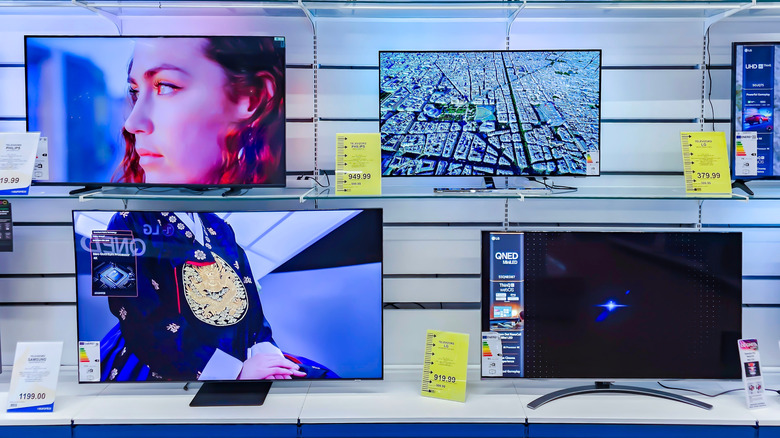
Smart TVs are chock-full of features that enhance your viewing experience and allow you to enjoy content without needing traditional TV delivery methods, such as over-the-air broadcasts. With everything from entertainment to sports and news available via streaming, you can watch your favorite content without ever needing to plug in an antenna. However, if you are someone who prefers to get your TV channels the old-fashioned way, and not be so dependent on the internet, it's normal to wonder how you can do so with a smart TV. Namely, whether or not there is a built-in antenna.
Unfortunately, smart TVs don't have built-in antennas for broadcast TV. The antennas it may have are to facilitate connectivity protocols, such as Wi-Fi. Moreover, the free live TV marketing that often accompanies these models is about accessing content over the internet through an included app, such as LG Channels, Samsung TV Plus, and Google TV Freeplay with its more than 150 channels. So why have the antennas which were once found in older analog TVs, disappeared, and how can you access local broadcasts without internet on your smart TV? Let's find out.
Why smart TVs don't have built-in antennas
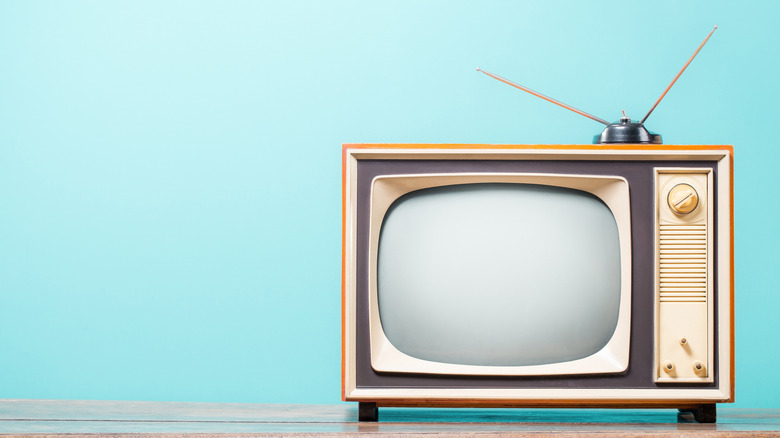
There was a time when TVs came with antennas. Most portable and smaller CRT (Cathode Ray Tube) TVs featured V-shaped dipole or single, retractable monopole antennas, which were used to receive VHF (Very High Frequency) channels. The analog broadcast signal was quite forgiving and easy to pick up in metropolitan areas. However, as TVs became thinner, it became tricky to include telescopic antennas without compromising on the aesthetics or picture quality.
TV broadcasts also moved from analog to digital signals in the late 2000s, and it became even more difficult to offer built-in antennas because digital broadcasts require a stronger and clearer signal for good picture quality. With these troubles, reduced number of over-the-air broadcasts, and easy streaming content availability via the internet, TV manufacturers effectively gave up on including built-in antennas in their smart TVs.
How to get local broadcasts on smart TVs without internet
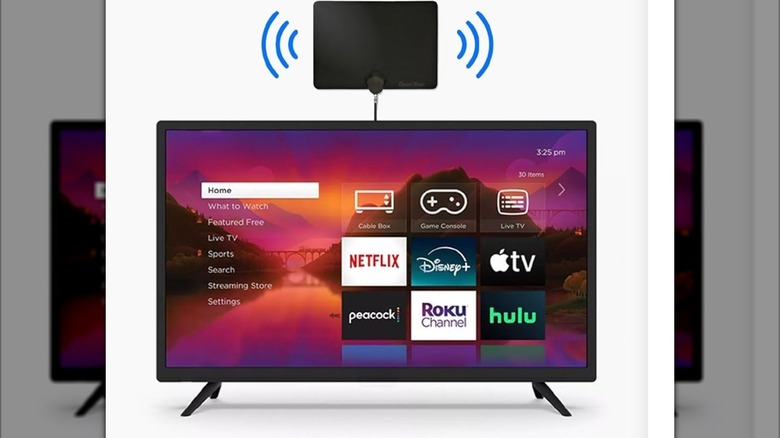
Although you don't get a built-in antenna, smart TVs do have integrated tuners and the related processing software, which offer access to local TV broadcasts by connecting an external antenna. There are plenty of excellent indoor TV antennas, such as the Channel Master FLATenna, which you can connect to your smart TV, use to scan for available channels, and start watching.
Keep in mind, while an indoor antenna can do the trick in metropolitan areas where TV towers are within 50 miles, you may need an outdoor antenna if you live in a area with towers that are further apart. Smart TVs can have two types of tuners: ATSC 1.0 or ATSC 3.0. ATSC stands for the Advanced Television Systems Committee, which defines the standards for digital TV broadcasting in the US. ATSC 1.0 is the older standard and is limited to 1080i broadcasts, a simple programming guide, and Dolby Digital 5.1 surround sound.
ATSC 3.0, or NextGen TV, is the newest standard that supports up to 4K HDR — which means High Dynamic Range — Dolby Atmos, and more. It has many interactive aspects as well, but those require internet access. Whether you can watch ATSC 1.0 or 3.0 broadcasts depends both on your TV and your location, as ATSC 3.0 broadcasts are limited to specific regions in the US right now, whereas ATSC 1.0 is more prevalent. And be aware that not every manufacturer includes an ATSC 3.0 tuner in their TVs.