

Think Twice Before Sleeping With Headphones On All Night - Here's Why
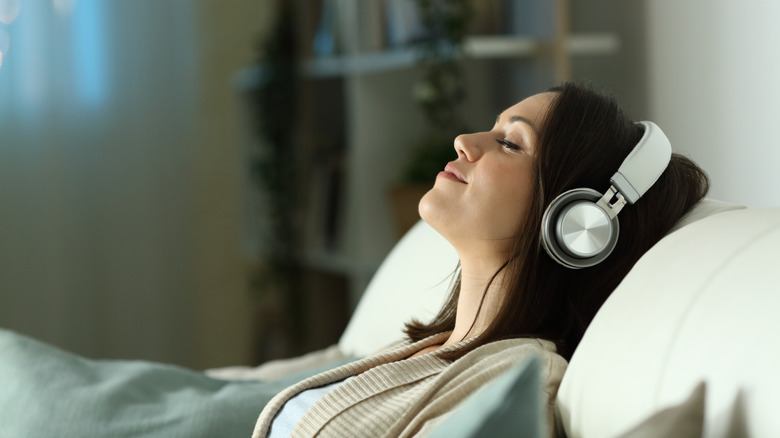
Some people may enjoy sleeping with headphones or earbuds all night and feel that it provides a better night's rest — listening to calming music or a soft-spoken podcast may help to lull one to sleep. However, that sleep may come at a cost. There are risks to leaving items on, or inside, your ears all night long. A multitude of problems can arise that could cause short or long-term damage to your ear.
Due to these concerns, you may want to ditch the headphones and opt for a new strategy to help you sleep, or at least find safer ways to wear your headphones. While you are working on improving your sleep habits, it's also not a good idea to sleep with the TV on all night. However, there are plenty of other strategies that can help you get just as good of a rest as wearing headphones might.
The dangers of sleeping with headphones on all night
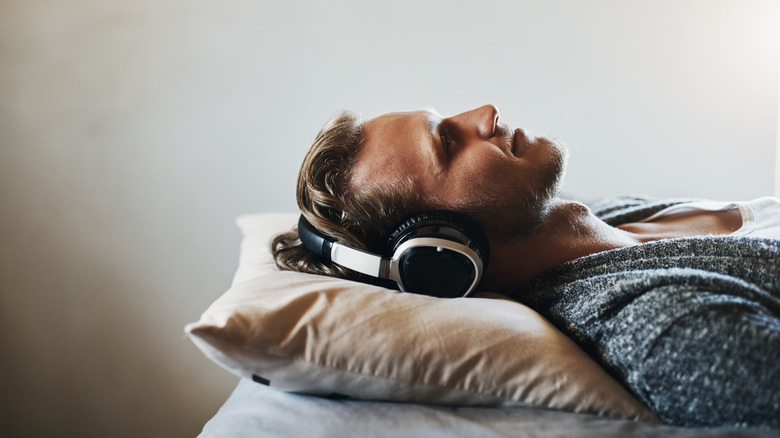
Though some people with a genetic mutation can thrive on only four hours of sleep, most of us need a full night's rest. Some may prefer to listen to music all night, as certain types of music can help you relax and fall asleep. Having that ongoing sound is also helpful if you live in a noisy environment.
However, wearing headphones while you sleep can produce less-than-desirable results. Your hearing is obstructed while listening to music or other audio content, meaning you may not hear a fire alarm, or shouting, in the event of an emergency. If you wear wired headphones, there is the danger of getting the cord wrapped around your throat. Listening to your music too loudly can cause hearing impairment over time, as well.
Necrosis can happen when your headphones aren't the proper fit, or if you are sleeping with them pushed too tight against you. The resulting obstruction in blood flow will cause skin cells to die and can cause lesions and dead-looking tissue. When you wear headphones, you can also trap moisture inside your ear which can cause an infection. This can result in ear pain, puss, and hearing problems. If your headphones or earbuds block the flow of wax out of your ear, it can cause it to build up inside the canal and become compacted. In that case, a physician will have to remove it.
Alternatives to sleeping with your headphones on all night
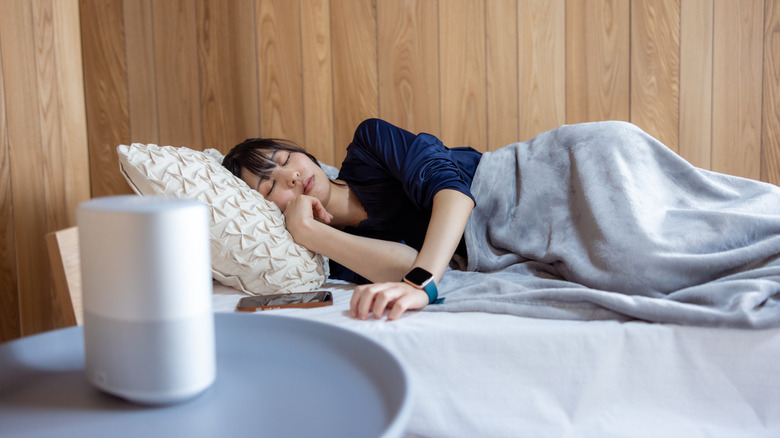
An external speaker may provide equal benefits to your sleep in terms of soothing music and blocking out unwanted noise. It also doesn't carry the same dangers that wearing headphones to bed does. Just be sure the volume isn't so loud that it blocks out sounds you may want to be aware of, in cases of emergency.
Sleep experts have plenty of advice around ways to get a better night's sleep – if that is the reason you turn to headphones. Keeping yourself healthy through proper diet, exercise, and a consistent sleep routine goes a long way toward improving sleep quality. Meditation practices before bed can help calm you down, in a similar fashion to how soothing music might. You can even listen to that music while you meditate, preparing yourself for bed.
Set your surroundings up for a successful night of sleep. Keep things dark the temperature cooler. Avoid ingesting caffeine late in the day. If possible, try not to sleep with your pet in the bed — especially if they are particularly rambunctious at night. Stressing about your sleep can make it more difficult to achieve quality rest. Try not to overthink your sleeping patterns, and let sleep come naturally to you.