

What Would Happen To Your Body On Each Planet In The Solar System
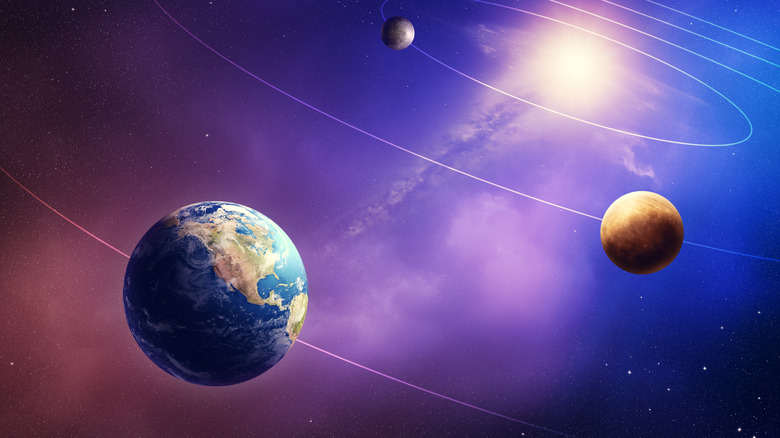
Earth has the perfect combination of a livable atmosphere and a protective magnetic field that prevents the Sun's harmful radiation and radioactive solar winds from damaging us, allowing us to live on this planet. It's rare, to say the least, for a planet to have these ideal circumstances that provide a habitable surface, even if we do know how most life on Earth will end in a billion years. The other seven planets in our Solar System are not so lucky. While not always conducive to life, each is distinct and has notable features that make it unique. Given how different they are, you might be wondering what it would be like if a human body were to visit these other planets.
We're going to explore what would happen to your body if you were on the surface of any other planet in our Solar System. For some, you might not even reach the surface, given how dangerous the atmosphere is, while for others, the gas or liquid surface won't even support you. Many of these places are uninhabitable, and you'd need specialized equipment (much of which does not yet exist) to walk around and survive. We'll be breaking down what happens to your body when you're on a different planet, and what complications you'd encounter on each one.
Mercury
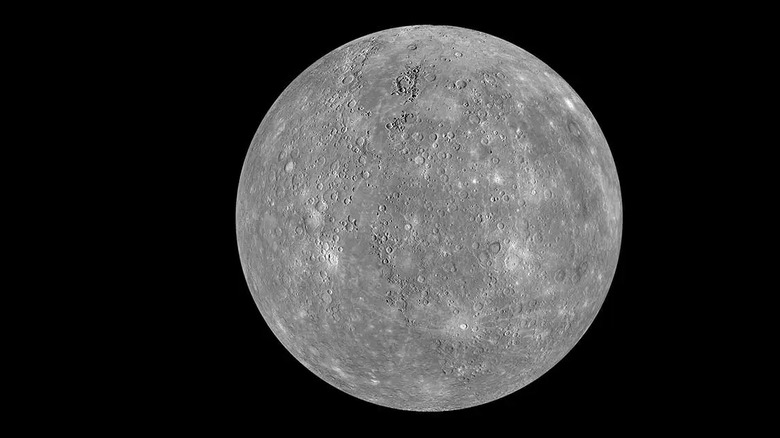
The closest planet to the Sun is Mercury, and as you might expect, it would be an incredibly hot place to visit. If you were to land safely on the planet during the daytime, the intense heat of the surface would melt your skin off. What keeps Earth safe is the layer of gases that surrounds our planet, known as the atmosphere. It stays in place due to the planet's gravity. Mercury doesn't have an atmosphere; It has a fragile exosphere instead. Because it's so thin, the intense heat and radiation the Sun naturally emits can reach the planet without restriction, creating incredibly high temperatures. During the day, you can expect it to be around 800 degrees Fahrenheit, and at night, it's -290 degrees Fahrenheit. If the intense heat didn't destroy you, the cold would. On the surface, the gravity of Mercury is similar to that of Mars, meaning you'd weigh a third of what you do on Earth.
Mercury also has a significantly weaker magnetic field than Earth's, only 1% as strong. Because of this, Mercury has frozen pools of water at its north and south poles, where it's permanently dark. If you were to land there, you'd be safe from the intense heat. However, then you'd always be dealing with the frigid temperatures of the planet. You're either going to have a frozen or burned body, but that won't matter to you, because the lack of atmosphere would have suffocated you to death in short order.
Venus
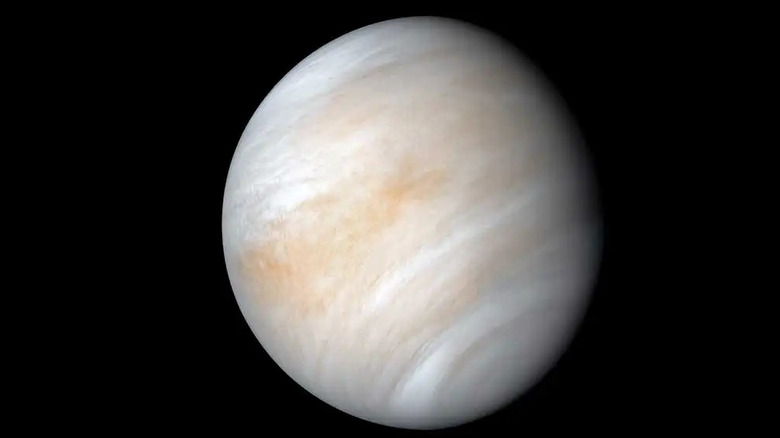
The second planet closest to the Sun is Venus. It is the complete opposite of many aspects of Earth, even though the two are the same size. It has a thick atmosphere, 93% heavier than Earth's, and it holds in greenhouse gases such as carbon dioxide. These gases mix with the ultraviolet light from the Sun, causing incredible heat, making it the hottest planet in our Solar System. These temperatures are hot enough to melt lead, so if you were to land on the surface, there would be nothing left of you — and probably not much of your ship, either. These dangerous greenhouse gases on Venus foreshadow why we should all be utterly terrified about climate change.
Say you were to take heat out of the equation. If you were to land on the planet, the heavy carbon dioxide would cause you to suffocate. On top of not being able to breathe, the heavy atmosphere above you would crush your body. When you're on the surface, the pressure is 1,350 pounds per square inch (psi), whereas the pressure on Earth at sea level is 15 psi. You'd need a specialized suit to protect yourself against the crushing pressure, similar to the ones worn on deep-sea missions on Earth. You'd also need the suit to protect against the toxic atmosphere.
Mars
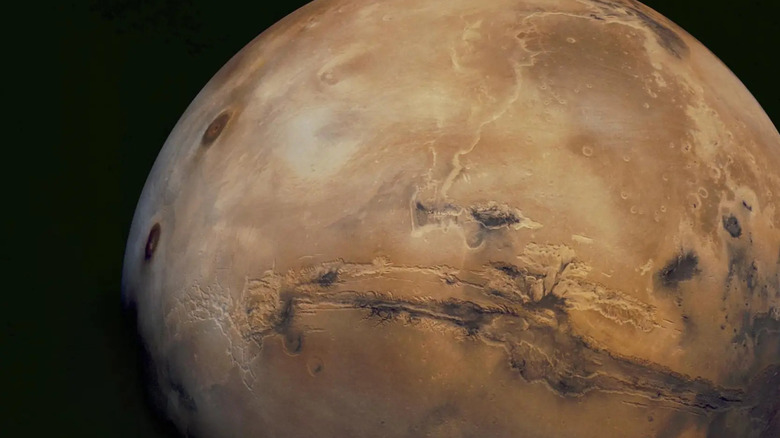
The fourth planet furthest from the Sun is Mars, and the likely destination for humanity's first interplanetary step. With this new engine that could get us to Mars in 30 days, the day of interplanetary settlement may be fast approaching. Aside from being close to Earth, the hopes behind Mars' colonization efforts center on the idea that, unlike Venus or Mercury, Mars could be habitable for humans if they were to settle there. There are a handful of issues we'd have to get around, though gravity and pressure aren't among them. You'd weigh only a third of your actual weight on Mars compared to Earth, meaning it'd be much easier to carry things and you could jump great distances.
However, Mars has a thin atmosphere, making it difficult for the Sun's heat to stay locked around the planet. You can expect high temperatures approaching 70 degrees Fahrenheit in the middle of the day, with an enormous swing to -225 degrees Fahrenheit at night. You'd need to protect yourself from the cold more than anything. On top of this, there's very little oxygen, with an atmosphere made primarily of carbon dioxide, nitrogen, and argon gases. The presence of carbon dioxide means settlers could create oxygen, but surviving out there means you'd have to wear a special suit that could supply you with it.
While you might be surviving on the surface with the proper equipment and gear, the weather can also cause problems. The winds on Mars can reach 60 mph, creating massive dust storms. These storms are not too intense, given the lower gravity, but they could cause other issues, and you might have trouble seeing if you were stuck in one. Your primary concern on Mars is breathable air and a habitat.
Jupiter
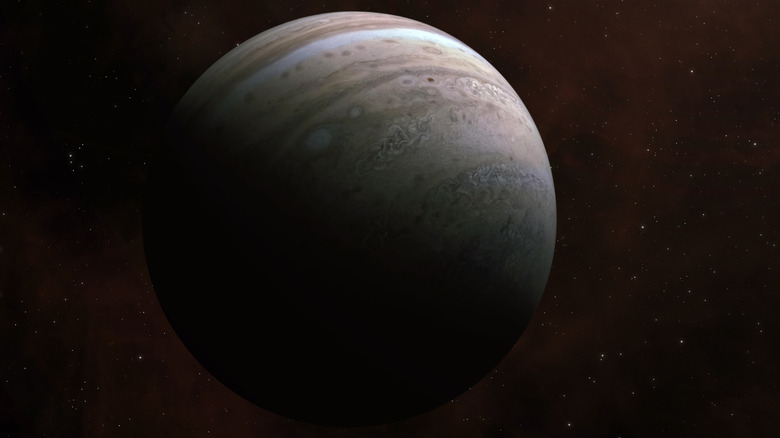
We pivot much further out in our Solar System to Jupiter, a gas giant and the fifth planet from the Sun. Jupiter is the largest planet in our solar system, and scientists are still developing theories about its age. The atmosphere there on the surface is primarily hydrogen and helium. These would make it exceptionally difficult to breathe, and your body wouldn't last long if it could only last on these resources. If we were to remove these factors, the next problem your body would face is radiation poisoning. Jupiter's magnetosphere traps particles from the Sun's solar wind. As such, you'd be exposed to a deadly amount of radiation within a few hours, and you wouldn't last long.
If a human body had a special suit to endure all of it, reaching the surface of Jupiter to stand on in the first place would be tricky. The planet is a gas giant, similar to our Sun in that it is composed of hydrogen and helium. The mean surface temperature of Jupiter is -166 degrees Fahrenheit. Should you pass the gas surface and descend toward the planet's core, the pressure and temperature increase. Some scientists believe the temperatures could be as high as 43,000 degrees Fahrenheit near the core.
Saturn
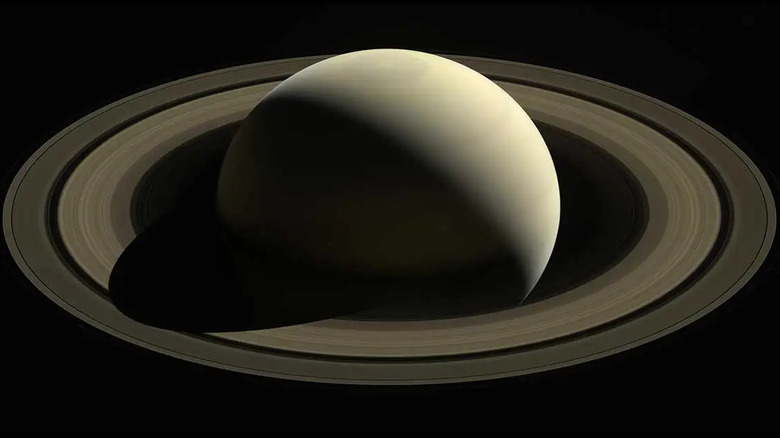
Saturn is the sixth planet in our Solar System, and it's another gas giant, like Jupiter and the Sun. You'll find it's made up of hydrogen and helium gases, meaning there's no surface on this planet. When you attempt to stand on Saturn, you'd fall through the many clouds, choking on the hydrogen and helium along the way. If you were fine without having to breathe on the planet, the next issue you'd have is with Saturn's pressure. The pressure strength increases dramatically as you drop through these clouds, closer to the core. It's strong enough to turn gases into liquids, which is more than enough to crush your body and likely any equipment you were using to protect yourself.
Before you could attempt to reach the surface, there is the issue of the heavy winds in Saturn's atmosphere. The wind speed can reach over 1,100 miles per hour. The hazards on Saturn make it incompatible with human life, even if that human solved all the problems presented by reaching the planet in the first place. You'd also have to get through Saturn's rings, which are made up of many small particles. If you were to look at Saturn in 2025, the rings are briefly vanishing, but they won't really be gone.
Uranus
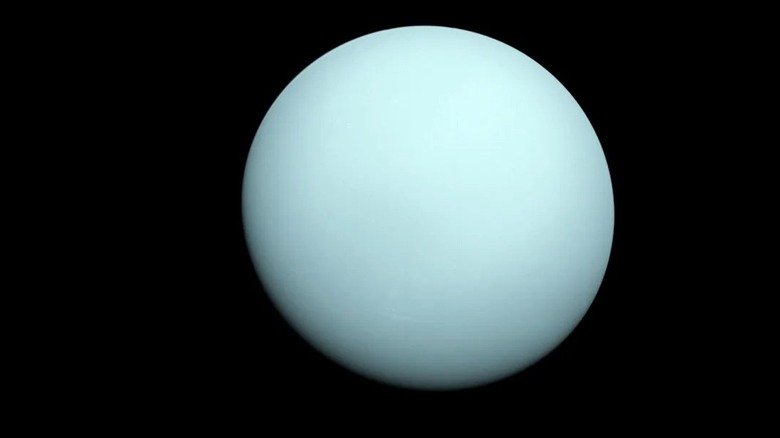
Uranus is the seventh planet in our Solar System, and given how far away it is from the Sun, it is a dangerously cold location. It's an ice giant, meaning that much of its surface is a roiling liquid, and 80% of its mass is constituted of water, methane, and ammonia. These surround a small core, where it goes from being incredibly cold to intensely hot, reaching up to 9,000 degrees Fahrenheit. Scientists are still learning about Uranus' core, as they discovered it's far hotter than they thought. Before you get there, though, you'd have to endure the mean -320 degree Fahrenheit surface temperature. A human body would freeze on its way to the core, then heat up and melt before reaching the center.
You can also expect heavy winds in Uranus' atmosphere, similar to Saturn. However, they are not as intense. These wind speeds can get up to 560 mph, merely half of what you can get in Saturn's atmosphere. These wouldn't peel your skin off a human body, but they would be about as pleasant. Pressure would be the thing that would destroy your frozen body on Uranus. While its relative surface is measured by where it has 1 bar of pressure (about that of Earth at sea level), that pressure increases dramatically as you descend — which you would, since the ice giant is mostly fluid.
Neptune
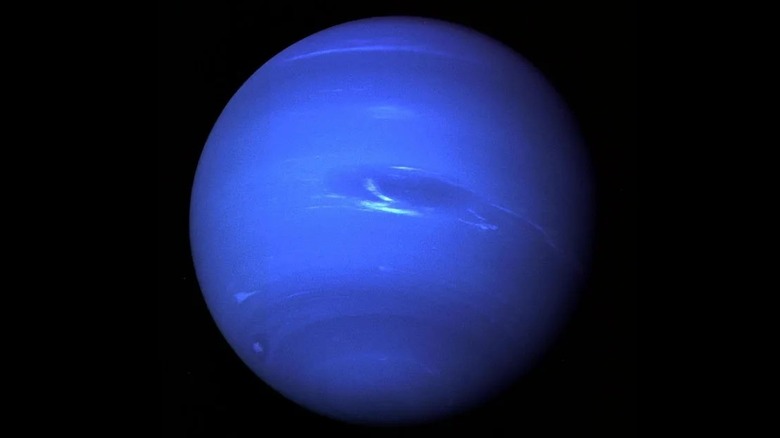
Neptune is the eighth planet in our Solar System, and it's another ice giant, like Uranus. As an ice giant, 80% of its mass consists of ammonia, methane, and water, and it has a small core. There's no surface for you to stand on. If you were to attempt to put your body close to the planet, the hydrogen, helium, and methane atmosphere would make it impossible to breathe. You'll encounter a freezing atmosphere that can get down to -346 degrees Fahrenheit. Underneath these clouds of gas, scientists theorize that there's hot water underneath Neptune's clouds. The high pressure keeps it locked in place between the core and atmosphere. If your body could pass through the gases, it might get stuck here, where it would melt or be crushed by the pressure.
If that weren't enough for your battered body, surviving the high winds on Neptune would be near impossible. It is the windiest planet in the Solar System, edging out Saturn to the tune of wind speeds up to 1,200 mph. Your body would have to endure these intense winds, kicking up frozen gases and materials in Neptune's atmosphere. You wouldn't get close to any true surface, which is the rocky core at Neptune's center.