

How Much RAM Does Your Smartphone Actually Need?
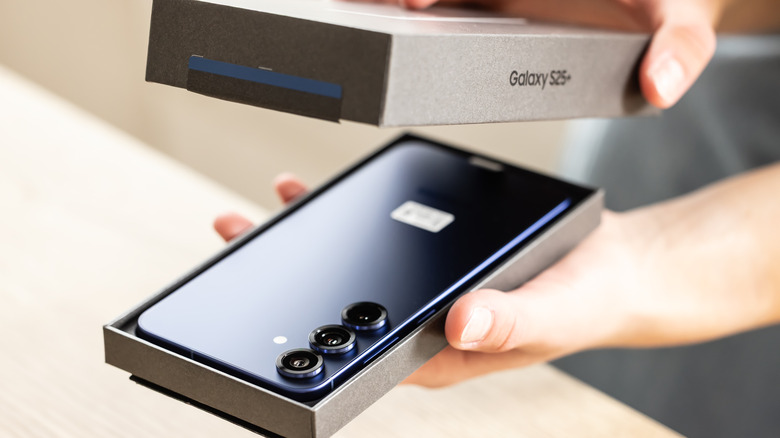
Flagship phones like the Samsung Galaxy S25 Ultra come with up to 16GB of RAM in the higher storage models, but they're also pricey. The base model of the S25 Ultra comes with 12GB of RAM, while the latest iPhone models feature 8GB in the iPhone 17 and up to 12GB of RAM in the iPhone 17 Pro. On the other end of the spectrum, budget or affordable phones often come with 4GB to 6GB of RAM. These numbers are all over the place. What's the sweet spot, and how much RAM does your smartphone actually need to run optimally?
First of all, RAM stands for random access memory and refers to the total size of the memory chips inside your device responsible for active use. Compared to flash storage, which is most similar to a hard drive, RAM is where all of the data for working or operational applications is stored. The more RAM you have, the more apps you can have open, the better you can multitask, and the smoother the experience is overall. Demanding apps and tasks take up more space; mobile gaming, for example, requires higher amounts of RAM to run properly.
A good amount of RAM for an ideal performance on modern smartphones is 8GB to 12GB, a solid middle ground between budget and flagship phones. That's because newer phones have apps and software running in the background that require large and available amounts of RAM, even before you open any additional applications. Google's Pixel 10 actually locks away some RAM for AI tools, so less will be available to you. This is why a device with anything less than 8GB of RAM will likely result in poor performance, hang-ups, or slow app loading times. It also has to do with how Android and iOS handle RAM altogether.
Understanding available system RAM versus swap space
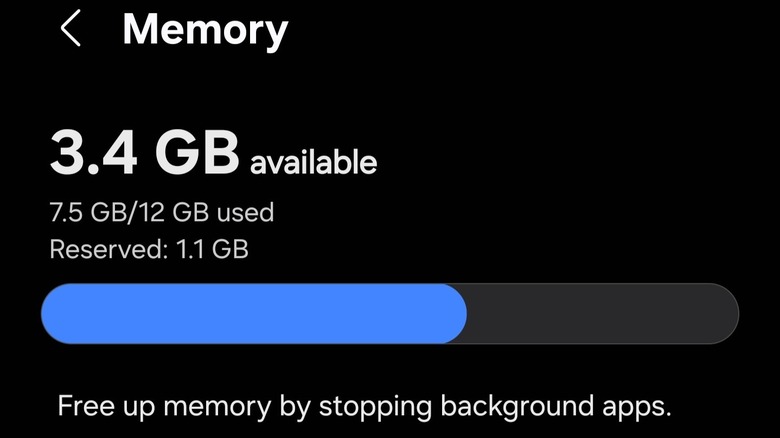
Realistically, the optimal amount of RAM depends on the operating system. With Windows, for example, 16GB of RAM is the optimal minimum for a responsive and enjoyable experience. On mobile, things are different. Mobile systems are more efficient at using RAM, iOS especially, but also take up all available RAM, whether it's being used or not. They leave nothing free and instead constantly optimize for what's available system-wide, closing or suspending apps to accommodate. The more RAM you have, the more resources will be available for apps, and that's why leaving more unused RAM results in a more responsive phone. That's crucial today with AI making its way onto mobile — iPhone 17 has a RAM upgrade for upcoming AI features, for example.
Regardless of how much RAM is available, modern devices default to a storage option called swap space (or swapping) when they run out of standard RAM. On Android, the system falls back on swap space for active app data, allocating part of the regular storage as virtual RAM. Swapping will make your phone slower because the system has to compress and decompress data, which takes more time even with fast UFS (or universal flash storage). Swap space is also finite and can run out.
With less RAM, there's a higher chance the system uses swap space more often. Once you run out of RAM and swap space, things slow down significantly. Moreover, performance is better with standard RAM over virtual RAM since less swap space needs to be used. That explains why 4GB to 6GB of RAM is not ideal. Less space, more swapping. Of course, with new RAM coming down the pipeline that's 10,000 times faster than what we have, all of this could change in the future.