

10 Best TV Soundbars For Audiophiles, According To Experts
We may receive a commission on purchases made from links.
People who think of themselves as true audiophiles tend to have a bit of an aversion towards soundbars. This skepticism doesn't necessarily stem from the fact that soundbars are bad, but because full-fledged home theater setups can often sound better. To simulate the experience of something like a 5.1 home theater system — one that actually has five speakers and a dedicated subwoofer — soundbars rely on digital signal processing. In lower-end models, this design can negatively affect sound quality aspects like tonal balance and stereo imaging.
Modern soundbars have evolved beyond that early reputation. Many contemporary models include discrete side and upward-firing speakers, dedicated subwoofers, and automatic room calibration. Most modern soundbars also feature an HDMI eARC connection, which helps support surround sound formats such as Dolby Atmos and DTS:X.
You can find some soundbars under $200 that punch well above their weight. Meanwhile, higher-end models can sometimes rival the spatial immersion of home theater systems. Options include established brands such as Sonos, Samsung, and LG, as well as specialized manufacturers like Nakamichi. This article covers the best soundbars for audiophiles across a variety of budgets and only includes models with strong feedback from expert testing sources like RTings, backed by real-world experience and knowledge from the writers.
Samsung HW-Q990F
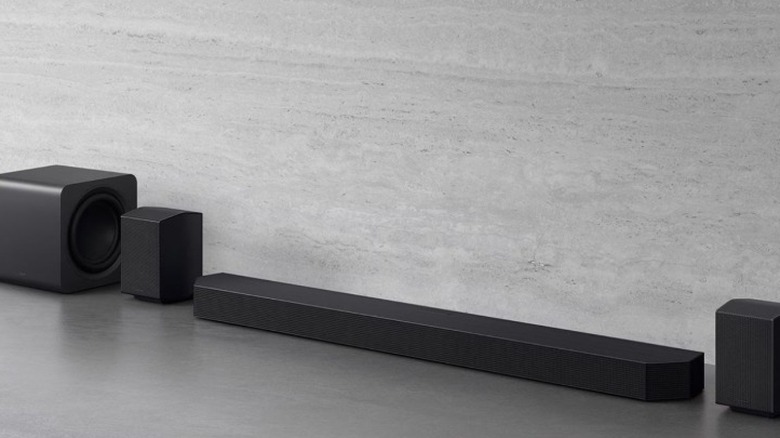
The Samsung HW-Q990F is a soundbar system that consists of the soundbar itself, two wireless rear satellite speakers, and a subwoofer. These components work together to create directional height and surround effects using both discrete drivers and up-firing speakers. According to RTings, all of this translates to an 11.1.4 channel configuration that enables a phenomenal Dolby Atmos experience.
Unlike some similarly priced premium soundbars, the Samsung HW-Q990F also includes two HDMI 2.1 passthrough ports that enable full-bandwidth passthrough for 4K at 120Hz directly from a gaming console or media player. Since you no longer need to connect those devices to the TV, the ports free up any additional TV HDMI 2.1 inputs for other devices. The Q990F also features 3D sound, meaning it can link with compatible speakers such as the Samsung Music Frame to expand the soundstage.
What Hi-Fi's review noted that the Q990F has superb tonal balance, delivers natural dialogue for movies and TV shows, and features a notably improved subwoofer compared to its predecessor, the Q990D. The Q990F's soundstage is immersive, spatially impressive, and highly convincing thanks to 23 drivers across all components. Movies that support Dolby Atmos have an outstanding height effect, and the bass is rich and textured. The Q990F is one of the more expensive soundbar setups available, but the exemplary sound quality and number of features help justify the premium price.
Sonos Arc Ultra

We reviewed the original Sonos Arc back in 2023 and lauded the soundbar for its excellent sound, comprehensive features, and premium design. The Arc sounds surprisingly immersive, even without a subwoofer, but we were surprised again when we reviewed its successor, the Sonos Arc Ultra. Featuring a new 9.1.4 channel configuration with a total of 14 dedicated drivers, the Arc Ultra pushes the single-bar experience even further.
Simply put, the Sonos Arc Ultra is an improvement in almost every sound quality aspect, and What Hi-Fi expressed similar sentiments in their review. Highs are crisp without becoming shrill at high volumes; mids sound fuller and more natural, and bass is clean, punchy, and more controlled. The Sonos Arc Ultra's low-end performance is the most improved aspect, and Sonos used a fancy new rectangular woofer design to achieve this feat. What Hi-Fi also highlighted how the Arc Ultra's bottom end feels more tuneful, tighter, and more textured compared to the original Arc.
The key here isn't that the Arc Ultra is an excellent soundbar; it's that the peripheral delivers all that excellent sound from a single-bar setup. The Arc Ultra's Dolby Atmos presentation is impressive, mainly thanks to the multiple front, side, and up-firing drivers. The only downsides are that the Ultra lacks HDMI passthrough ports and doesn't come with a dedicated remote. You have to control the soundbar through an app on your phone, which can have strange issues at times, according to What Hi-Fi.
Sonos Beam Gen 2

Audiophiles might be surprised to see a smaller soundbar on this list, but the Sonos Beam Gen 2 delivers impressive sound despite its small footprint. At only 25 inches wide (almost half the width of the Sonos Arc), the Beam Gen 2 is a great choice for setups with restricted space. This soundbar ditches the woven fabric finish at the front for a perforated polycarbonate grille, which makes it more durable and easier to clean than the original Beam. While the new Sonos Beam lacks dedicated up-firing or side-firing drivers, the virtualization is decent enough to make Dolby Atmos immersive.
In our review of the Sonos Beam Gen 2, we noted it has enough low-end weight to make explosions and sound effects sound much more grounded. Meanwhile, in-depth testing from RTings revealed that dialogue and vocals were well-balanced and clear, making this soundbar a great choice for listening to music or watching TV shows. The Beam Gen 2 doesn't provide the deep rumble of a dedicated subwoofer, but that is to be expected for its size.
For the highbrow audiophile who needs all the components in one package — a dedicated sub, side-firing and up-firing speakers, and HDMI 2.1 passthrough — the Beam Gen 2 might feel incomplete. But for smaller rooms, apartments, or those who prefer a clean, single-bar design without extra setup, the sound quality might surprise you. The Sonos Beam Gen 2 is one of the best compact Dolby Atmos soundbars you can buy for $500.
Samsung HW-Q800F

If you don't want to move into flagship pricing but still want a capable Dolby Atmos soundbar with a dedicated subwoofer, the Samsung HW-Q800F is a strong choice. While it's a couple of steps down from Samsung's current flagship, the Q990F, the Q800F still sports plenty of features. You get a wireless Dolby Atmos setup, the ability to link with other Samsung speakers via Q-Symphony, and a room-correcting feature that calibrates sound to your space.
RTings' review praised the Q800F for being a versatile soundbar that can handle gaming, music, and movies/TV shows. The included subwoofer adds meaningful low-end impact, and the up-firing and side-firing speakers do a great job of delivering an immersive Dolby Atmos experience. Compared to the more expensive Q990F, the Q800F lacks an HDMI 2.1 video passthrough and the satellite speakers, but the overall package is still strong for its price.
The Q800F costs around $750, which means it has numerous competitors in the mid-range market. Bose's Smart Ultra Soundbar comes close in terms of features and sound, but it lacks a dedicated sub – RTings noted that this oversight slightly impacts overall immersiveness. The fact that both soundbars are similarly priced, but Samsung's offering comes with a subwoofer, makes the Q800F a potentially more compelling choice.
Vizio 5.1 Soundbar SE
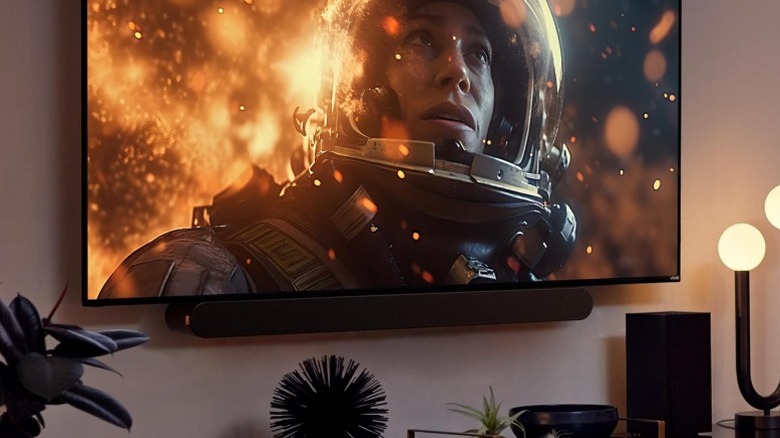
Budget soundbar systems won't always impress discerning listeners, especially when it comes to surround performance or bass accuracy. However, the Vizio 5.1 Soundbar SE is an exception to that idea. For under $200, this sound system comes with a full 5.1-channel configuration that includes two satellite speakers, a wireless subwoofer, and the soundbar itself. Wired's review of the Soundbar SE contained high praise for the surprising surround sound capabilities.
While this Vizio soundbar does support Dolby Atmos, it lacks up-firing speakers that provide a height effect. Instead, the 5.1 SE uses virtualization to simulate that experience, and according to Wired, it does a convincing job. Furthermore, the dedicated satellite speakers are a great addition and provide a clear sense of directionality. However, these speakers are not wireless, which can limit where you place them, depending on your room. You won't have this problem with the wireless subwoofer, thankfully, which provides a strong bass presence. Furthermore, this setup lacks the deep rumble found in higher-end models, but it adds enough weight to make action scenes feel more exciting.
The Vizio 5.1 Soundbar SE isn't without its compromises, but most soundbars in this price range are standalone bars with middling surround sound. The Vizio 5.1 delivers a more cinematic experience than rival options, and it's a great deal under $200.
Nakamichi Shockwafe Wireless

The Nakamichi Shockwafe Wireless is quite the dramatic shift from minimalist soundbar systems. This setup features an 11.2.6 channel configuration, driven by a total of 31 dedicated drivers across the soundbar, dual subwoofers, and dual satellite speakers. The soundbar alone spans 54 inches in width and houses front-firing, up-firing, and side-firing drivers and tweeters. As you can probably expect, this system gets very loud.
While that loudness is expected, the sound's sheer scale and physicality set the Shockwafe apart from other systems. RTings' review highlighted strong performance at high volumes with minimal compression, and the bass response also allegedly felt genuinely exciting. As the soundstage is wide and the Dolby Atmos effects feel immersive thanks to expansive surround sound, action movies work great on this system.
As raw power is the main focus here, the Nakamichi Shockwafe isn't practical for most rooms. For comparison, the Samsung Q990F is another high-end soundbar and has a more balanced overall sound than the Shockwafe. Nakamichi's sound system is more in-your-face, and the sheer depth of the bass can sometimes muddy mid-range instruments when listening to music. But despite being a brute of a system, the Shockwafe doesn't sacrifice important features. You get two HDMI 2.1 passthrough ports for 4K at 120Hz, Apple AirPlay, and plenty of DSP presets. The Nakamichi Shockwafe Wireless might not be the most accurate sound system, but it's a commanding centerpiece that delivers a high-impact, cinema-style experience at home.
LG S95AR
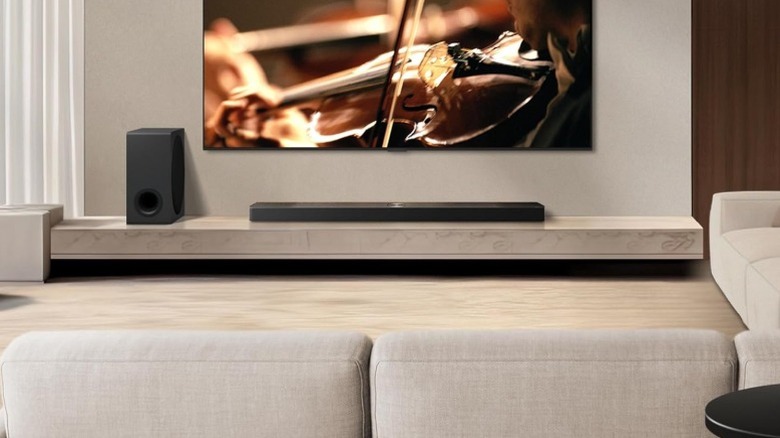
If you're using an LG OLED TV and want a high-end soundbar to go with it, the LG S95AR is a very compelling option. This soundbar system features a 9.1.5 channel configuration with a total of 17 drivers across the wireless subwoofer, main soundbar, and two satellite speakers. Comparatively, the Samsung Q990F gets a bit louder, but LG has some tricks up its sleeve that make the S95AR potentially more appealing.
Wired's review details that the LG S95AR features five height channels and immersive Dolby Atmos performance. Furthermore, the S95AR can connect to recent LG TVs, such as the LG B5, via the wireless WowCast system. There's also the Wow Orchestra feature, which syncs LG TV speakers with the soundbar to widen the soundstage.
As the S95AR includes dedicated rear satellites, a subwoofer, and a main bar loaded with front, side, and up-firing drivers, the speaker system can fill most rooms no problem. The only downside is that the S95AR has to compete with the Q990F because of its high price. While Samsung's sound is a bit more textured, for LG TV owners, the S95AR's extra features might swing user preference in the soundbar's favor.
Klipsch Flexus Core 300
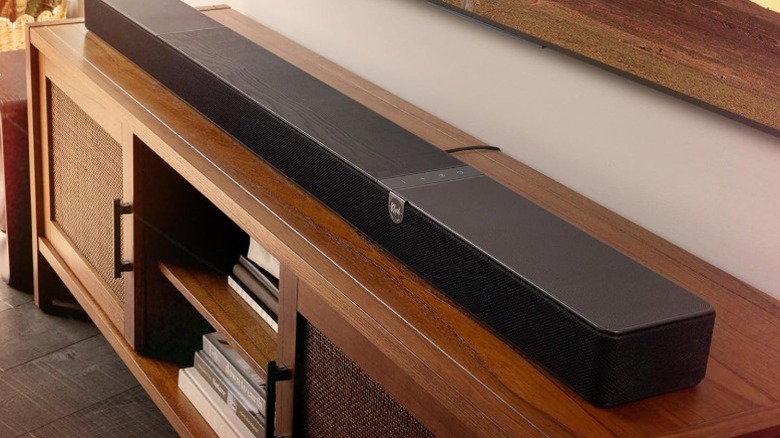
The Klipsch Flexus Core 300 is for users who want a premium standalone soundbar but don't want to sacrifice any features. This soundbar comes equipped with a 5.1.2 channel configuration and full Dolby Atmos support. The Flexus Core 300 also features HDMI 2.1 video passthrough, making it a great hub to pair with gaming consoles, media streaming devices, and Blu-ray players.
RTings' review states this bar is a fantastic centerpiece with versatile use. The soundstage is immersive, and thanks to up-firing drivers and strong bass, the Flexus Core 300 is excellent for watching movies. Klipsch also throws in sound presets, basic Dirac room correction, and a three-band EQ. This translates into more control over tuning than most standalone soundbars.
Compared to the Sonos Arc Ultra, the Flexus Core 300 provides better connectivity and audio format support, whereas the Sonos has a simpler app-based setup and comparable sound. The Sonos Arc Ultra sounds louder, but the Flexus Core 300 has a bit more power in the low-end for bass. If you want a full theater-style experience, you can add the Flexus Sub 200 wireless subwoofer to the Flexus Core 300 for a deeper rumble. However, this purchase just makes an already expensive sound system even pricier.
Samsung HW-B750F

Features such as up-firing drivers, wireless satellite speakers, and HDMI 2.1 video passthrough are great, but they often inflate the price of a soundbar. If you don't care about bells and whistles or the full Dolby Atmos experience, the Samsung HW-B750F delivers on the most important experience: great sound. RTings' review indicates that the B750F is a great choice for listening to music, purely because of its great tuning, strong bass, and immense clarity.
Because of the lack of dedicated up-firing speakers, the HW-B750F's Dolby Atmos experience is not as great as higher-end soundbars. However, the B750F does feature side-firing speakers that somewhat widen the soundstage. Stereo response is also excellent, which is something that stereo purists might appreciate more than surround sound. Furthermore, dialogue sounds clear, and the bass from the included subwoofer adds good presence without being overpowering.
You don't get any form of room correction here, and the B750F goes old school with a remote instead of a companion app. Sacrificing spatial sound features would normally sound criminal, but since you get excellent sound quality for just $500, the compromise might be worthwhile. The Samsung HW-B750F won't compete with something like a Sonos Arc Ultra, but for typical living room use, it's a surprisingly engaging experience.
TCL Q85H
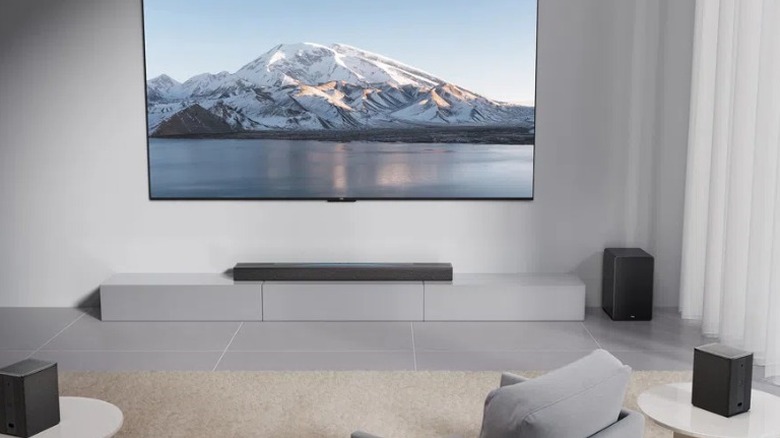
Many audiophiles might want a soundbar that delivers impressive music performance, but casually dropping over $1,000 on a peripheral doesn't make much sense for most listeners. Priced at around $700, the TCL Q85H is an excellent middle-ground option. This speaker bundle features a 7.1.4-channel setup with two satellite speakers, a subwoofer, and the main soundbar. You also get side-firing and up-firing drivers that help elevate the Dolby Atmos experience.
RTings' review claims the sound is full-bodied and balanced, and the side-firing speakers help widen the soundstage. Unlike other soundbars that focus too much on the spatial element, the Q85H maintains that aspect without sacrificing the stereo listening experience. Will higher-end soundbars such as the Samsung Q990F and LG S95AR sound better? Most likely. But they also cost at least twice as much.
The best part is that, for around $700, you're getting two dedicated satellite drivers, room correction features, and decent EQ presets. The only feature the TCL Q85H is missing is HDMI 2.1 passthrough, which could have made an already great soundbar even better.
Methodology

When recommending audio equipment to discerning listeners, the fundamentals matter more than feature lists. As such, we only included soundbars with clean stereo performance, tonal balance, vocal clarity, and composure at high volumes. These days, cinematic immersion due to the advent of Dolby Atmos also matters, so it was essential that any featured high-end soundbar had good height effects and a wide soundstage.
To determine what soundbar to include on the list, we first searched for the top products from big names such as Samsung, Klipsch, Sonos, and LG. Each model was then validated with real-world testing from long-standing audio-focused publications like RTings, What Hi-Fi, eCoustics, and Wired. This expert analysis was then combined with my own experience on Dolby Atmos and stereo listening, which helped give an idea of what to look for. BGR's own reviews for certain soundbars also helped in this regard.
For this article, premium models needed to offer advanced capabilities like HDMI 2.1 passthrough for 4K at 120Hz, proper eARC support for lossless Dolby Atmos, room calibration features, and strong satellite/subwoofer integrations. Meanwhile, affordable options were judged on value — whether they offer dedicated subwoofers, real channel separation, and a wider, convincing soundstage with or without virtualization.