

Your HDMI 2.1 Ports Might Be 'Fake' - Here's Why

Buying consumer tech has always been a challenge, but what happens when you can't even trust a product's official HDMI specs? This is a conundrum that came to light when TFT Central — a computer monitor-focused publication — reached out to the HDMI Forum regarding the Xiaomi Fast LCD Monitor 24.5-inch 240Hz version. The display in question listed HDMI 2.1 in its official specifications, even though the monitor only supports up to 1080p resolution and a 240Hz refresh rate.
Up to this point, the HDMI 2.1 standard had several assumed specs, including 4K/120Hz, 48Gbps bandwidth, variable refresh rate (VRR), and auto low latency mode (ALLM). But thanks to TFT Central's curiosity, representatives from HDMI.org provided information that makes the HDMI 2.1 label more ambiguous when seen on TVs and monitors moving forward.
According to the organization, many features typically associated with HDMI 2.1 (higher bandwidths, VRR, ALLM) are purely optional. As part of the same newsflash, HDMI.org also claimed that HDMI 2.0 no longer exists. Instead, the features of HDMI 2.0 tech are now a subset of the HDMI 2.1 standard.
It wasn't long ago that BGR reported on the upcoming Steam Machine's HDMI identity crisis, but that was a case of under-promising and over-delivering — the hardware is labeled HDMI 2.0, but actually supports 2.1 capabilities.
HDMI 2.1 isn't always HDMI 2.1
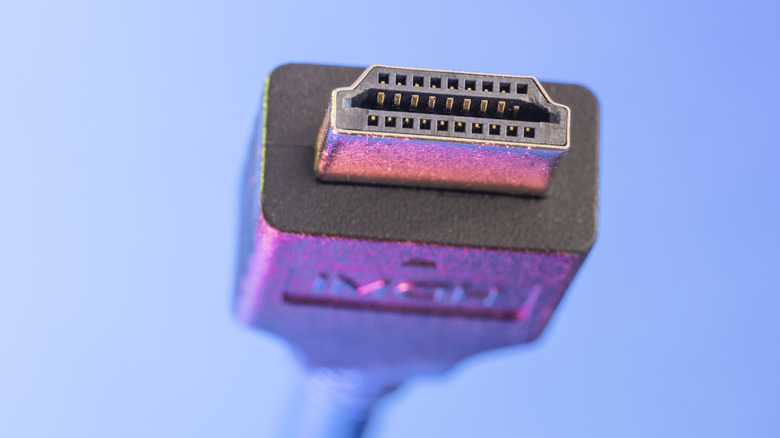
Instead of just focusing on HDMI tips and tricks to get the best picture quality, consumers will now have to read the fine print to see precisely what specs an HDMI 2.1-certified product supports. To be clear, "proper" HDMI 2.1 should support the fixed Rate Link (FRL) signaling technology, which replaced the older transition minimized differential signaling (TMDS) spec associated with HDMI 2.0 and older standards.
Without FRL support, features like 4K/120Hz, 48Gbps, VRR, and ALLM simply won't be possible, even if the manufacturer claims the HDMI inputs are all 2.1 certified. This is exactly what happened with the Xiaomi monitor mentioned above: The official product description says the display supports HDMI 2.1, when in reality, it only supports TMDS, 1920 x 1080 resolution, and a 240Hz refresh rate. Technically, at least according to TFT Central, this makes it an HDMI 2.0 monitor, not up to the HDMI 2.1 designation.
One caveat: HDMI.org also indicated that if a device claims HDMI 2.1 compliance, the manufacturer needs to state which features the device supports, ostensibly reducing consumer confusion.
Choose your HDMI port (and cable) wisely
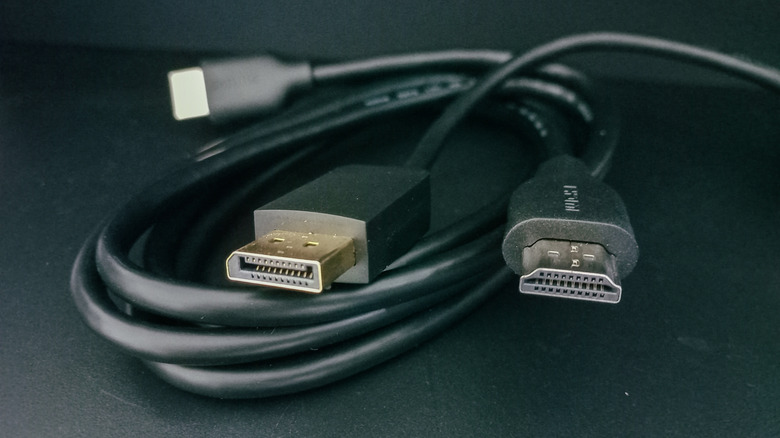
Looking ahead, will it even matter which HDMI port you use on your TV or monitor? That all depends on what you're looking to get out of your AV setup. If you want uncompressed Dolby Atmos for all compatible smart TV apps, you'll still want to stick with hardware that supports HDMI eARC, which is often a complete HDMI 2.1 connection with 4K/120Hz, 48Gbps, and other 2.1 staples.
It's also a good idea to double-check HDMI cables that are labeled as 2.1 compliant. Look for post-FRL-powered features like 4K/120Hz, 48Gbps, and VRR, and assume that if you don't see one of these features listed on the cable packaging or product page, the cable probably doesn't support them.
While most HDMI ports will still work just fine for everyday viewing, you'll want to be extra mindful of the inputs you're working with (and what specs they actually support) when connecting game consoles like the PlayStation 5 and Xbox Series X. The same goes for gaming PCs, as well as premium home theater soundbars with built-in HDMI switching.