

Aqara FP300 Presence Sensor Review: The Only Smart Home Sensor You Need
The promise of the smart home largely hinges on accurate, speedy presence detection. That's to say, our home needs to know when there are people in it and where they are, as quickly as possible, so that it can adjust things like lighting, temperature, and so on. Aqara has been at the forefront of presence detection for consumers with models like the FP2 and P2, and now, it's taking what it learned from those devices and combining them into a single device called the FP300, and it could prove to be the last smart home sensor you ever need.
The FP300 isn't just a presence sensor either. It's actually a 4-in-1 sensor that detects temperature, light, and even humidity. In other words, put one of these in each room in your home, and you could have all you need to set up great automations.
At $50, the FP300 is relatively well-priced compared to some options, but if you're building out a smart home and want sensors in all your rooms, the bill could add up. Is the Aqara FP300 worth the money? I've been testing it to find out.
Design
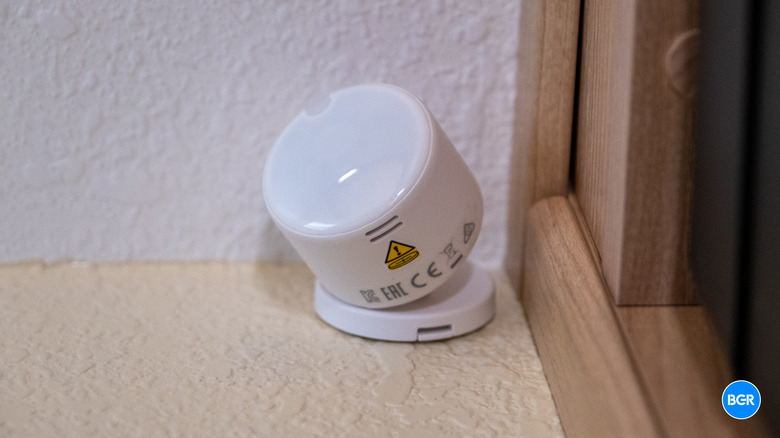
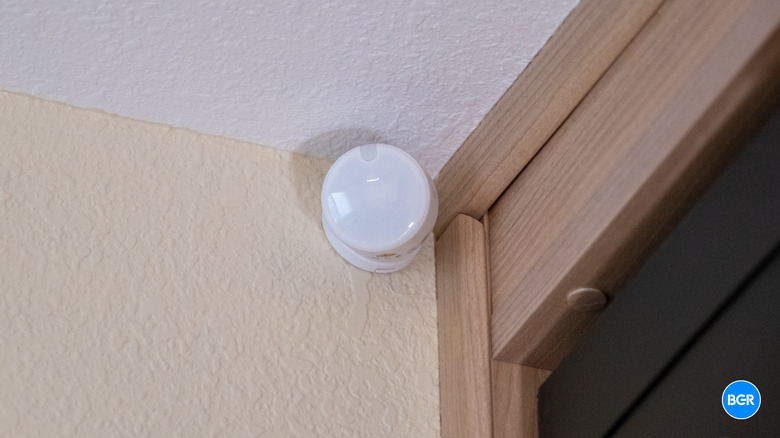
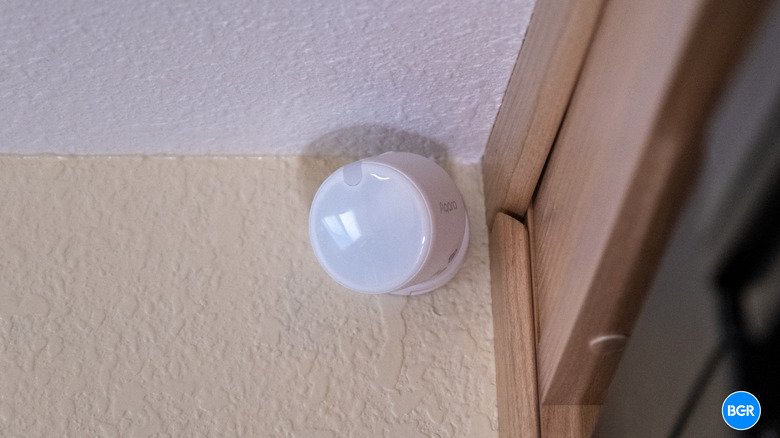
For the most part, the Aqara FP300 is well-designed and should blend into most rooms. It's compact and low-profile, and the matte finish helps it disappear into the background, which is exactly what you want from a sensor. It doesn't scream "tech," which is a good thing, and it's not as bulky as most motion sensors.
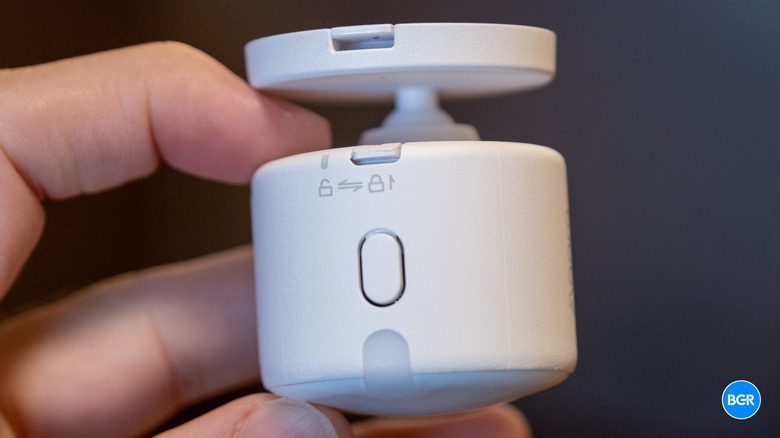
One of the most notable improvements over the FP2 is the adjustable base. The joint design gives you flexibility in positioning, which matters when you're trying to get optimal coverage in a room. Since it runs on batteries, there are no cables to deal with, which keeps things clean and means you can install it wherever you want in a room (within reason).
The sensor comes with mounting hardware for wall installation, and you'll want to use it. The device needs to be pointed towards the room — it can't accurately detect presence if it's sitting on a shelf, for example. I wish it could, as someone who tests gadgets that I don't necessarily want to screw into the walls in my home for only a few months, but for most people, mounting it in the corner of a room will be the best way to install it anyway.
Features
The FP300 uses a dual detection system that combines PIR and mmWave. This hybrid approach is designed to allow the device to detect even the smallest of movements in a room, unlike motion sensors, which are usually a bit heavy-handed. I tested the sensor in my home office, and with a motion sensor, I would need to wave my arms around like a mad man every so often to trigger detection. With the FP300, I could sit at my desk, making movements when I type and shift in my seat without worrying that my lights would turn off.
The FP300 has a 120-degree field of view and can detect up to 6 meters out, which covers most average-sized rooms — but not larger ones. The sensor kicks in immediately when you enter a space, and you can adjust the sensitivity depending on the room. That kind of flexibility makes it work in bedrooms just as well as it does in living rooms, but with a 6-meter range, you might find that you need multiple sensors in homes with an open floor plan, for example.
Beyond motion and presence, the FP300 also packs in light, temperature, and humidity sensors. That turns it into a central data hub for automations, if you're willing to get a bit nerdy with them. You could create automations that combine conditions, like only turning the lights on when occupancy has been detected and the light is below a certain level — ensuring you're not wasting energy on lights when there's enough natural light in the room. Of course, you'll need to use a service a bit more advanced than Apple Home to set these kinds of automations up.
The FP300 is designed to be smart enough to know the difference between a person and other moving figures. It uses AI-based filtering so it doesn't trigger when there's a pet or robotic vacuum in the room, and it seemed to work well with my cat. I have seen some reports note that with a large enough pet, it may still trigger, but I can't say one way or another if that's true.
The sensor isn't smart enough to know how many people are in a room though. The FP2 is able to detect how many people are present, and if that feature is important to you, the FP300 won't work for your needs. Most people probably don't need that, though — they just need their smart home to know if a person is present at all.
The battery-powered design is great for rooms where wired installation would be a pain, and the battery lasts long enough to where you might not feel like you're making a major trade-off. I don't love the look of an ugly wire running all the way down a wall. Aqara claims the FP300 has a two-year battery life when connected using Matter over Thread, or three years using Zigbee. I didn't test the sensor for two years, so I wasn't able to verify the battery claims. It runs on two CR2450 batteries, so you can easily replace them.
Aqara Home app
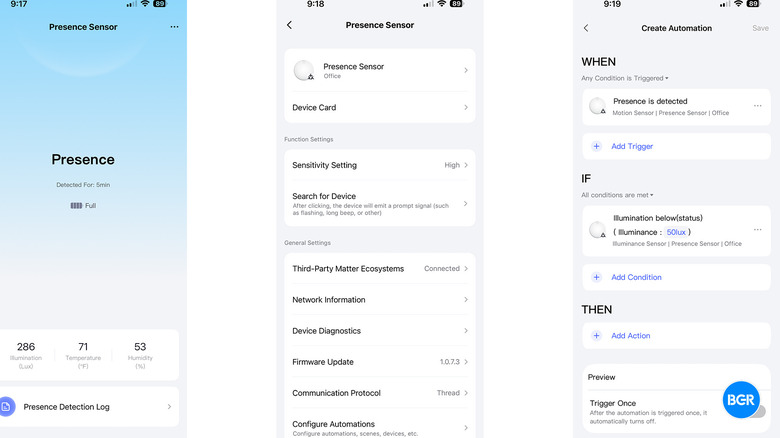
The Aqara Home app is straightforward and easy to use. Setup walks you through getting the FP300 connected to the Aqara app, but with Matter support, you can just as easily add it to other platforms, like Apple Home. Even if you're not particularly technical, you shouldn't have any trouble getting it running.
The Aqara app does allow for slightly more advanced automations than Apple Home, but you'll need all your devices in the Aqara app to actually make use of that. In the app, you can set up multiple conditions for an automation, which is handy.
If you want more control, there are advanced settings where you can tweak sensitivity, but you'll need to do this in the Aqara app or a more advanced smart home platform like Home Assistant. Another feature I appreciated was the ability to view historical data for temperature, brightness, and other metrics in graph form. It's useful for spotting patterns over time.
Smart home support
The FP300's ecosystem support is one of its biggest strengths. Matter-over-Thread compatibility means it works with basically any modern smart home platform without needing a bunch of bridges or workarounds. That said, you might want to use the Aqara Home app if you want to tweak some settings, as noted above.
You get both Zigbee and Thread connectivity, which gives you options for how to integrate it into your setup. Because it uses Matter, it talks to other Matter devices regardless of brand. That's a nice bit of future-proofing, especially as Matter adoption keeps growing.
In practical terms, the FP300 works with Apple HomeKit, Amazon Alexa, Google Home, Samsung SmartThings, and pretty much anything else you're likely to be using. The only thing to keep in mind is that it doesn't support Matter over Wi-Fi — so you'll need a smart home hub that supports either Thread or Zigbee.
Conclusions
The Aqara Presence Multi-Sensor FP300 is a solid all-in-one sensor for modern smart homes. Combining presence detection with environmental sensing gives you a lot of flexibility for automations. It's pricier than basic motion sensors, but it consolidates multiple capabilities into one device, which makes the cost easier to justify.
The battery-powered operation, broad smart home compatibility, and thoughtful design make it a strong choice for spaces where wired sensors aren't practical. If you're building out a smart home, you'll probably want to install a few of these across multiple rooms to create a consistent sensing setup that can be used in more sophisticated automations.
The competition
Compared to the Aqara FP2, the FP300 has clear advantages in certain scenarios. It works well in smaller to medium-sized rooms, and it includes environmental sensors that the P2 doesn't have.
The main difference for most users is power. The FP300 runs on batteries, while the FP2 needs wired power. That's a tradeoff between the clean, wire-free look of the FP300 and the set-it-and-forget-it nature of the FP2. The FP2 also has more advanced features like fall detection and the ability to set up customizable detection zones, and it might be more precise in some situations. I haven't found the FP2's detection zones to work all that well though, and most people will be fine with simple room-based presence detection.
Should I buy the Aqara FP300?
Yes. It's an excellent all-in-one sensor for the DIY smart home.