

Apple's Brain Drain In The Post-iPhone Era Proves It Can Handle Executive Turnover
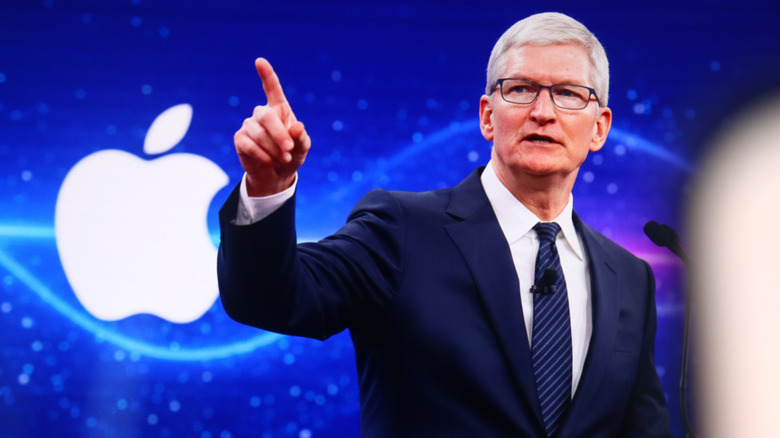
Apple today is riding a wave of unprecedented financial success, fueled in part by its strongest iPhone lineup to date and a growing services business that already generates more revenue than companies like Disney and Tesla — $102.5 billion in the most recent quarter alone. What's more, there's no indication that Apple's success is poised to slow down anytime soon. Apple CEO Tim Cook says iPhone sales during the current holiday quarter will likely set a new all-time record. And looking ahead, with the rumored foldable iPhone on the horizon, Apple's best days may still be in front of it.
But behind the scenes, Apple has been dealing with several high-profile executive and employee departures. Back in July, Apple announced that Jeff Williams would be stepping down as COO. Following that, word broke that top AI engineers and researchers were leaving the company for Meta. For instance, Ke Yang, a fast-rising AI executive at Apple who was working on the next-gen version of Siri, left for Meta in October. More recently, Meta also poached Apple design executive Alan Dye. And in the background are lingering reports that Tim Cook himself is preparing to step down later next year.
In light of the executive and employee turnover, many analysts and armchair pundits online have begun asking if Apple is losing its magic. The departures, along with rumors of Cook stepping down, have naturally sparked questions about stability within the company, not to mention Apple's ability to keep churning out and developing best-selling products in the years ahead. This speculation is understandable, but Apple is structured in a way such that it can survive any number of key executive departures. This isn't a theory, but rather something that Apple already proved a little more than a decade ago.
Apple is no stranger to losing top talent
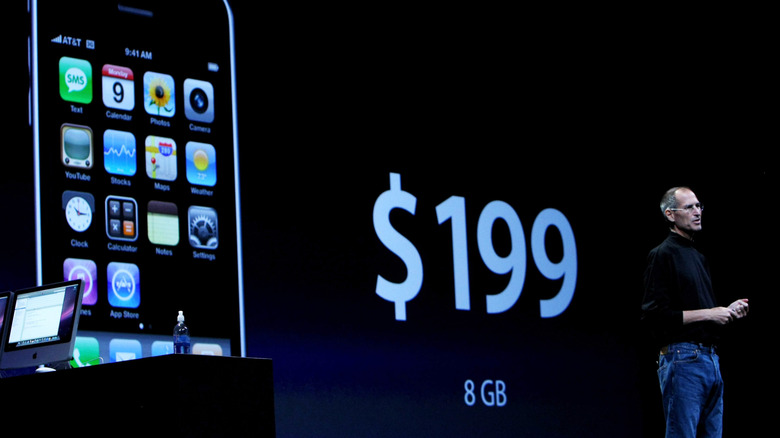
As with most things pertaining to Apple, the rampant speculation about the company being on the decline has eclipsed reality. While there's no doubt that losing top executives and employees — whether it be to retirement or to other companies — is not ideal, Apple is well situated to withstand these departures.
It's important to highlight that the current rash of departures isn't a new phenomenon. A little over a decade ago, Apple experienced a huge brain drain of top executives and engineers, many of whom were directly responsible for designing the very first iPhone. Other departures involved key employees who had a significant hand in developing advanced technologies and iconic products that, cumulatively, helped save Apple from the brink of bankruptcy while simultaneously transforming Apple into one of the most profitable companies on the planet.
Suffice it to say, if Apple was able to withstand the passing of Steve Jobs, along with dozens of employee departures more than a decade ago, there's no reason why the company won't be able to do the same this time around. If anything, if we take a stroll down memory lane and look at some of the key Apple employees who left the company from 2011-2014, it's fair to argue that those departures were, on the whole, more significant than what Apple is experiencing today.
Scott Forstall and Bertrand Serlet left Apple between 2011-2012
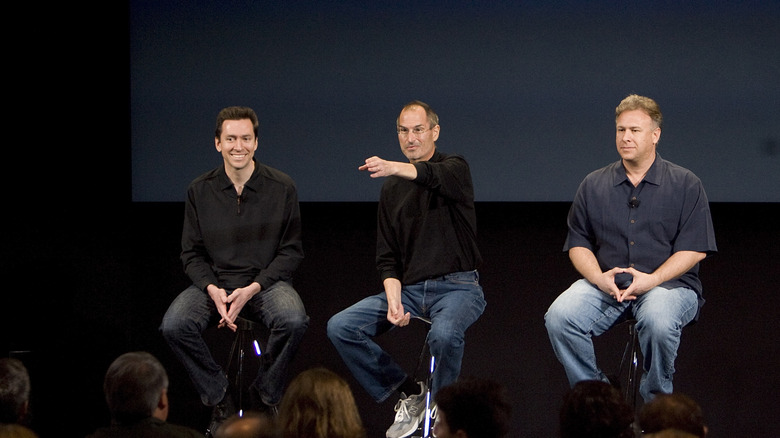
In 2011, famed Apple engineer Bertrand Serlet left the company. Serlet was Apple's Senior Vice President of Software Engineering, where he played an instrumental role in several OS X releases. Serlet was something of a legendary figure at Apple, as he previously worked at NeXT and Xerox PARC. Serlet was largely seen as irreplaceable, and his departure at the time was considered a tremendous loss. Serlet's position was subsequently filled by Craig Federighi, who has become one of the faces of the company over the past 14 years.
Another dramatic departure worth mentioning was the 2012 firing of Scott Forstall. Forstall was one of the more visible personalities at Apple at the time. A talented engineer who came over to Apple with Steve Jobs in the late '90s when Apple acquired NeXT, Forstall led iOS development on the original iPhone. There's no way to overstate Forstall's contributions to iOS and the iPhone user experience. In short, the entirety of the iOS architecture was designed by Forstall and his team. Many even viewed him as the logical CEO successor to Steve Jobs. Ultimately, the role went to Tim Cook, who let Forstall go after he refused to take ownership of the disastrous rollout of Apple Maps.
Naturally, Forstall's departure was viewed as a huge loss. Like Serlet, he was viewed as irreplaceable given his technical prowess and his core contributions to early iPhone models. In a testament to Forstall's importance, note that his singular position at Apple was subsequently filled by three people: Eddy Cue, who took over Maps; Jony Ive, who took over the iOS user experience; and Craig Federighi, who took over as the head of iOS software. Still, Forstall's departure didn't stop Apple from thriving in the years ahead.
Top iOS engineers also left during this era
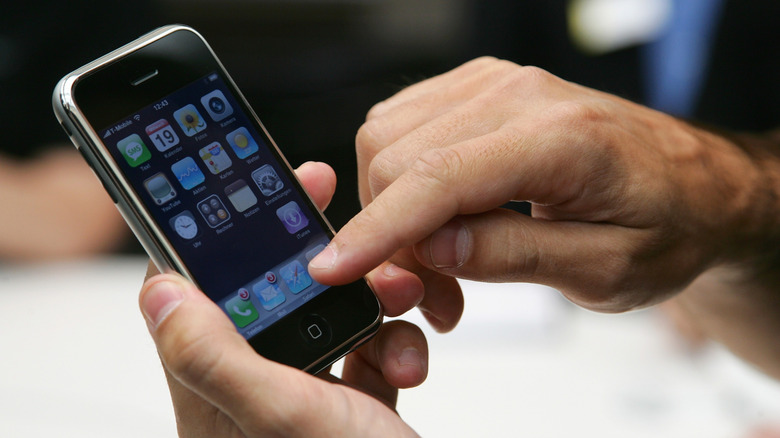
There are several other departures from that era worth mentioning, including Greg Christie, who was the VP of Human Interface Design at Apple. Christie and his team were directly responsible for some of the more iconic iPhone UI elements, including slide-to-unlock and many of the multitouch gestures that quickly became standard across the industry. Christie retired from Apple in 2014.
When Christie retired, Apple issued a statement noting that "Greg... has made vital contributions to Apple products across the board, and built a world-class Human Interface team which has worked closely with Jony for many years."
One year earlier, Apple also endured the departure of Henri Lamiraux, the company's VP of iOS engineering. Lamiraux was a 30-year Apple veteran at the time of his retirement and was an instrumental figure in the development of the iPhone. Put simply, a good deal of the engineering infrastructure that made iOS possible is attributable to Lamiraux and his team. Before that, Lamiraux played an important role in transitioning Apple to the OS X era.
Within three years, Apple lost three key members of the original iPhone design team. And yet, iPhone and iOS development soldiered on. Again, this isn't to minimize the importance of these employees, but rather to emphasize that Apple is a massive company with tens of thousands of employees. It has the ability to withstand important employee losses in a way that perhaps other companies can't.
There are several other examples of high-profile executive departures from Apple during the post-iPhone era, including Tony Fadell, who would later go on to found Nest Labs with another former Apple engineer named Matt Rogers. It's also worth mentioning the departure of Bob Mansfield, who left Apple in 2012, only to be convinced to stay on for a few more years by Tim Cook. Mansfield ultimately left the company for good in 2015. More recently, Apple executive Phil Schiller stepped down as the company's VP of marketing in 2020.
Beyond product design and development, Apple in the post-iPhone era also lost Ron Johnson, the executive who helped build Apple's retail footprint from scratch. While there are currently hundreds of Apple retail stores scattered across the globe, Apple's foray into retail was a risky move early on. Johnson's expertise, however, helped Apple's bet pay off. Johnson left Apple in 2011 to become the CEO of J.C. Penney. Apple's retail initiatives, meanwhile, didn't slow down or become less successful.
Two biggest losses: Steve Jobs and Jony Ive
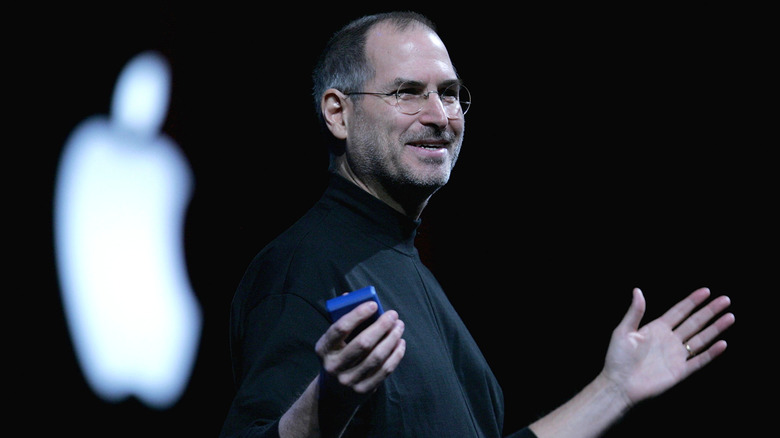
Of course, the strongest evidence that Apple can withstand executive shakeups is that the company continued to thrive even after Steve Jobs passed away. With Tim Cook at the helm, Apple's pace of innovation didn't grind to a halt. On the contrary, Apple under Cook's leadership expanded into new product categories with products like the Apple Watch and the Vision Pro. At the same time, Cook helped steward Apple's immensely profitable services business. In turn, Apple's financial success reached new heights. Today, Apple's share price is near an all-time high while the company boasts an astounding $4 trillion market cap.
Additionally, recall that Apple also didn't miss a step when legendary designer Jony Ive left in 2019. Ive was instrumental in helping Apple come back from the brink of bankruptcy when he helped spearhead the design of the Bondi Blue iMac. Subsequently, he played an instrumental part in shaping the look and feel of every Apple product, from the iMac to the iPhone. Nonetheless, Apple's design prowess hasn't seen a dramatic dip since his departure.
Often overlooked is that the excellence that defines Apple isn't solely attributable to one individual, or even one team. Rather, it's institutional. Jobs fostered a culture of innovation and attracted world-class engineers who wanted to work on game-changing products and technologies. What people often forget is that Steve Jobs had the foresight to build a company capable of surviving without him. He did this by fostering a culture of innovation and excellence, which subsequently attracted the best engineers who wanted to work on once-in-a-lifetime products. Consequently, Apple's corporate structure is designed in such a way that corporate transitions often lead to new opportunities as opposed to instability. Johny Srouji, for instance, was able to take on a more integral role within Apple after Bob Mansfield retired.
Steve Jobs set up Apple to withstand the departure of top talent
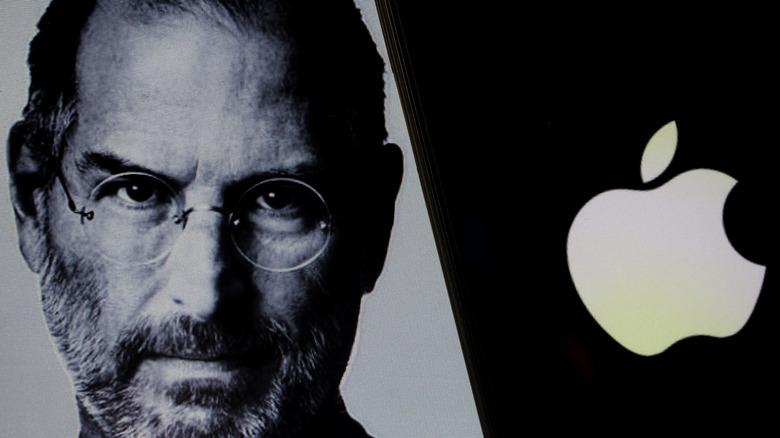
History shows that anytime Apple loses a star executive, the person who replaces them typically becomes an instrumental leader in their own right. Apple's ongoing success underscores that it's not a fragile company with fortunes dependent on any one person. Instead, its strength is rooted in a strong company culture capable of elevating new leaders even during difficult periods of transition.
In short, employee and executive departures may make good fodder for sensationalist headlines, but they ultimately have little impact on Apple's momentum and its ability to innovate. Steve Jobs set up Apple to endure not only without him, but to thrive in the absence of any number of employees or executives. Notably, this isn't a theoretical statement about the company, but something concretely put into practice. In 2008, Steve Jobs hired Joel Podolny to start up and run Apple University, a leadership program designed to impart Apple's DNA upon company directors and executives. Apple's culture isn't just picked up organically, but taught directly to important employees. Through this, Apple employees are able to further educate themselves about Apple's operating philosophy.
"With Apple University," The Los Angeles Times reported over a decade ago, "Jobs... identified tenets that he believes unleash innovation and sustain success at Apple — accountability, attention to detail, perfectionism, simplicity, secrecy. And he oversaw the creation of university-caliber courses that demonstrate how those principles translate into business strategies and operating practices."
In short, Steve Jobs took steps to ensure that Apple's culture was codified so that it could be studied, internalized, and optimized for success for decades down the line. Consequently, the current brain drain at Apple will likely do little to slow the company down, if only because we saw Apple survive a more impactful series of executive and engineering departures about a decade ago.