

What Happens To Your TV When You Leave It On All The Time
Televisions have long been a centerpiece of our entertainment lives, and with the best 4K TVs offering beautiful picture quality and excellent features, that's not changing anytime soon. Plus, with the recent Netflix purchase of Warner Bros, we're likely to see many more hours of the best TV and film centered on streaming platforms — which means your TV is going to get some serious use.
That may beg the question: What happens to your TV if you leave it on all the time? There are a lot of things to consider here. First, being clear on what "burn-in" is and how it may actually affect your OLED TV is important. Thankfully, we covered this recently, with info from experts. While the screen itself is a consideration, there are also other components to your TV that may wear out over time. Additionally, there's energy consumption to consider, especially if you've got other devices connected to your TV. It's a complex issue, but we'll dig into a few key points to help you determine how long you want to leave your TV on.
Don't wear out your screen or components
One of the chief concerns for overusing your TV is putting too much strain on the components. Like a computer or any other tech gadget, TVs are filled with circuit boards, power units, processors, and more. When these devices are used for long hours, they can run hotter, putting strain on their performance over time. In general, these power boards and central processing boards can start to wear out and need replacing.
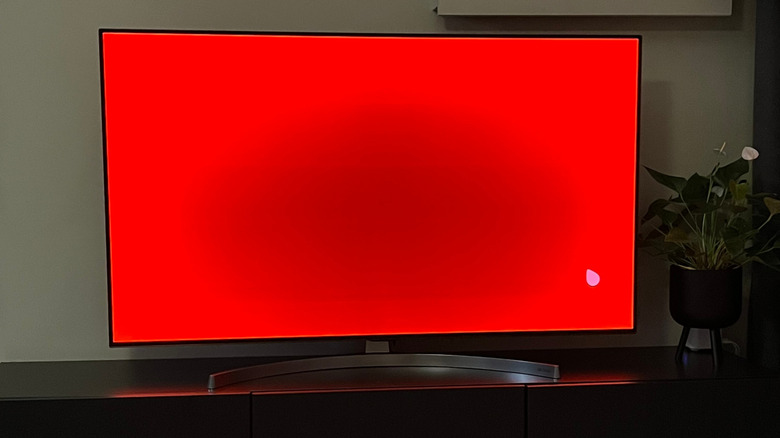
One of the most obvious fears is the screen panel itself. If you leave your TV playing around the clock, you're putting hours and hours more use on the LCD or OLED panel. OLEDs in particular can be prone to something called burn-in, where forcing certain pixels to stay on will actually cause them to wear out and leave that image burned on the screen. While modern OLEDs have technology to help prevent this, long hours of burn-in tests prove that these panels are still susceptible.
Consider the energy you're using
Beyond the lifespan of the TV components themselves, there's also energy usage to consider. After all, a TV is an electronic component, and those take energy to run. How much? The total energy consumption really varies depending on the TV you're using, but TVs tend to pull anywhere from 50 to 200 watts, meaning that if you watch an average of three hours of media per day, you'll consume anywhere from 55 to 219 kilowatt hours per year.
While these are broad numbers, if you consider recent data about energy costs, you could be looking at more than 20 cents per kilowatt hour. Let's extrapolate that out. If that assumes you're using a TV for three hours per day, that could be $11 to $40 a year just for the TV. But what if you have a TV on for 8 hours a day? How about 10? It's easy to see how those numbers can add up.
It's not just the TV itself, though. Many people have their TVs connected to smart streaming devices or a sound system, often using eARC or ARC technology to have everything turn on and off together. That means that leaving your TV on could mean you're leaving multiple devices on at the same time. While it may not sound like a lot at first, the numbers can add up, and your electric bill could start to show it.