

China Is Cracking Down On One-Pedal Driving (For A Good Reason)

One-pedal driving is a feature familiar to many electric vehicle (EV) drivers. It allows them to lift off the accelerator pedal to slow down (and sometimes stop) the vehicle without using the brake pedal. One-pedal driving is one of the ways to extend your EV's range, and you'll find it on some of the best EVs on the market. One-pedal driving assists with regenerative braking, which enables an EV to convert some of the car's kinetic energy to electricity as it decelerates. New regulations in China will put limits on the feature, however. Beginning on Jan 1, 2027 a national GB (GuoBiao) standard prohibits automakers from making one-pedal EVs with a default setting that brings the vehicle to a complete stop without the driver pressing the brake pedal.
Drivers will still be able to manually enable the feature, and there are other provisions in the new standard that take effect a year sooner. Anti-lock braking systems (ABS) will be required on all new EVs sold in China from 2026 on, and EVs will also need brake lights that come on during rapid deceleration even if the driver isn't pressing the brake pedal. These changes came after studies and accident analysis showed that some drivers got too accustomed to only using one pedal. In some incidents, drivers were unable to move their right foot to the brake quickly enough to stop in time. Older EVs that are already on the road won't need to be updated, and the brake light and ABS requirements bring China's standards in line with existing regulations elsewhere.
Safety concerns with one-pedal driving
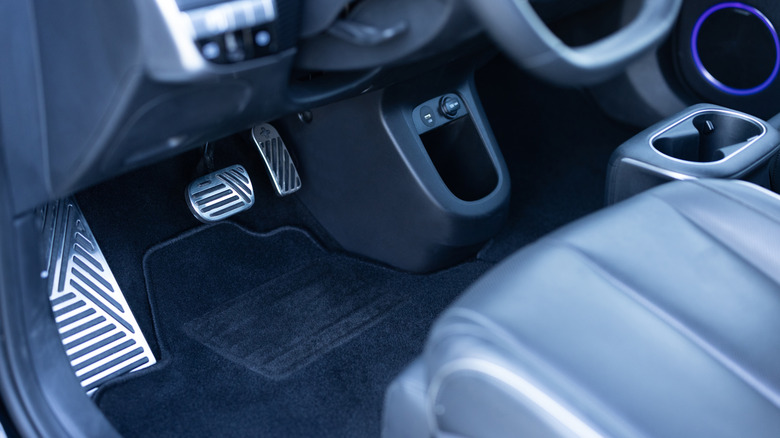
EV brake lights will now come on when a car is decelerating more quickly than 1.3 meters per second per second, about 3 mph per second. The new regulations will mean new EVs will not be brought to a complete halt by lifting off the accelerator pedal alone, and drivers will now need to use the brake pedal to avoid the car "creeping" forward at low speed. The restriction on one-pedal driving by default could also reduce incidents of unintended acceleration; accident investigators found that some drivers pressed the accelerator thinking their foot was on the brake and more frequent switching between them should get EV drivers more familiar with their car's pedal placement.
One-pedal driving can be more comfortable than continuously moving back and forth, especially in city traffic or for drivers with nerve or muscle issues. Using a single pedal to accelerate and decelerate may also result in smoother rides for passengers, and any real-world difference in deceleration rate and stopping distance ultimately depends more on vehicle physics and driver reaction time than any technological limits.
Why did China change standards for EVs?
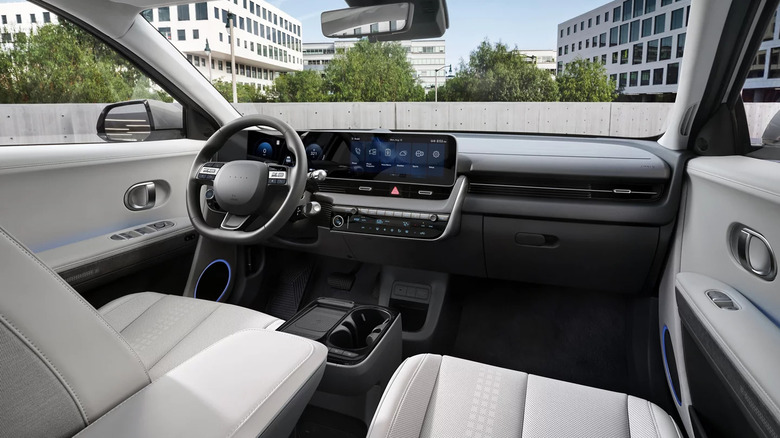
Some accidents involved Tesla models, and Chinese regulators forced the company to recall more than 1 million vehicles in 2023. Tesla then issued a software patch that replaced the default 'creep' mode with a 'hold' function that gradually brought the car to a complete stop when the driver released the accelerator. Separately, Consumer Reports found in 2023 that brake lights on some EVs from Hyundai and sub-brands Genesis and Kia "might not illuminate when the vehicle was using aggressive regenerative-braking settings."
Hyundai responded by updating brake lights to illuminate at the same deceleration rate mandated by China and the EU; the change has the added benefit of making the company's vehicles compliant with China's new standard before it takes effect. The ABS requirement for EVs in China also brings the country in line with global norms in that respect. All cars sold in the U.S. have had ABS since 2012, and European-market cars have had it since 2004. ABS pulses the brakes rapidly to keep the wheels from locking up during sudden stops, possibly preventing a skid or spin.