

This Sleek Accessory Can Make Your Older TV Feel New Again
We may receive a commission on purchases made from links.
Flatscreen TVs have been the norm for years, and there's no indication that manufacturers will return to the bigger, bulkier cathode-ray tube (CRT) sets of yesteryear. But that doesn't mean everyone owns a modern LED-backlit LCD, OLED, or QLED TV. Believe it or not, there's even a small pool of individuals who prefer the image that a CRT produces over the 4K HDR deliverables of a brand-new model.
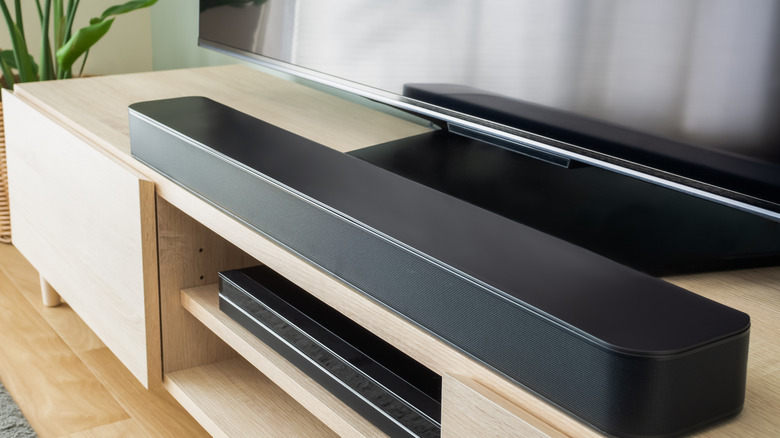
Whether you still own a CRT set because it simply refuses to kick the can, or you simply haven't felt like upgrading to a new flatscreen, one of the best ways to make your old TV feel new again is by investing in an audio system for it. These days, one of the easiest ways to enhance TV audio is with a soundbar. Designed for plug-and-play connectivity, the average soundbar uses HDMI or digital optical to bypass TV speakers for a more fulfilling sound. Many of the best soundbars support premium audio formats like Dolby Atmos and DTS:X, which could make it sound as if you have more speakers in your living room.
Top-rated soundbars like the Sonos Arc Ultra and Samsung HW-Q990F are renowned for high-quality audio, but even a soundbar that costs less than $200 can make a big difference for your CRT. Products like the Amazon Fire TV Soundbar Plus and Roku Streambar SE deliver a solid boost in volume and sound quality without breaking the bank. (The latter even doubles as a 4K HDR-ready streaming device.) If you're planning on outfitting your old TV with a new soundbar, though, there are a few things to be mindful of, particularly when it comes to inputs and outputs.
Give your old TV new life with a soundbar and audio adapter
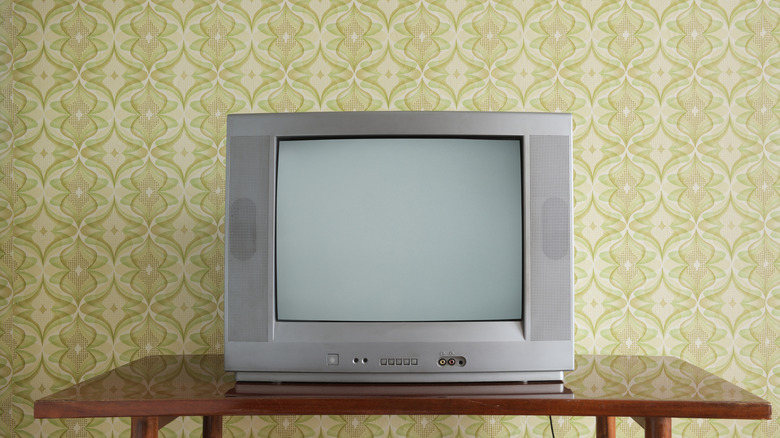
When HDMI hit the scene, CRT TVs could still be purchased brand-new (your best bet at finding CRT tech these days is shopping at a thrift store). This means you might own a CRT that actually has an HDMI port or two. That said, these aren't the kind of HDMI connections that can interface with a soundbar in the way modern TVs do. Soundbars and other home theater systems use HDMI ARC or eARC to send audio from the TV back into the speaker system, and ARC didn't debut until 2009 with the HDMI 1.4 standard. CRT sets were starting to fade by the mid-2000s, which means it's unlikely that even a brand-new CRT purchased in 2008 had ARC capabilities.
What you have a much better chance of finding are RCA audio outputs — the familiar red and white plugs. To connect a soundbar, you'll need a model that includes RCA inputs or an auxiliary (3.5mm) input. If your soundbar has only the latter, you can use an RCA-to-aux adapter, which is usually sold separately, to connect your soundbar to your CRT set. You'll want to be extra mindful of your TV and soundbar dimensions when mixing and matching, too. Older CRTs often required bulky stands and other furniture to accommodate their weight, with many of these units designed for smaller viewing spaces. If it looks like a soundbar is going to cut into your viewing space, you could always mount it to the wall above your TV with a soundbar mounting kit.
It can be difficult to part ways with a great TV that refuses to die, but missing crucial dialogue because of subpar TV speakers is problematic. Thankfully, a soundbar solves many of these problems without an extensive or difficult installation.