

Samsung's New Android Phone Can Completely Change Tablets Forever
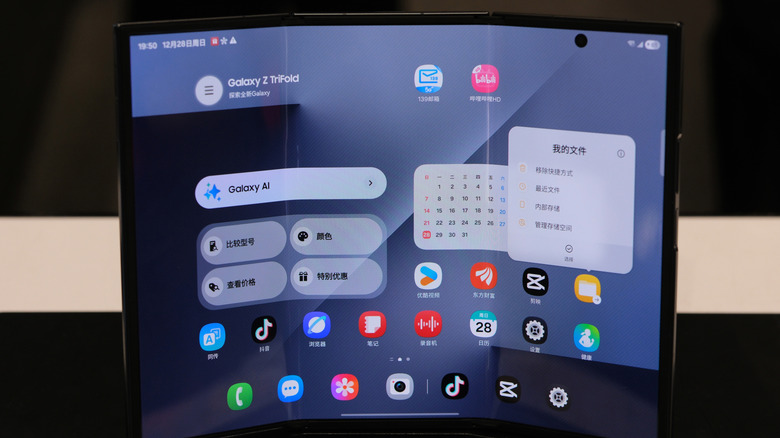
Unveiled in Korea last month, Samsung's new Android phone that folds twice was present at CES 2026 in early January, ahead of its Stateside release. The Galaxy Z TriFold is the first foldable in the seven-year history of Samsung foldables that becomes a genuine tablet when unfolded. That may sound odd, given that book-style foldables like the Galaxy Z Fold 7, which Samsung launched last summer, also become tablets when unfolded. However, the Galaxy Z TriFold actually looks like a traditional tablet. The 10-inch foldable display is only 2 inches larger than the Galaxy Z Fold 7's 8-inch screen, so it may not seem like a big deal. But the Galaxy Z TriFold has a rectangular shape compared to the squared appearance of the Fold 7, which gives it a more tablet-like appearance.
Content consumption, like watching YouTube, benefits from this 16:11 aspect ratio. The video occupies more real estate, which is what you'd want from a tablet. The extra real estate also makes it easier to work with multiple apps on the screen, especially thanks to Samsung's DeX, the desktop mode that allows flagship smartphones to connect to larger displays for improved productivity. But the Galaxy Z TriFold adds a DeX capability that the Fold 7 doesn't have. The Galaxy Z TriFold transforms into a more conventional desktop-like interface when DeX is enabled, without requiring an external display.
Put differently, the Galaxy Z TriFold may change tablets forever, as it is a device that offers an all-in-one experience. It switches from a 6.5-inch smartphone to a 10-inch tablet that can run multiple apps side-by-side to a DeX computer where multitasking looks more similar to traditional computers. That said, there are drawbacks to replacing your Android phone and tablet with the Galaxy Z TriFold.
Galaxy Z TriFold's tablet mode
The Galaxy Z TriFold and Galaxy Z Fold 7 are both high-end foldable phones featuring similar high-end components, including the Snapdragon 8 Elite chip, and generous RAM and storage configurations (16GB/512GB and 16GB/1TB for the TriFold compared to 12GB/256GB to 16GB/1TB for the Fold 7). Both handsets run Android 16 with Samsung's One UI 8 on top, and they're optimized to offer similar foldable experiences. But seeing the two devices side-by-side is enough to make you realize that the Galaxy Z TriFold is far superior.
The TriFold lets you run three Android apps side-by-side (multi-window). You can divide the 10-inch display evenly between three apps and interact with content in any of them. You can move the apps around and switch their order. Also, you can have an app occupy half of the display and divide the other half between the remaining two apps. In this case, the "smaller" apps sit on top of each other rather than opening side-by-side. Mrwhosetheboss' YouTube video below demonstrates multitasking in tablet mode on Samsung's new Android phone.
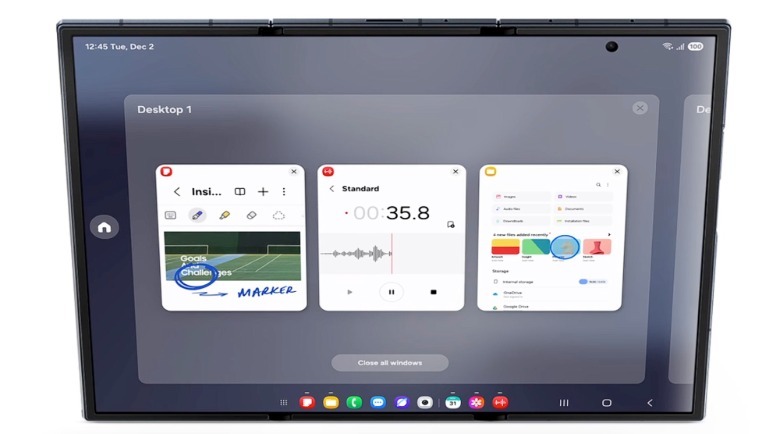
Where the Galaxy Z TriFold stands out is in standalone DeX mode. Activate it from the Quick Settings panel, and the Galaxy Z TriFold looks more like a computer than a foldable smartphone. In DeX mode, the apps become windows that you can move around and resize. You can run up to five apps in each workspace and set up to four different workspaces. This functionality allows you to pair specific apps that you may want to use simultaneously. The Galaxy Z TriFold is Samsung's first phone to support standalone DeX, but it can also work in traditional DeX mode by connecting to an external display, like the Galaxy Z Fold 7.
Don't ditch your Android phone and tablet just yet
As impressive as the hands-on Galaxy Z TriFold videos may be, you should think twice before changing your current phone/tablet setup. Yes, the Galaxy Z TriFold can change Android tablets forever, as more smartphone vendors may want to offer similar tablet-like experiences in book-type foldable phones. However, trifold devices like Samsung's new phone have two big problems. First, the Galaxy Z TriFold may cost close to $3,000 when it launches in the U.S. this quarter. The Galaxy Z Fold 7 costs $2,000. If you were to buy the most expensive Samsung candybar phone and the best tablet the Korean giant manufactures, you'd pay $1,300 for the Galaxy S25 Ultra and $1,200 for the Galaxy Tab S11 Ultra, and that's before any discounts that Samsung may throw your way. On that note, the Galaxy S26 series will be unveiled next month, according to rumors.
Second, the Galaxy Z TriFold is fragile. The video above shows how easy it is to scratch the display even with fingers. Samsung hinted as much in its announcement last month, introducing a special display repair program for the Galaxy Z TriFold that offers buyers a one-time 50% discount on display repair costs. The Galaxy Z TriFold is also very thin when unfolded. At its thinnest point, it measures 3.9 mm. At its thickest point, it measures 4.2 mm, like the Galaxy Z Fold 7. An accidental drop while using the trifold in standalone DeX mode on a train or plane may render the handset useless.
The foldable's fragility may be the main drawback, not the price, for some Android enthusiasts. However, Samsung is only getting started. We may see more durable trifold designs in the future, especially if the new handset sells well.