

5 Streaming Changes You Can Expect In 2026, According To Roku
Did you hear that streaming superseded both cable and broadcast TV in 2025? The news comes to us from Roku, a longstanding horse in the streaming device race that's garnered a positive reputation for its budget-friendly streamers and smart TVs. Toward the end of each calendar year, Roku sits down with its platform data to make a few thoughtful predictions for the new year. And, now that we're officially living in 2026, we thought it best to share some of Roku's speculations for streamers like us.
First and foremost, it looks like we could see a year where our TV-watching gets much more personalized — thanks, mostly, to AI. As a matter of fact, AI factors into all of Roku's 2026 predictions in both positive and negative ways. The same goes for product and service marketing, especially as they relate to content creators. Call it a list of educated guesses, or data trends, but it'll be interesting to see just how many of these predictions end up coming true.
Ultra-personalized content and ads
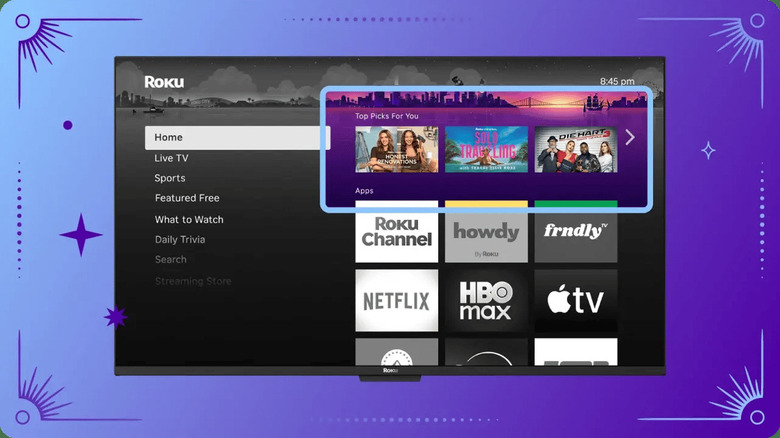
Sometimes it's uncanny just how good YouTube is at queuing up the next video. This is thanks to years of improvements and tweaks to the company's personalization algorithms. Unfortunately, the same can't be said for other content providers. According to Comscore and Nielsen, the average streamer spends about 20 minutes searching for something to watch, an increase of 12.5 minutes since 2019.
However, Roku believes that by the end of 2026, AI-driven personalization is going to reduce the time it takes for someone to press play on the next movie or episode of a show. Roku also thinks that content personalization will take place both at a platform and an app level. Preston Smalley, Roku's VP of Viewer Product, said, "Roku has invested heavily in giving viewers the most personalized experience possible, and we're now doubling down on those efforts."
Roku also believes that personalized TV advertising will make a big leap forward in 2026, which could result in more viewers actually paying attention to the content for products they're being recommended on the Roku Home Screen or inside an app like The Roku Channel or Tubi. We wonder if that means Roku users will no longer be able to stop ads from tracking their viewing habits?
Ads will be inescapable
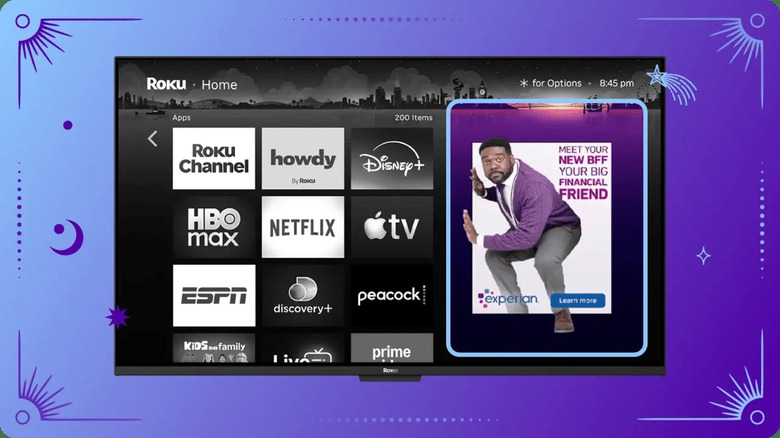
It's never a fun feeling when a sudden, one-minute ad drop interrupts the flow of your binge session. That's why signing up for a year of YouTube Premium for $140 is the only option for some streamers — full membership gives you ad-free viewing. But, as we head further into 2026, Roku seems to think that no streamer will be able to avoid ads entirely.
Roku's own data claims that up to 96% of streamers are privy to video ads when using Roku TV OS, and also makes the secondary prediction that most advertisers will start embracing free, ad-supported streaming (FAST) apps. These are apps like The Roku Channel, Tubi, and Pluto, which provide massive libraries of movies and TV shows that are 100% free to stream — you just have to endure the occasional commercial.
At this stage of the game, most streaming services deliver four to eight minutes of ads per hour, which is nothing compared to the massive ad breaks you'll find on cable (sometimes as long as 16 minutes, according to Adweek).
CTV will overtake search and social
Remember when you would search for something on Google, and the first result was at least a link to a website? Nowadays, most search queries result in top-of-the-page Gemini summations, which is Google's in-house AI, with top-level information. Yes, there are still links you can click — pages upon pages, in fact — but the AI result is primary.
According to the Roku think-tank, AI's active devouring of the World Wide Web is going to make CTV a much more appealing space for marketers and media brands. Roku suggests that up to 50% of streaming advertisers will contribute more toward CTV ads by siphoning funds from search and social: two sectors currently dominated by generative AI.
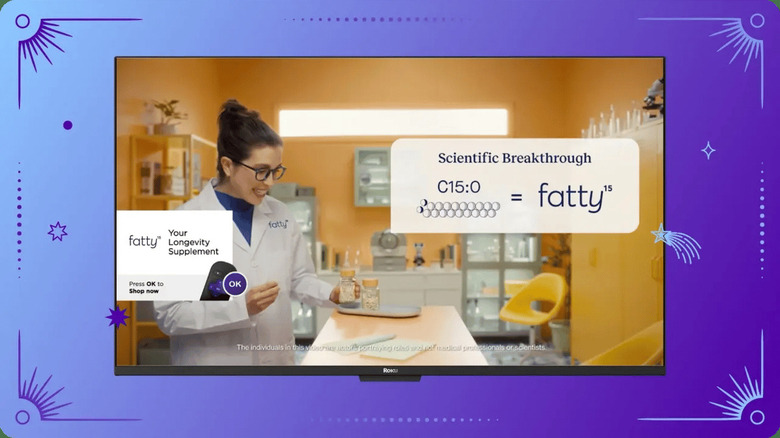
The proof is in the pudding, as they say, and Roku chose to highlight the success story of fatty15, a healthcare brand that opted for CTV ads over social media. The campaign resulted in over 97,000 page views and a 120% return on ad spend. While "AI slop" may not be going away anytime soon (if ever), streamers can expect to see less of this thrown-together content on CTV platforms.
More content creators will use CTV
While social media helped to elevate many a content creator's following, Roku seems to think that CTV is the next forum these individuals will flock to. The company projects that creators will use licensing, ads, and more to reach both new and old viewers, and that at least one of these platforms will introduce a "creator" tab, so users will be able to locate this type of content faster.
YouTube has been a go-to forum for content hosts, but platforms like Tubi and Samsung TV Plus continue to support creators through unique partnerships and the launching of FAST channels to increase viewership in the CTV space. Roku did this itself with Jellysmack in 2023, which led to numerous FAST channels dedicated to the media umbrella's clients.
In 2026, we might start seeing creator merchandise and sponsorship tie-ins right on the Roku Home Screen and within the Roku City screensaver itself. Here's to our favorite YouTubers and other content hosts expanding into new terrain via CTV.
More hyperlocal advertisers will use CTV

Just when you thought you'd escaped the ear-piercing jingles of your local Toyota dealership by ditching cable TV, the vehicular juggernaut went and signed a contract with Roku. The company predicts that 2026 is going to be a massive year for regional advertisers taking advantage of the CTV space — with midterm elections leading the charge and local businesses following suit.
Roku also predicts that generative AI tools will assist local advertisers in promoting products and services in 2026 by up to 30% more than efforts made through linear programming. CTV gives marketers the kind of ZIP code granularity that'll make testing new ad strategies simpler and faster. So, even if your local dealership doesn't stick the landing with its first batch of AI-generated ads, the company can quickly reevaluate and pivot efforts.
There's no bones about it: it's going to be a very interesting year for streaming platforms. If even a little of what Roku predicts ends up coming true, digital advertising is on track to become more personalized and geographically-oriented than ever before. The best we can do to prepare is to adjust a few essential Roku TV settings to make way for all these potentials.