

Why Do Electrical Plug Prongs Have Holes In Them?
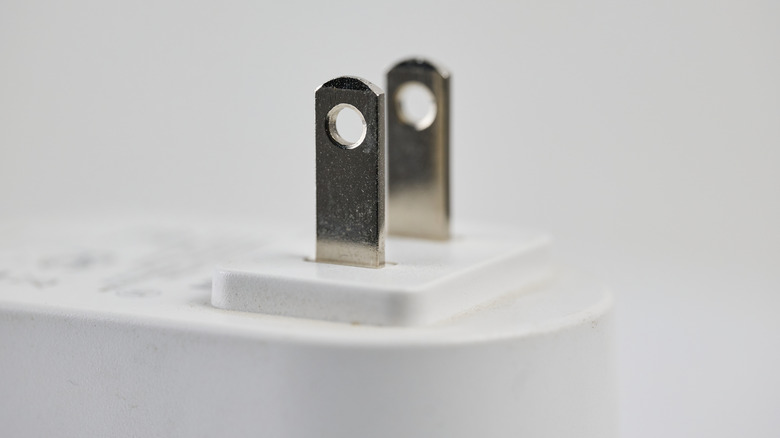
Most gadgets and small appliances in U.S. homes have either a Type A or Type B electrical plug, perhaps with a cover to hide cords. Whether they're two-pronged or three-pronged, their purpose is obvious: fitting perfectly into an outlet to receive electricity. While the metal prongs themselves are clear in their purpose, the reason for the holes on both prongs may not be so obvious. As it turns out, these holes have had several purposes over the years, ranging from securing the plug to safety sealing.
The original detachable electrical plugs date back to the early 1900s, patented by scientist and inventor Harvey Hubbell. Hubbell's original design included small indents in the prongs meant to secure the whole plug in place and prevent it from falling out of the outlet. While that may have been the original purpose, most outlets no longer have the necessary internals to accommodate that feature. Why, then, do prongs still have holes? Part of it is a simple habit on the part of manufacturers, but those holes can also provide a vital safety feature for tools and electronics manufacturers.
Electrical plug prong holes are now used for safety ties
Harvey Hubbell's original design for detachable plugs included the installation of two small nubs on the inside of the outlet. The idea was that, when you inserted a plug into an outlet, the indents (and later holes) on the prongs would lock onto the nubs, helping to keep the plug in place. If you disassembled an old outlet, you would find the ball bearings used in this process.
Modern outlets no longer need this locking system and instead keep plugs in place with a combination of friction and pressure. Standalone devices like smart plugs have no need for the old setup either. There is some speculation that manufacturers still add the holes to the prongs because it saves a little bit of money in materials, but user safety is a much more practical reason to keep them.
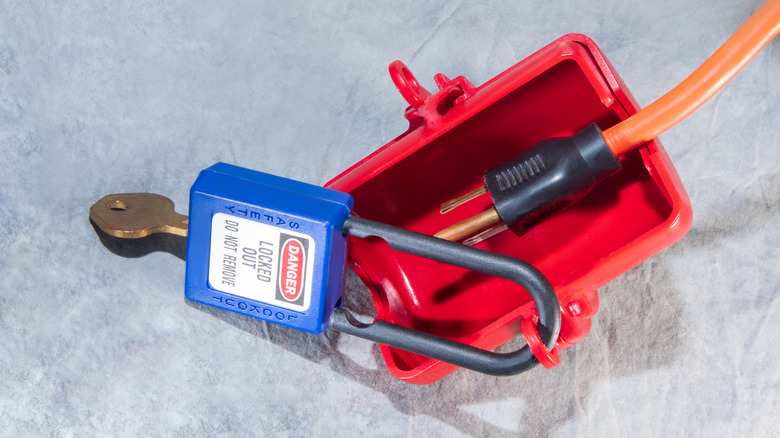
Some device and appliance manufacturers insert small plastic ties into the holes of the prongs, usually with a small placard attached with instructions or warnings, such as whether you should plug it into a power strip or extension cord. As long as that tie is in there, the device cannot be plugged in, so a user would first need to remove it. Naturally, if a user removes the tie, they will see the warning placard. Essentially, this is a way for manufacturers to ensure users see vital instructions before using the plug for the first time. You could also use the holes to lock down something potentially dangerous, like power tools, and prevent children from activating them without a key.