

5 3D Printed Gadgets You'll Use Every Day
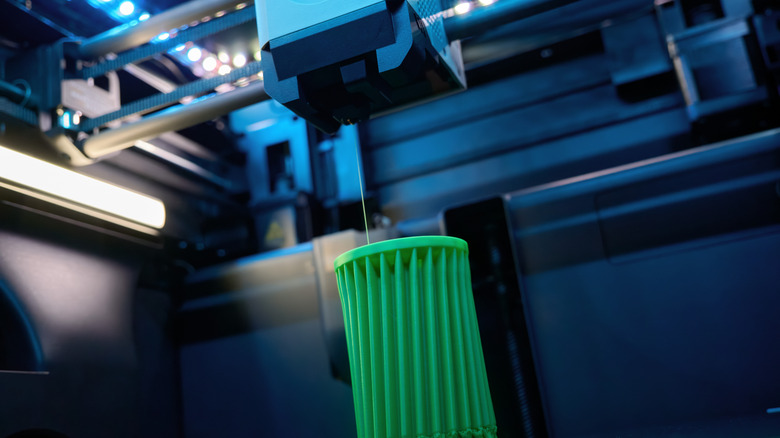
3D printers aren't just for making random statues and toys, as admittedly fun as that is. They are tools that can create just about anything out of nothing but plastic filament, and if you put your mind to it, you can print all kinds of clever gadgets. With the right designs, you can create tools and helpers that could see usage every day, from utility knives to collapsible stools.
The ultimate dream of science fiction is having technology that can either solve all our problems for us or, at least, make said problems a little easier to handle. While a 3D printer can't just conjure things out of thin air, it is more than capable of providing the components necessary for feeding an intuitive, forward-thinking mind. Whether you're in need of ideas for developments or just want some handy household helpers, try using your 3D printer to create these various gadgets, and make them a part of your regular work and habits. You might just find they've become an indispensable part of your life.
Self-watering planter
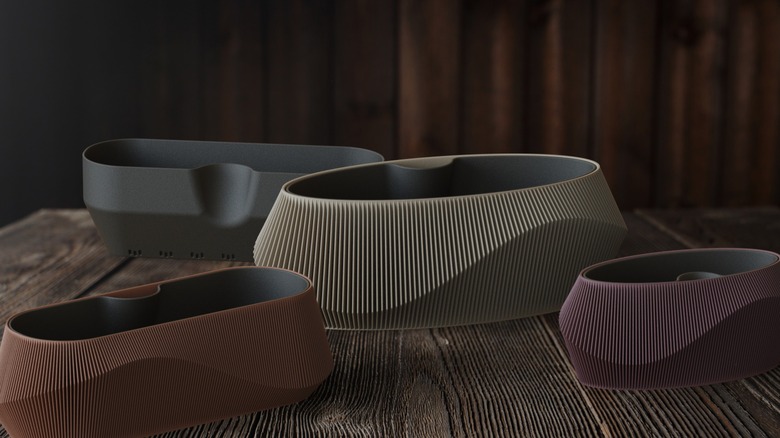
It's nice to keep some greenery around the house, providing a bit of color and clean oxygen to a stuffy living room or office. Of course, keeping a plant means caring for it, and that means watering it regularly. There's no shame in admitting if you have trouble keeping to a watering schedule for a houseplant, as it's not always readily apparent when plants actually need water just from looking at them, at least until they're already on the verge of wilting. If you want to take some of the guesswork out, try 3D printing a self-watering planter.
This helpful gadget utilizes a two-tier system for planting and watering houseplants. The plant itself and its soil go in the top layer, while a detachable insert separates them from a refillable reservoir of water beneath. All you need to do is periodically top off the reservoir; the soil will take a swig whenever it needs to, keeping the plant nice and healthy with far less direct intervention from you. As an added bonus, this project comes in three sizes for different types and sizes of plants, so you can make more efficient use of space for something like an herb garden.
Heavy-duty adjustable desk feet
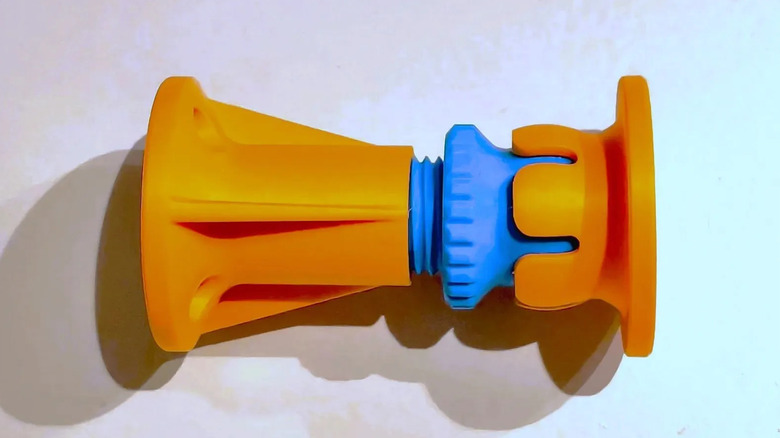
There are few things as existentially irritating as a chair, desk, or work table that refuses to sit level on your floor. Whether the desk isn't properly sized or the floor itself isn't level, it's the same problem: constant bumping, shaking, and tilting, the last of which can potentially lead to important objects sliding right off and onto the ground. If you've got a listing desk, whip things back into shape with a set of heavy-duty adjustable feet.
This clever add-on to most work surfaces allows you to account for unevenness either in the surface itself or the floor beneath it. It's made up of three components: a base secured in place with several small screws, a large screw with a ball on the bottom, and an adjustable ball joint. Just secure the base to one of the legs on your desk or table, and tilt the ball joint to account for any dips or bumps in the legs or floor. Each support foot can handle 75 kg (approx. 165 pounds), so you can safely put your desk's weight on it without worrying about it collapsing.
Vertical and horizontal adjustable utility knives
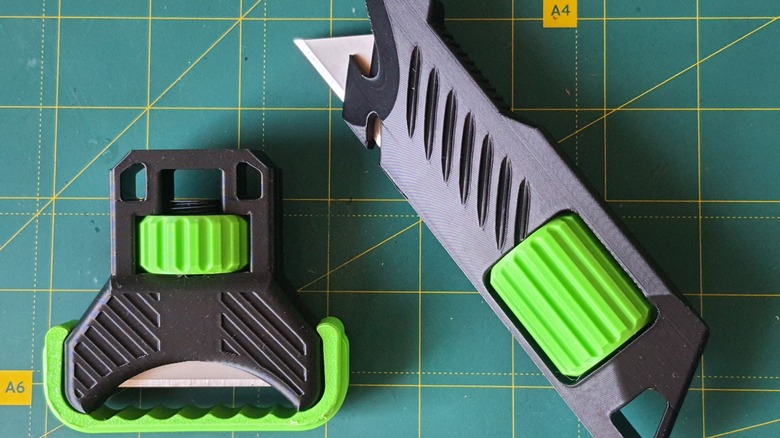
Whether you work as a professional contractor or are just putting a home tool kit together, you definitely can't skip out on the utility knife. While it's not exactly hard to get a utility knife at your local hardware store, if you have a strong plastic filament on hand, why not use it to create a utility knife from scratch and save yourself a few dollars? In fact, why not make two different utility knives for different uses around the house?
This 3D printing project produces two kinds of utility knives, a traditional horizontal one and a smaller vertical one. Both models have simple rotating dials you can use to deploy the blade, with the horizontal one also having an ergonomic handle for easy use. The vertical knife is helpful for pressing down and cutting on materials from above. In fact, it could be a useful accessory to your 3D printer kit, as you can use it to quickly cut up loose filament. The only components this project needs that the 3D printer can't provide are self-tapping screws and utility blades, all of which can be found at the hardware store without having to add the cost of the utility knife on top.
Table-side cable clamp
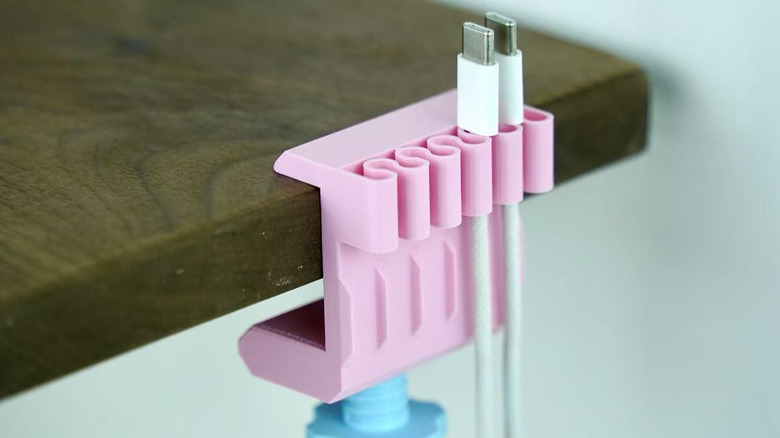
Odds are strong you've got at least a few assorted cables hanging loosely off of your desk or nightstand right now, whether they're the connector cables for peripherals like your keyboard or charging cables for your smartphone. It's best not to leave those hanging loose if you can help it, as they could get tangled or scuffed from falling on the floor. If you need an easy way to keep everything anchored to your desk, a simple cable clamp is both a convenient solution and a great beginner 3D printer project.
This particular cable organizer features a simple rotating clamp mechanism. Just latch it onto the side of your desk where cables are hanging and screw in the clamp, and it'll hold fast while the grooves keep those unruly cables in line. While it's most at home on the side of a desk, since it's made of plastic, you could clamp the organizer just about anywhere without fear of damage, like the side of your computer monitor or on one of the legs of a table.
Portable, collapsible chair
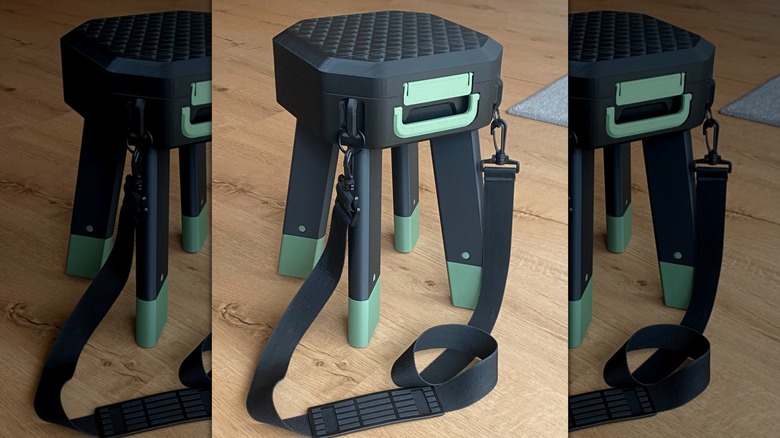
Everyone needs a sturdy spot to sit sometimes, whether you're a contractor in the midst of intensive work or a camper setting up shop next to the campfire. A full wooden or metal chair, even a folding one, isn't exactly easy to move around, which can be annoying if you're on the road a lot. If you're on the go every day, you need a seating arrangement that can be just as on-the-go as you are. What you need is a portable, collapsible chair, fresh out of the 3D printer.
This small, yet sturdy chair utilizes a combination of a suitcase-style seat and removable legs to create a truly portable seating solution. When it's time to take a seat, just open the locking latch, remove the legs, and attach them to the bottom. The seat can safely support about 200 pounds of weight, and when it's time to move, just pack the legs back in and lock the lid. The project comes with a folding handle, though it also has a pair of tie-downs you can attach a shoulder strap to for convenient transport.