

China's Humanoid Robots Are Coming For The US Market
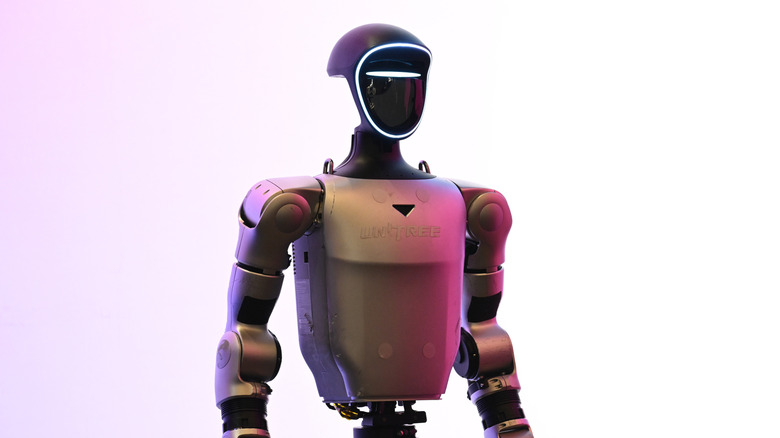
Artificial intelligence has been arguably the hottest topic of the decade thus far, and it's starting to feel like it's only a matter of time before we move beyond discussions of which AI chatbots are the best to a world where fully humanoid robots serve our needs. The big question is what companies will be the first to start mass-marketing humanoid robots, and what standards will they set for those that follow? American companies like Apple, Alphabet, and Tesla have long been at the forefront of tech innovations like smartphones, social media, and electric vehicles. However, when it comes to humanoid robots, a number of Chinese companies appear to have gotten ahead of the game, and at a recent tech conference, they showed that they're serious about coming for the U.S. market.
The Consumer Electronics Show (CES) in Las Vegas is one of the most prestigious tech expos in the world, often used to debut the most cutting-edge innovations. CES 2026 took place in the first week of January, and 21 of the 38 companies featured in the humanoid robotics category are based in China. The expo highlighted a key difference in mindsets between Chinese and American robotics makers, with the eastern brands promising faster and more affordable results and their western competitors promising greater functionality and data security. Ultimately, the winners of the humanoid robotics race will be determined by consumer sentiment, and it looks like some companies out of China could be hitting the American market as soon as this year.
Meet the Chinese robots that could be coming to America
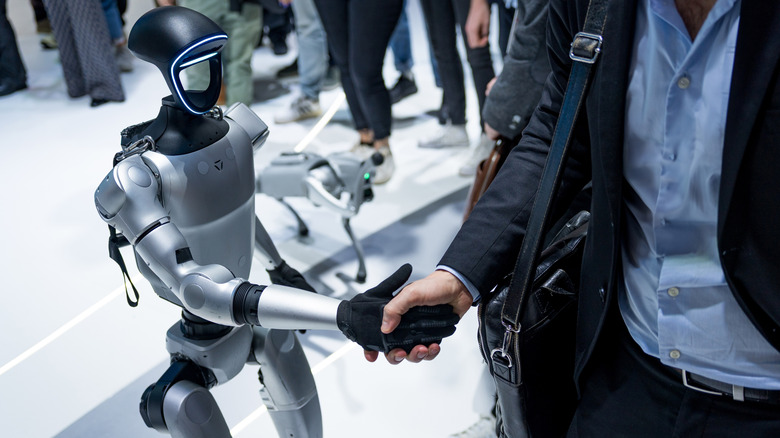
Of the 21 Chinese companies that presented humanoid robots at CES 26, the most well-known is probably Unitree Robotics. Based in Hangzhou, Unitree already has an established presence in the U.S. market, even sold through online retailers like Amazon and Robostore. Unitree used CES to showcase its G1 robot, a humanoid of small stature, standing just over 4 feet tall and weighing just shy of 80 pounds. G1 is very effective at mimicking human motions with great fluidity and genuinely impressive athleticism. Its small size and two-hour battery life present some limitations, but it's already on the market, and at $13,500, G1 beats nearly every competitor on pricing.
One newcomer that made a big splash at CES 26 was Shanghai-based AgiBot, which showcased three humanoids and a robot dog to boot. They covered a range of sizes, beginning with the AgiBot X2, which is about the same height and weight as Unitree's G1, and up to the AgiBot G2, which stands nearly 6 feet tall and weighs over 400 pounds. The company has integrated motion capabilities at the system level, so all three humanoids have a unified design. They also allow customers to customize the hardware and software of each robot, allowing buyers to tailor the AI to their needs without having to build the whole system from the ground up. AgiBot reported at CES to have shipped 5,000 of these humanoid robots already.
The gap between Chinese and American robotics
Both Unitree and AgiBot are preparing to go public this year, escalating the robotics rivalry between the U.S. and China. There is a lot of debate over which country is making the better quality robots, and that depends partly on what different people value. Where China has a clear lead, however, is quantity. The fact that a majority of the humanoid robots at CES 2026 were from Chinese companies is telling. Over the past five years leading up to the expo, U.S. companies filed 1,561 patents for humanoid robotics or related parts. Chinese companies filed 7,705 such patents. Chinese companies have also been accelerating towards mass-production far faster.
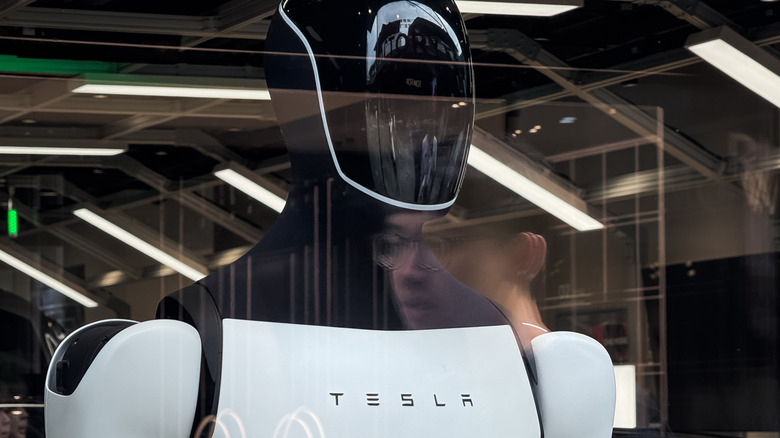
The best-known makers of humanoid robots based in the U.S. are Tesla and Boston Dynamics. Boston Dynamics is now under Hyundai (a Korean company), and while they debuted their new Atlas robot at CES 2026, it is planned to be deployed only in Hyundai factories at first, and it's unclear when consumer marketing might begin. Tesla, meanwhile, has generated a great deal of press over its Optimus humanoid robots, but the product has yet to actually go on sale, and a botched demonstration of an Optimus robot in December 2025, suggested that the technology isn't as advanced as Elon Musk has been hyping it up to be. With market analysts projecting China to hold a majority of the humanoid robotics market in coming decades, the U.S. might be playing second fiddle in the tech world soon.