

This High Schooler Found 1.5 Million Unknown Space Objects That NASA Missed
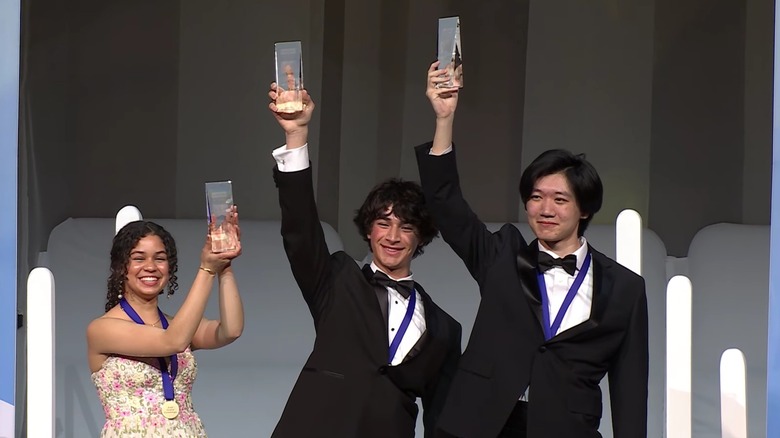
By analyzing retired mission data from NASA, one 18-year-old high school student from California has had an amazing breakthrough for mankind: The discovery of over 1.5 million unidentified space objects with his work now peer-reviewed and published in 2024 in The Astronomical Journal.
What started as a relatively simple project for the Caltech Planet Finder Academy — a program that allows students to work on and experience real-world astronomy challenges — Matteo Paz began analyzing data collected by NASA's NEOWISE telescope, which had previously been recorded and archived. Rather than confining his work to a small subset of data, with access to over 200 billion rows of spreadsheet collated observations, Paz instead built an algorithm to scan and process the archive.
In six weeks, he developed a machine-learning pipeline — a process workflow to automate ML training and deployments — that accurately detects faint light sources that emit subtle changes the naked eye cannot catch. His algorithm was able to identify flickering, pulsing, and fading objects like binary stars or quasars. They were objects that no one had ever discovered before, leading to Paz's work being formally published along with a prize of $250K in the Regeneron Science Talent Search. It's not every day that a student makes quite the discovery, wins a large sum prize, and has his work published in a formal journal. It would be interesting to see if this algorithm could be used to analyze other telescope datasets, like the massive trove of data on exoplanets the Kepler telescope collected during its lifetime, or the upcoming Roman Space Telescope when it eventually launches.
How did an algorithm make these discoveries?
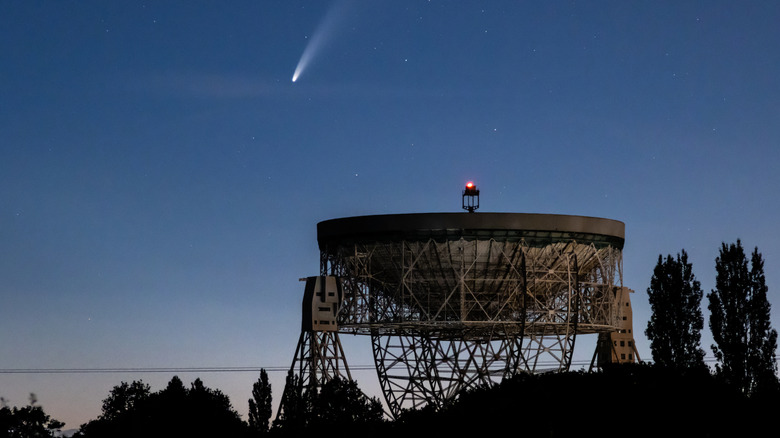
The data collected by the NEOWISE telescope, which stands for Near-Earth Object Wide-field Infrared Survey Explorer, spanned more than a decade. Its original goal was to spot asteroids and comets to harvest measurements, ultimately helping to further the study of solar system anomalies and space objects. As it's a telescope, it also collected "large and rich datasets" of minor planets and other space objects. The raw data was dumped into a database in one large table. Paz, his algorithm, and supporting teams used that raw data to analyze and make their discoveries.
Paz's mentor, Davy Kirkpatrick, an IPAC senior scientist and astronomer also working on the project shared on NEOWISE, "We were creeping up towards 200 billion rows in the table of every single detection that we had made over the course of over a decade." To make things a little simpler, they took a "little piece of the sky" or a small collection of data to find variable stars. Then, they could take those discoveries to the astronomical community. With some work, they refined the algorithm to systematically detect and classify objects through the rhythm of their light changes. Eventually, the AI model was expanded to process all of the raw data from NEOWISE, and that's where the 1.5 million new potential objects were identified.
It certainly helps highlight the potential of AI and modern solutions for these sorts of tasks. NASA's James Webb telescope is also being improved with AI solutions. The telescope's new AMI functionalities will allow for the discovery of unknown planets, albeit at unthinkable resolutions, but not unlike what Paz's algorithm was capable of doing through data analytics.