

This 3D Printed Lamborghini Is Every Car Enthusiast's Dream

You often hear people mention "Lambos" when talking about stocks or crypto trading and imagining a big payday that will let them buy the Lamborghini of their dreams. But if you're an engineer passionate about cars, you could always build your own Lamborghini on a much tighter budget. All you'd need is a 3D printer and enough time on your hands to complete the project. That's what Sterling Backus did. He used his knowledge and skills, a 3D printer, and a $20,000 budget to create a one-of-a-kind Lamborghini based on the Lamborghini Aventador model. The vehicle took four years to complete, and is drivable around the block.
A physicist and engineer, Backus was playing Xbox video games with his 11-year-old son in 2018 when they talked about the Lamborghini Aventador in the game "Forza." His son asked whether they could build something like that car, and that was enough to set the plans in motion. By November 2022, Backus had the car ready, or at least almost ready. As he shared in the video, work is never done for car enthusiasts.
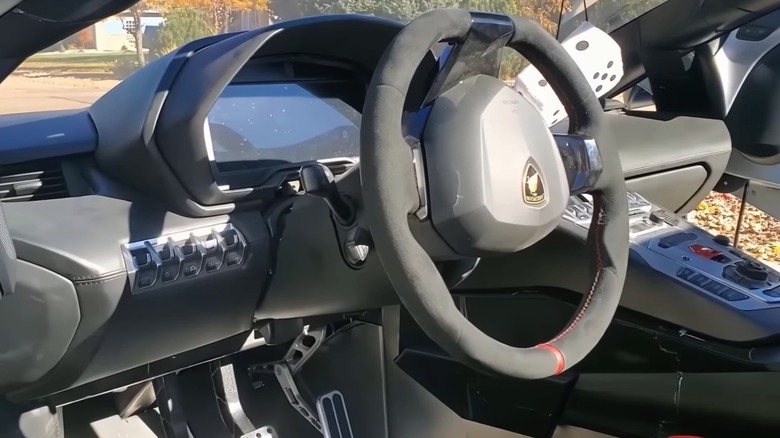
There was plenty of tinkering left to do with the vehicle, but the 3D printed Aventador was usable. While you might not see the car on the road, Backus does take it to car shows and schools to show it around. Lamborghini acknowledged this fan-made project, donating several parts to Backus. The headlights, dash, and steering wheel all came from Lamborghini, complete with the official badge.
How the 3D printed Lamborghini Aventador was made
Backus started by cutting and welding the car's chassis out of tubular steel. He also sourced several parts from junkyards. For example, the 3D printed Lamborghini is powered by an LS1 V-8 engine (550-600 horsepower) from a 2003 Corvette, and the transmission is from a Porsche 911 6-speed manual. The car also features a windshield from the much more affordable 2008 Toyota Sienna.
The hard work involved in the 3D printing project was the car itself. Backus started by printing small sections of each panel and then gluing them together. The doors and other panels are made of several parts glued together. However, Backus soon discovered a big problem with this approach: Exposed to the sun, the 3D printed segments started melting. The engineer wrapped the 3D printed parts in carbon fiber and epoxy to increase the durability of each component.
Backus 3D printed all sorts of components, including the front and rear bumpers, the taillights, air vents, and parts of the dashboard and center console. In total, he printed 1,000 pieces, totaling about 6,000 hours of print time. The rear bumper needed some 10 days, while 3D printing the front bumper took two weeks. The parts aren't exact replicas of what Lamborghini uses for its real cars, with the engineer giving the panels a distinctive look. After completing the car, Backus sanded the parts and gave the Lamborghini a clear coat of paint, which helped it retain its carbon fiber look. Later, he painted the entire car in white, which made it look like the real deal.