

Scientists Are Trying To Build Empathy Into Robots - Here's How
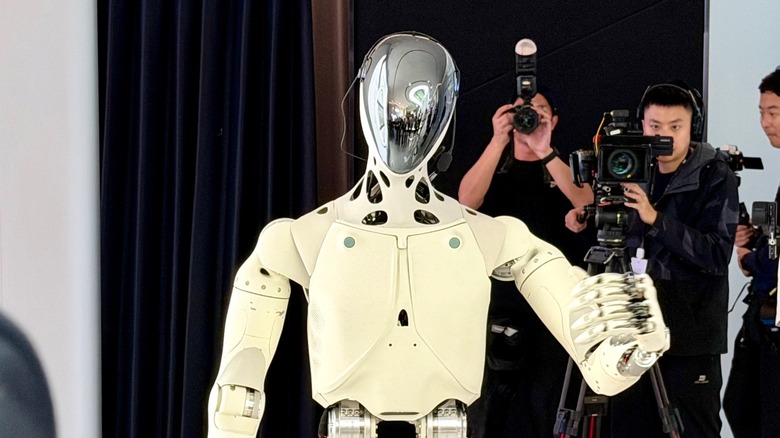
The humanoid robot market is getting more interesting each day. Several companies are working on different fronts to develop the robot of today but also of the future. Meanwhile, there's a researcher who's trying to teach empathy to robots so they can understand how people react to them based on their facial expressions.
Currently, chatbots and humanoid robots tend to be overly empathetic and ask follow-up questions so you keep using the service. However, Philippine scientist Angelica Lim, an associate professor of computing science at Simon Fraser University, is trying to change that. She told CBC that she wants to avoid an over-reliance on empathy, "where they're so overly empathetic that they are triggering delusions and psychoses, and it's absolutely horrible."
Even though companies like OpenAI offer different moods for its ChatGPT bots, they're all predetermined and can't necessarily understand what's going on with you.
A robot that can read the room can be the next breakthrough technology
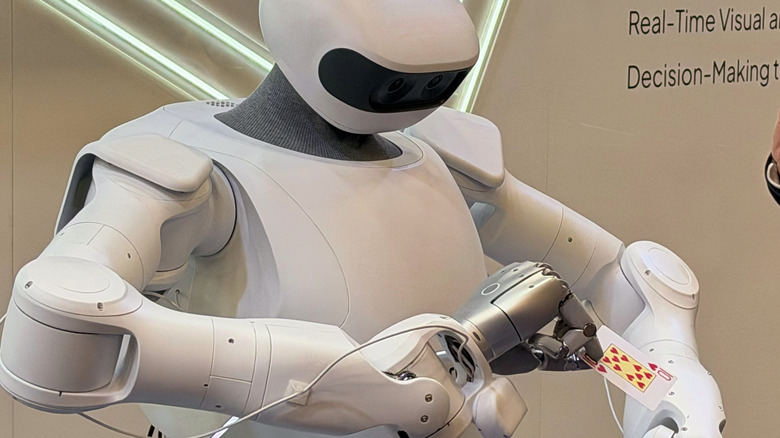
According to CBC, Lim's team is creating algorithms to analyze facial expressions. For example, during the interview, the robot tries to tell a joke, but the scientist doesn't laugh. The robot is able to understand the lack of response and gives a sassy prompt, saying, "Oh. Well, this one kills in the robot-verse. Tee hee?"
Lim says that both the foundational work and platforms are a decade old, but her team is still trying to perfect a technology that makes robots "treat us like actual humans." Interestingly enough, the scientist isn't the only one focused on that subject, as Apple recently made its second most expensive purchase ever by acquiring an Israeli AI startup that, among its patents, can deeply analyze facial expressions and voice inputs.
While it's unclear what Apple's goal will be with this AI company, besides the obvious reason of boosting its AI offerings and improving its products, Lim's team wants to make robots understand unwritten social rules. "There's different things that humans automatically know. They just know. And we want robots to just know. But it's hard, because no one's really written down those rules. And so part of what our lab does is try to figure that out," Lim said.