

5 Chinese Smartphones More Powerful Than The iPhone 17
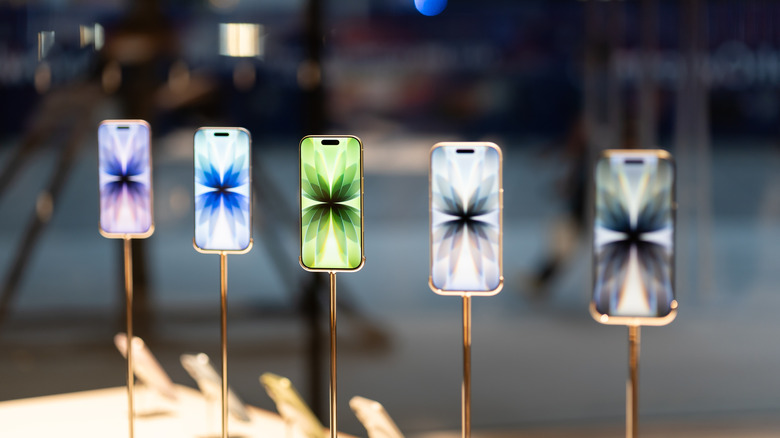
The standard iPhone 17 model, part of the iPhone 17 series Apple launched in mid-September 2025, turned out to be a major success for the company. Starting at $799, some iPhone 17 models sold out in the U.S. and various international markets from the preorder period through mid-December, according to BGR's weekly checks. Solid hardware that makes the base iPhone 17's specs very similar to theiPhone 17 Pro's.
The iPhone 17 features the same high-end 6.3-inch OLED display as the Pro model. It's the first standard model to support 120-hertz refresh rates (ProMotion) and Always-On display functionality. The phone also features the same 48-megapixel main and ultra-wide cameras as the iPhone 17 Pro and starts at 256GB of storage, again just like the Pro. The superior model has an extra camera on the back, a 48-megapixel telephoto camera, and longer battery life (33 hours vs. 30 hours on the standard edition). It also comes with a slightly better chip, the A19 Pro instead of the A19 chip on the base model. All these extra features cost a $300 premium on top of the $799 you'd pay for the regular iPhone 17.
Buyers looking for a powerful new smartphone wouldn't go wrong buying the base iPhone 17. However, those not tied to iOS have access to some of the most powerful Android handsets that vendors in China launched in late 2025 and early 2026. These Android flagships may offer more exciting experiences than Apple's offerings. It's not just about powerful chips that can match the A19 in benchmark tests, but also about camera and battery upgrades that some buyers may appreciate.
OnePlus 15
OnePlus is easily one of the most accessible Chinese smartphones to U.S. buyers. OnePlus, an Oppo subsidiary, makes high-end and mid-range Android phones, including the OnePlus 15 model, which was available for sale in the U.S. in early December. Prices start at $899.99 for the 12GB RAM and 256GB storage version, a configuration that gives you the first advantage over the base iPhone 17 model: more RAM than Apple's device, which features just 8GB of memory. Performance-wise, the OnePlus 15 features Qualcomm's newest flagship chip for mobile devices, the Snapdragon 8 Elite Gen 5, which scores 3,529 (single-core) and 10,623 (multi-core) in Geekbench 6, results that are slightly lower in single-core but considerably higher in multi-core compared with the iPhone 17 performance.
The OnePlus 15 features a slightly larger display than the iPhone 17 (at 6.78 inches vs. 6.3 inches). The Android handset also supports higher refresh rates (165 Hz vs. 120 Hz) when running select games. The OnePlus 15 triple-camera system on the back has three 50-megapixel sensors (wide, ultra-wide, and telephoto), and the dedicated zoom lens is another advantage over the iPhone 17, which lacks a standalone telephoto lens. On the front, the OnePlus 32-megapixel camera is better than the 18-megapixel lens on the iPhone 17.
Battery and charging speeds are two other areas where a phone like the OnePlus 15 can outperform Apple's latest device. The OnePlus handset features a 7,300 mAh battery that supports 80-watt wired and 50-watt wireless charging. Our OnePlus 15 review shows the phone can last more than two days on a charge. Comparatively, the iPhone 17's 3,692 mAh battery can last up to a day. The Apple phone can reach 50% capacity in 20 minutes with a 40-watt charger, while wireless charging is rated at 25-watt (MagSafe and Qi2).
Xiaomi 17
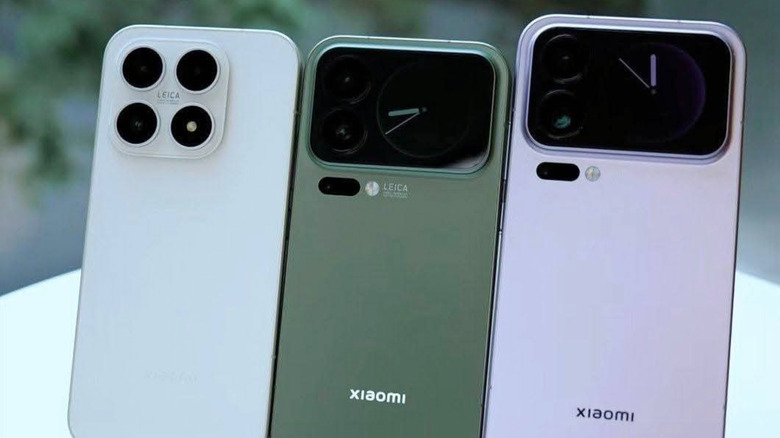
The Xiaomi 17 was unveiled in late September, and it's the cheapest model in the Xiaomi 17 series, which also includes Pro and Pro Max versions. Unlike other Android phones on this list, the Xiaomi 17 is a 6.3-inch handset that matches the iPhone 17's display size. Also, the phone is quite affordable, at least in China, where it retails for the equivalent of $649. Like the iPhone 17, the Xiaomi 17 supports a dynamic refresh rate of up to 120 Hz, but offers more intense brightness (3,500 nits vs. 3,000 nits for the iPhone). An ultrasonic in-display fingerprint reader can be used for unlocking the phone, while the iPhone 17 features a Face ID sensor inside the Dynamic Island display cutout.
Xiaomi's cheapest Xiaomi 17 model runs on the same Snapdragon 8 Elite Gen 5 platform as the OnePlus 15, so its performance benchmarks will be similar. Geekbench 6 scores stand at 3,714 and 11,196 on single-core and multi-core tests, both higher than the base iPhone 17. They also have more RAM and storage than the iPhone 17: You can choose versions with 12GB or 16GB of RAM, with storage from 256GB to 1TB, while the iPhone 17 only gets 512GB of storage at most.
The Xiaomi 17 comes with three 50-megapixel cameras on the back, including wide, ultra-wide, and telephoto sensors with premium Leica lenses. The hole-punch selfie camera also features a 50-megapixel sensor. The base Xiaomi 17 model supports 8K video recording, while the iPhone 17 goes up to 4K. Powering the Xiaomi 17 is a massive 7,000 mAh battery that supports 100-watt wired charging and 50-watt wireless charging. The Xiaomi 17 can be used as a power bank, as it supports 22.5-watt wired and wireless charging speeds.
Realme GT 8 Pro
Like most Android flagships in this list, the Realme GT 8 Pro features the hole-punch display design on the front. On the back, it comes with a triple-lens camera, one more than the iPhone 17. However, the rear camera module can be replaced, letting users choose between a square, circle, or robot-like frame around the lenses.
Unveiled in October, the Realme GT 8 Pro features a slightly larger display than the iPhone 17, at 6.79 inches. The screen offers a resolution of 3,136 pixels by 1,440 pixels, a 144 Hz refresh rate, and up to 7,000 nits of brightness. The same Snapdragon 8 Elite Gen 5 chip runs Android 16 with Realme UI 7.0 on top, but the chip is paired with a Hyper Vision+ AI processor that handles image processing for entertainment and gaming. The phone features 12GB or 16GB of RAM, with storage options ranging from 256GB to 1TB. In Geekbench 6, the results are on par with other Android phones in this list and similar to the iPhone 17. A large vapor chamber cooling system covers the internal components to dissipate heat, a feature unseen on the base iPhone 17.
The Realme GT 8 Pro features 50-megapixel wide and ultrawide sensors paired with a 200-megapixel periscope zoom (3x optical). On the front, there's a 32-megapixel selfie camera. The phone also features a large 7,000 mAh silicon-carbon Titan Battery that supports 120-watt Ultra Charge wired charging, and 50-watt wireless charging speeds. U.S. buyers interested in the Realme GT 8 Pro will have to import it from other markets. In Europe, prices start at €999 (roughly $1,182).
Nubia Z80 Ultra
Nubia unveiled the Nubia Z80 Ultra in October, another phone that's powered by the same Snapdragon 8 Elite Gen 5 flagship chip as other Chinese devices. Geekbench 6 scores reach 3,655 and 11,281 in tests for this, a similar performance to all other phones on this list. Storage and memory are similar to those of the Realme GT 8 Pro, as you can choose between 256GB, 512GB, and 1TB of flash memory, and 12GB or 16GB of RAM. What's unique about the Nubia Z80 Ultra, compared to the iPhone 17 and the other Android handsets in the list, is the display design.
Nubia is one of the few Android vendors using under-display cameras, with the Nubia Z80 Ultra featuring a 16-megapixel selfie camera under the screen, a rare sighting in a world where most mainstream handsets have not embraced this technology. The phone features a boxier look than other Android devices, with less rounded corners than the current standards. The rear camera system is also unique, featuring an elongated camera module that incorporates a large 50-megapixel main lens, a 50-megapixel ultra-wide sensor, and a 64-megapixel zoom camera.
The uninterrupted 6.85-inch display features a 2,688-by-1,216-pixel resolution, a 144 Hz refresh rate, and peak brightness of 2,000 nits. A dual-stage button on the side can be used for taking photos or controlling games, while the iPhone 17 features a Camera Control button for camera and Visual Intelligence features, as well as an Action button that can be paired with specific shortcuts. Like the Realme flagship, the Z80 Ultra features a large vapor chamber cooling system that covers the camera and the main internal components. Speaking of internals, the Nubia handset features a 7,200 mAh battery that supports 80-watt charging speed (wired and wireless). The Nubia Z80 Ultra starts at $649 in the U.S. The 16GB RAM and 512GB storage model matches the iPhone 17's $799 starting price.
Honor Magic 8 Pro
The last Android flagship on our list is the Honor Magic 8 Pro, released in China in late 2025 and in international markets in early January 2026. The Honor Magic 8 Pro features a unique display design for an Android phone, but it is otherwise identical to the iPhone 17 screen. The Honor phone has a larger pill-shaped cutout, which gives the handset 3D facial recognition support, similar to Apple's Face ID. Unlike the iPhone, the Magic 8 Pro also features a 3D Ultrasonic fingerprint sensor under the 6.71-inch display. The OLED screen supports 2,808-by-1,256-pixel resolution, 120 Hz refresh rate, and 6,000-nits peak brightness.
The phone scores 3,550 and 10,393 in Geekbench 6 tests, thanks to the Snapdragon 8 Elite Gen 5 chip paired with 12GB or 16GB of RAM and 512GB or 1TB of storage. Buyers who may want to purchase the unlocked handset from the U.K. should know the 12GB/512GB option costs £1,099.99 (roughly $1,507).
In addition to the solid specs mentioned so far, that high starting price buys you an AI-enhanced camera performance optimized for zoom photography. The phone features three 50-megapixel lenses, including the selfie camera, and the main and ultra-wide cameras on the back. A 200-megapixel zoom lens (3.7x optical) is also available on the rear, with Honor using the Ultra Night branding for the main and zoom cameras to emphasize that the Magic 8 Pro is great for low-light photography. The phone also supports Honor's AI features, including agentic experiences such as controlling the handset via voice commands and via Google Gemini. Finally, the Magic 8 Pro features a massive battery pack (7,100 mAh in China, and 6,270 mAh in Europe) that supports 100-watt wired charging (in Europe) and 80-watt wireless charging.
How we chose these Chinese smartphones
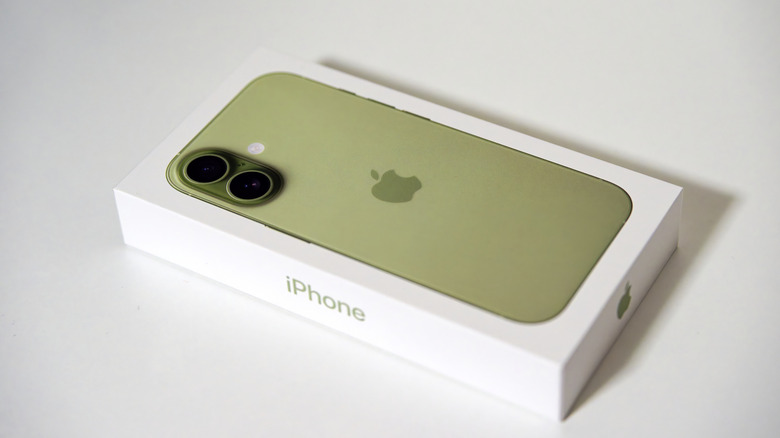
The standard iPhone is a flagship device that offers a high-end experience. For example, the iPhone 16, the predecessor of the iPhone 17, is the best-selling phone of 2025, which means the new model has potential to become the best-selling phone of 2026. Given the surprise upgrades Apple gave the base iPhone 17 model without raising the $799 starting price, we searched for flagship Android phones that can go toe-to-toe with the entire iPhone 17 series, not just the base model.
We also looked at models that may be available for purchase outside of China. U.S. buyers can get the OnePlus and Nubia phones with relative ease, while the Honor, Xiaomi, and Realme devices on the list above are available in Europe and other international markets. Some devices may be listed on Amazon, though shipping to the U.S. isn't guaranteed.
While we looked at five Android devices from five different Chinese vendors, other models exist, ready to offer buyers similar experiences when it comes to display quality, chip performance, camera specs, and battery life. They may be equally strong iPhone 17 contenders, assuming you can find the phones in stores or purchase them in international markets.