

The 10 Most Reliable Electric Vehicles Of All Time, Ranked
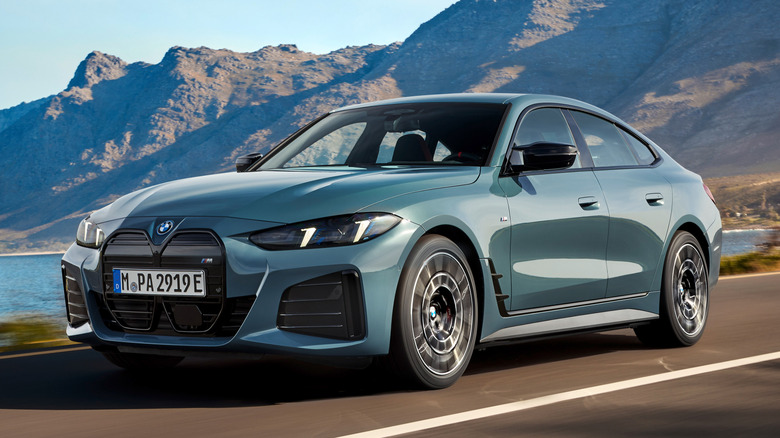
About a hundred years ago, cars redefined how humans travelled. We used them to expand cities, travel long distances, and grow the economy. Today's gas cars have benefited from decades of R&D to the point that we expect them to survive the toughest conditions. When EVs became a thing, people expected the same level of durability, given fewer moving parts and higher operating efficiency. However, EV reliability has been mixed. Early cars were plagued with issues and faced multiple recalls.
Fortunately, the times have changed, as both carmakers and governments have pushed for greater EV adoption. EVs today can cover hundreds of miles, are much cheaper to run, and are pretty reliable. But this begs the question: what are the most reliable electric cars? The answer is a bit tricky. The biggest test of reliability is time. Most petrol cars are considered reliable because they've served owners for decades without faults. Since electric cars haven't been around for that long, we've compiled user feedback from surveys and complaints to rank the ten most reliable EVs so far in their young history.
10. Tesla Model 3 (2019-present)
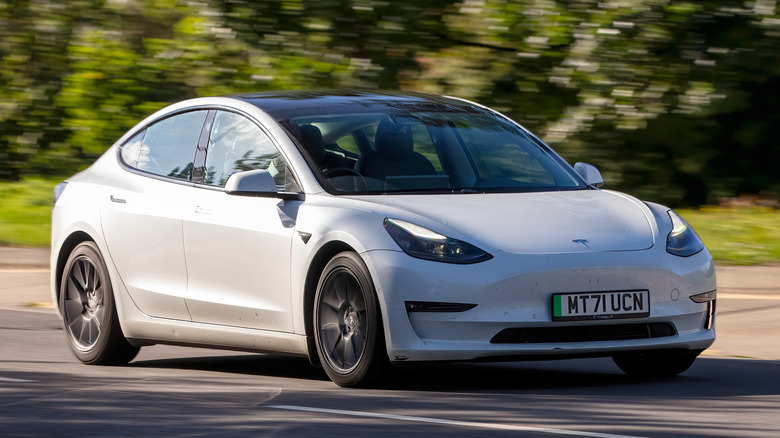
It's impossible to write any EV list without mentioning the brand that kickstarted the electric revolution back in the 2010s and turned EVs from experiments into production vehicles: Tesla. One of its biggest success stories is the Model 3, which is perhaps the most recognizable EV on the planet, and for good reason. It is a seriously quick car that handles well and can cover up to 310 miles at highway speeds. All this at a starting price of $38,630 makes the Model 3 hard to ignore. But Tesla does have a history of questionable build quality, including panel gaps and cabin rattles.
These problems, coupled with plenty of recalls, made life a headache for early adopters. Fortunately, Tesla has improved its build quality, which has paid dividends in reliability, earning the Model 3 a place in the top ten of What Car's annual reliability survey, with a score of 92.8%. The study, which surveyed real car owners, found that 23% of Model 3 owners had a problem, most of which related to non-essential things like bodywork and non-motor electrics. Tesla's home repair service helped resolve most issues without requiring a service center visit, and the costs were largely borne by the carmaker.
9. Audi Q4 e-tron (2022-present)
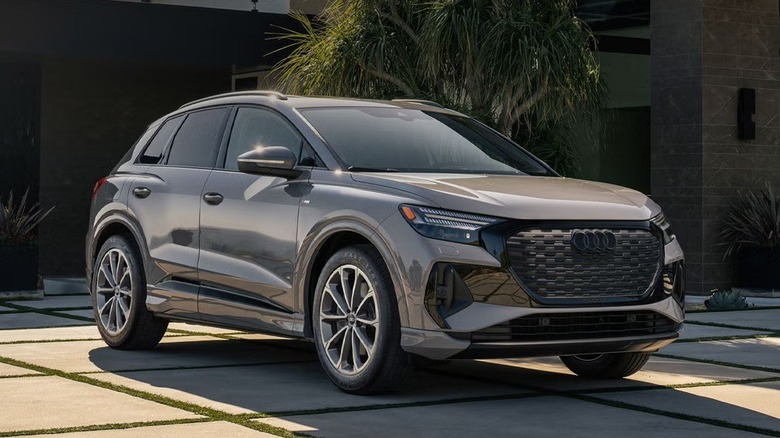
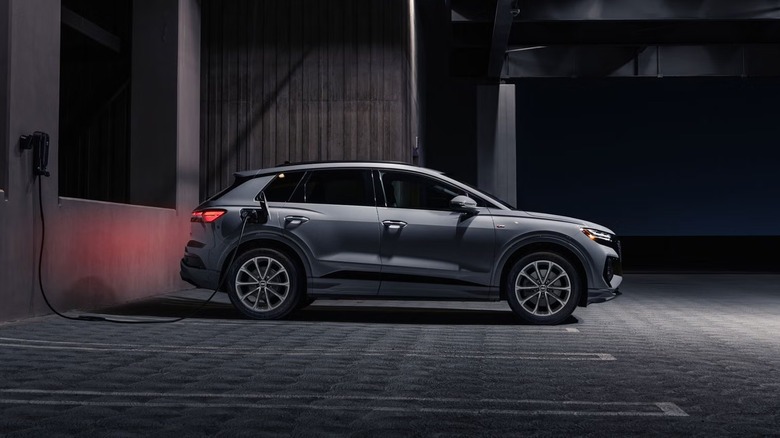
The German carmaker Audi has made some of the best engines around. Its Quattro AWD system dominated rally racing and cemented Audi's place in the hearts of motorsport enthusiasts as a reliable performance carmaker. Audi has continued its reliability focus in EVs, best shown with the Q4 e-tron. It's between the Q3 and the Q5, and serves primarily as a family hauler that happens to have some kick. It comes with a couple of engine options. Buyers can choose between a 282-hp RWD single-motor model and a 335-hp dual-motor AWD model. Top Gear's review said the Q4 is a family SUV that's easy to live with and offers tons of space. Car and Driver reports it covers between 258 and 288 miles on a single charge.
The Q4 e-tron was also a part of the What Car? reliability survey, where it placed seventh in its class, with a score of 93%. Buyers who drove the car for thousands of miles reported few issues with the drivetrain or batteries. There's been one recall, though, which related to the failure of the Electronic Stabilisation Control (ESC) and affected the Anti-Lock Braking System (ABS). Beyond that, most Q4 e-tron's issues have stemmed from the infotainment system, which glitches from time to time and has required some dealer intervention for software updates.
8. Renault Megane E-Tech (2022-present)
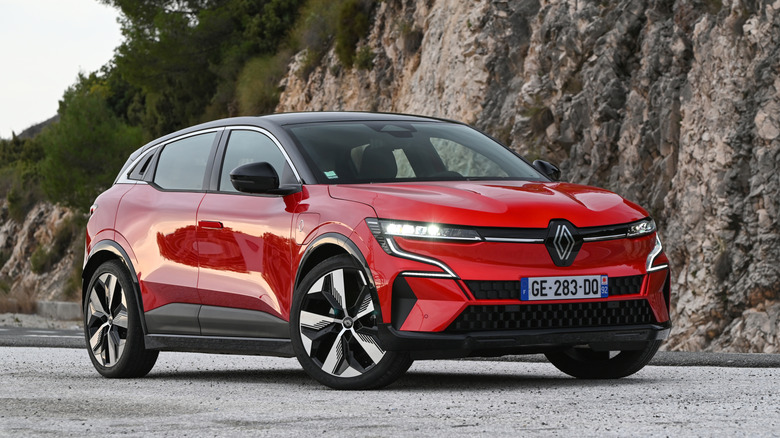
Renault was one of the first major carmakers to enter the EV space with a small hatchback named Zoe, which launched in 2013 and was loved by many for its small footprint. After its success, Renault, weirdly, went silent in the EV space for 9 years. The Megane E-Tech is only the second fully electric car from the French automaker built from the ground up on the CMF-EV platform (shared with the Nissan Ariya). In the U.K., the E-Tech starts at £32,795 and gets just one engine option. The FWD single motor makes 215 hp and has a 0-60 mph time of 6.9 seconds. The 60kWh battery (220 hp) clocked 280 miles on the WLTP scale.
Carwow describes the Megane as a well-behaved crossover that's zippy enough. While the multilink suspension handles potholes and keeps the ride comfortable, one reviewer found the brake pedal troublesome because it has noticeable dead travel before suddenly kicking in. Still, thanks to Renault's expertise, the Megane E-Tech is a highly reliable car, according to What Car? survey, where it scored it scored 93.6%. The carmaker offers a five-year warranty, and the most common reported problems have been with the infotainment system. In other news, there's been one documented recall of the Megane due to a defect in the electronic parking brake system on some models.
7. Mini Electric (2020-2024)
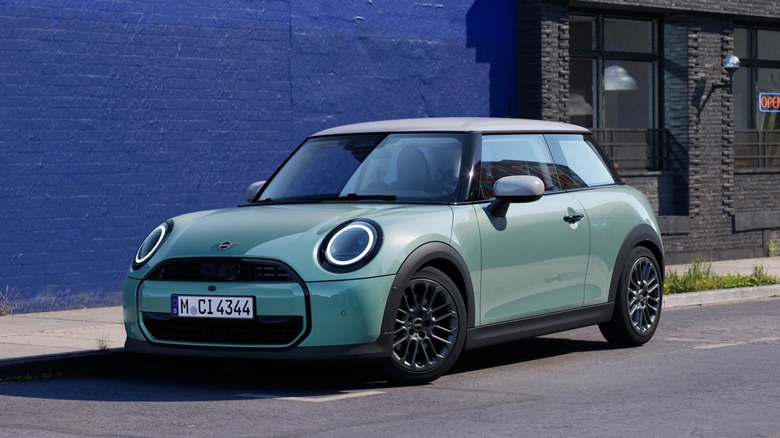
Mini Coopers have held a special place in the hearts of motoring enthusiasts for being small, capable cars that also pack a punch. After being acquired by BMW some three decades ago, the company has consistently delivered on that metric. It was when Mini shifted to electricity-powered cars that the problems started. Our review of the 2022 Electric Mini Cooper SE criticized its 110-mile range, which limited everyday usability.
Fast forward to today, though, and the fourth-generation Mini Electric can travel up to 190 miles (WLTP) on a single charge, with a smaller 36.6kWh battery. If you splash more for the Mini Electric SE, the 49.2kWh battery pack increases the range to up to 249 miles. This improvement is the result of the new EV platform from Chinese automaker Great Wall Motor (GWM), with which BMW partnered.
Top Gear described the new Mini Electric as a nimble car that you can throw into corners without a thought. That said, the ride can be a bit harsh due to the added weight of the batteries. The Mini Electric also featured on the What Car? reliability survey, where it scored a remarkable 94.2%. Only 17% of the surveyors encountered issues. Although several of these problems were related to the battery pack and brakes, they generally were not serious enough to render the car undrivable.
6. Kia Niro EV (2022-present)
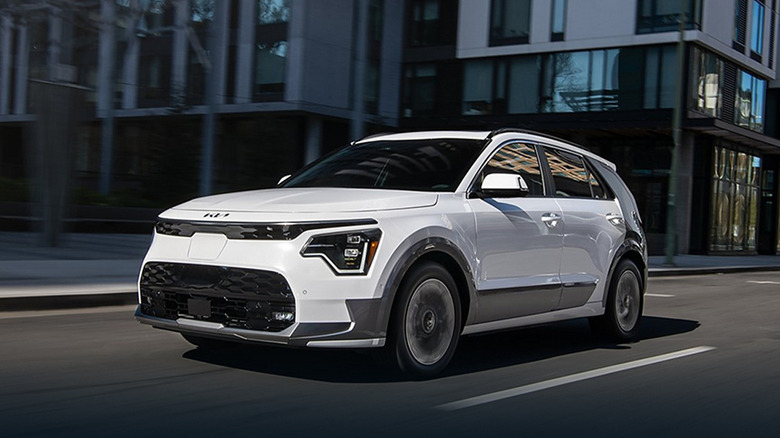
The South Korean carmaker Kia has recently been on a roll with EVs that are practical, easy to drive, and don't skimp out on essential features. Perhaps the best example of this formula is the Kia Niro EV. It's got zero gimmicks or special features. Instead, you get a small yet practical family car that doesn't break the bank. Starting at $41,195, the Niro EV offers a single engine option: The FWD single-motor produces 201 hp. Reviews noted that the EV is plenty powerful to overtake on highways and is fun to drive. Beneath the floorbed sits a 64.8-kWh battery pack, which EPA estimates should be good for 253 miles between charges.
In the What Car? In the reliability survey, the Kia Niro EV scored 94.6%, with no recalls recorded. The good news is that Kia offers a seven-year, 100,000-mile warranty. The people who had issues were mostly concerned about the bodywork and the electrical system, and Kia helped 94% of people at no charge.
5. Kia EV3 (2025-present)
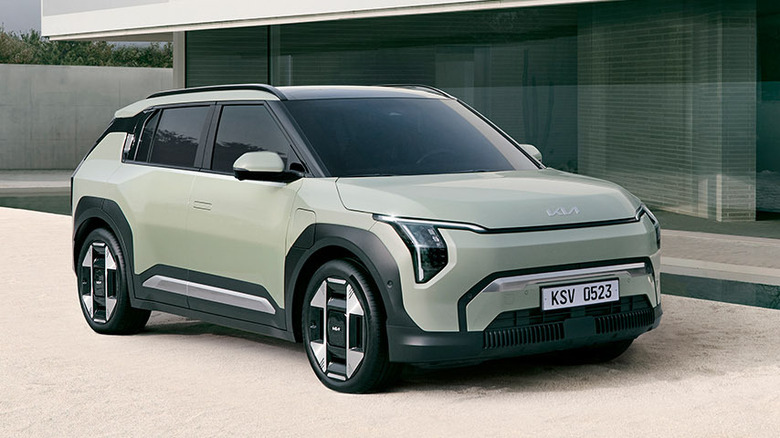
Even in 2026, people are hesitant to buy a new EV, fearing it may have manufacturing defects that will inevitably lead to a recall. Sure, this has proven true for many cars, but one has broken this notion significantly. That's the Kia EV3. In its first survey with What Car?, the EV3 achieved a rare 100% reliability score. There were few common problems, and no average repair cost was recorded. These sentiments were relayed on Reddit, where one buyer said, "I'm super happy with it, would buy it again anytime."
The Kia EV3 starts at $35,000. All trims are equipped with a single electric motor delivering 201 horsepower. It's the battery options where things get interesting. Underneath the floor of the base model sits a 58kWh battery that's good for 270 miles of range (WLTP). On the other hand, Kia claims the 81kWh battery pack should unlock 370 miles. Experts say the EV3 rides smoothly and glides over any uneven surface. The cabin noise is kept to a minimum, and its interior, while not being the most premium, is practical and has space for all five passengers.
4. Hyundai Ioniq 6 (2022-present)
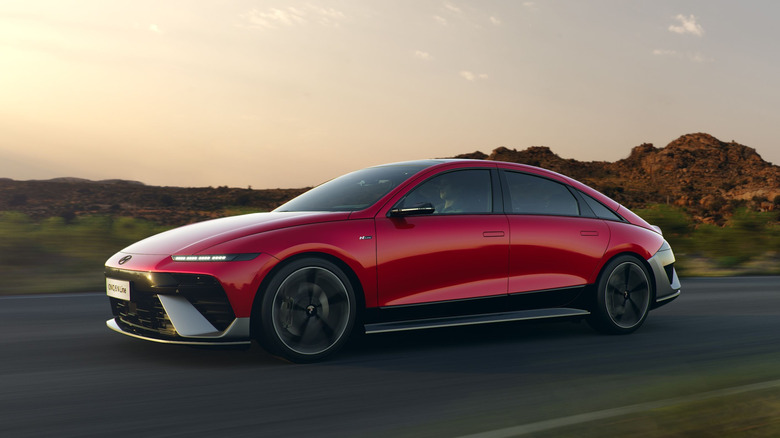
It's no secret that people love the Hyundai Ioniq 5's retro hatchback styling, which still plays a big role in driving sales. Unfortunately, the same can't really be said about the Ioniq 6. Hyundai went with the Mercedes EQ-way of letting aerodynamic efficiency control the design, and the result is a car that looks like a teardrop with a spoiler. Whatever camp you might be in on the design, there's no denying that the Ioniq 6 is a capable car. It starts at $39,095. At that price theEV can be configured with a single electric motor that produces 149 hp with the smaller battery pack. Options, such as the Long Range package, improve that to 225 hp and a greater range. There's also an AWD model with 320 hp and two motors. The top range is 342 miles.
Top Gear's review mentioned that the Ioniq 6 is confidence-inspiring due to a low center of gravity. It takes corners easily, and the cabin is peaceful. While Consumer Reports did not have much praise for the Ioniq 6's predicted reliability, the What Car? survey revealed something completely different. With a reliability rating of 95.7%, the Ioniq 6 placed fourth. Only 11% of the buyers reported problems with the car, over half of which were fixed within a week's time, and no charges were levied.
3. Nissan Leaf (2019-2024)
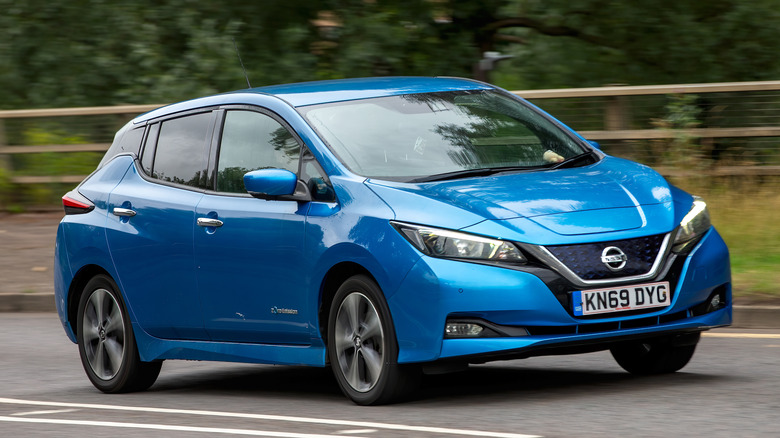
If you watched old Top Gear, you'd remember Clarkson driving the Nissan Leaf and giving it a proper beating for being painstakingly slow to charge, 13 hours to be exact, and not covering enough miles. That was a long time ago, and the Leaf has undergone many changes since then. Despite Nissan's reliability ranking of second-worst in the What Car? survey, the Leaf finished as the third-most reliable electric car, with a score of 96.5%. Sure, some owners faced issues with critical components like the battery or suspension, but Nissan repaired most within a day.
This reliability makes the Nissan Leaf a pretty dependable everyday car to buy used, considering they can be had for around $14,000. If you want something newer, Nissan has announced the 2026 version of the EV, which ditches the old small design in favour of a modern small SUV look. It could start at around $26,000, and for that price, you'll get a single electric motor driving the front wheels and making 174 horsepower. The costlier trims bump the power to 214 horsepower. Car and Driver's test drive found that the ride is cushioned by the supple suspension. The steering is sharp, but the weight is noticeable during cornering.
Unlike the one Jeremy drove, the new Leaf has two battery options: a 52-kWh pack and a 75-kWh pack. The S+ trim with the larger battery could provide an estimated 303 miles of range, while the more expensive SV+ and Platinum+ should deliver 288 miles and 256 miles between charges, respectively.
2. BMW i4 (2021-present)
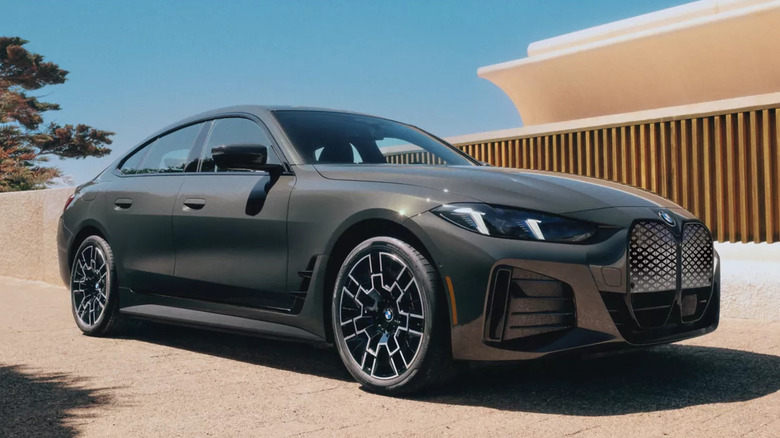
The BMW i4 was the Bavarian carmaker's first attempt at an all-electric sedan, designed for people wanting M-level performance. And for the most part, they got it right. The i4 starts at $59,250, which isn't cheap, but that's also what people generally pay for BMWs. The starting trims feature either a 335-hp single-motor or a 396-hp dual-motor setup, while for performance enthusiasts, the 592-hp M60, with a 0-60 mph time of 3.3 seconds, should be the way to go. Our review of the 2022 i4 eDrive40 loved it for being a well-rounded take. It was a plush people-cruiser on highways with low cabin noise. But when put in performance mode, the i4, whose soundtrack is done by Hans Zimmer, became agile enough to tackle corners at high speeds.
What BMW also got right with the i4 is reliability. That's because it's currently the most reliable EV on the market, according to Consumer Reports. Beyond that, it ranked second in the What Car? survey with a 96.8% score. Car and Driver's 30,000-mile test of the 2024 BMW i4 reported that it was a super comfortable car to live with and take on long journeys. Be sure to do the mandatory service required after 30,000 miles. Even the EPA-estimated range was accurate. On the list of problems, there have been a few minor recalls and glitches with the infotainment system, but nothing major.
1. BMW i3
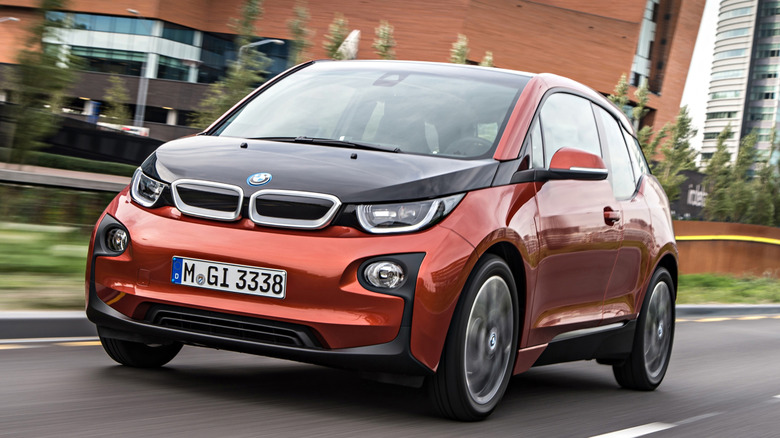
Project i was the name of BMW's new era in the 2010s, when they decided to throw away convention to make cars for the future. They came up with the BMW i3. An over-engineered EV made of carbon fiber that weighed less than 3,000 pounds. The i3 featured all-new styling that made it futuristic, coupled with clamshell doors, naturally sourced sustainable materials, and a gorgeous interior. Car and Driver said that the i3 is an excellent city commuter due to its smooth ride, quick performance, and low road noise.
That's where the good news ends and the bad news starts. Thanks to the carbon fiber, the i3, in its last production year, started at $45,445. At the price of a new Tesla Model 3, you would get a 42.2-kWh battery with an estimated EPA range of 150 miles. If you wanted more range, BMW would bundle the i3 with a two-cylinder gasoline range extender engine.
While it's safe to assume the i3 wasn't very popular in the motoring world, it does still have one trick up its sleeve: reliability. Topping the What Car? survey, the BMW i3 is the most reliable EV, with a score of 97.4%. Only 21% of buyers had encountered faults, and many were fixed by BMW within a week at no charge. A used BMW i3 today can be bought for around $18,000. At this price, it makes a lot of sense for those who want a premium and efficient commuter car.
Methodology
Judging a car's reliability, let alone ranking it among the most reliable cars, is a big challenge. People have different experiences, and a car that ranks high on reliability in this list might have broken down for you multiple times. To ensure consistency, we based this article on long-term ownership data from platforms such as Reddit, documented recall histories, and the What Car? consumer reliability survey. The study considers experiences of thousands of U.K. car owners and rates cars based on the severity of faults, their impact on the driving experience, and the time required for resolution.
We then cross-referenced the cars with Consumer Reports' ratings to ensure consistency with owners from different parts of the world. However, for newer models such as the Kia Niro, we based our rankings on early reliability surveys and owner-reported fault rates rather than predicted reliability alone.