

Do You Need To Worry About HDMI Viruses? Here's What You Need To Know
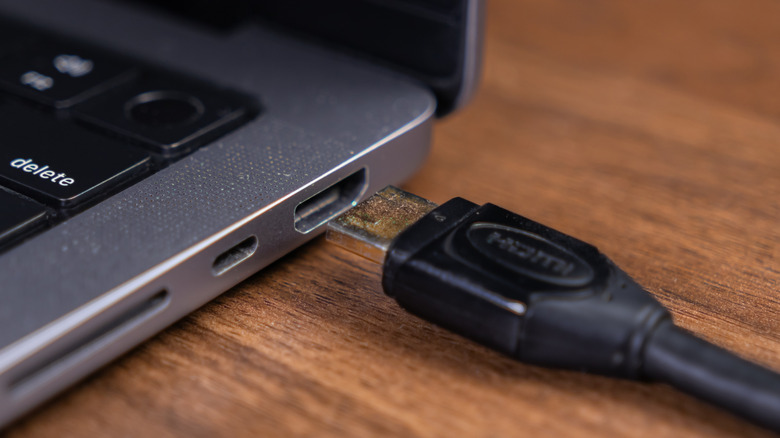
In the last decade, the use of HDMI cables has increased significantly. From connecting your laptop to a monitor, to projecting your phone screen onto a TV, it all relies on HDMI (High-Definition Multimedia Interface). The same period witnessed a massive rise in malware and cyberattacks. So, when someone tells you that an HDMI cable can infect your device, it's completely normal to feel uneasy. But for most people, or at least everyday users, HDMI carries almost no risk. It isn't designed to transfer files like USB connections do. Instead, it relays audio and video signals between devices, which can't be used to install viruses.
That said, it's still smart to stay cautious. As tech evolves, what's safe today might not be that secure tomorrow. Recent research highlights how HDMI cables, in sophisticated setups, can be prone to vulnerabilities that allow threat actors to reconstruct parts of what's on your screen by analyzing electromagnetic emissions from HDMI connections. Given the advanced hardware and technical skills required to set up such a system, it's unlikely to be used against most people. So while you are not likely to be at risk, it's still a possibility.
For most people, HDMI is safe enough
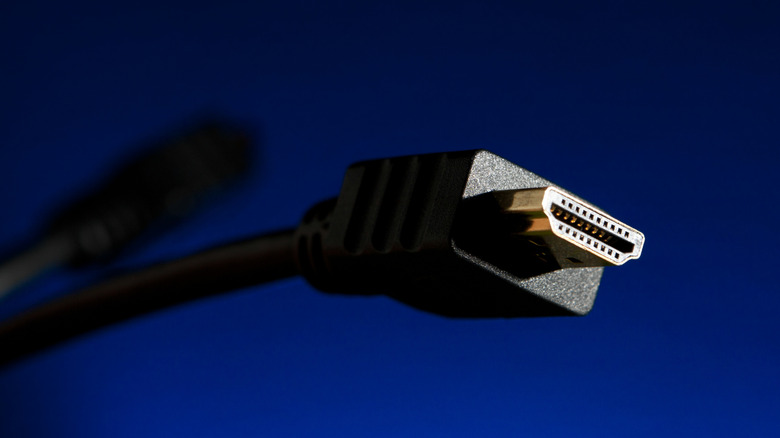
An at-home HDMI cable used to connect your laptop to a monitor, or a console to a TV, isn't something you need to worry about from a security standpoint. It simply sends audio and video signals from your device to a display.
You can't share files or apps over it the way you can over a USB, which is one of the most common ways malware spreads. HDMI is merely a display connection, not a file-transfer method. Some communication does happen between the device and the display, such as information about supported resolutions and refresh rates, but it's limited and unlikely to be a path for malware infections.
Additionally, the HDMI cable itself can't carry or store viruses, the way a USB drive can. So if you have lent your HDMI cable to someone and are worried whether it's safe to use afterward, it absolutely is. Irrespective of what they used it for, the cable can't store or bring back malware to your device, as long as the hardware wasn't physically modified, which is an extremely unlikely scenario.
Adapters and hubs are where things can get risky
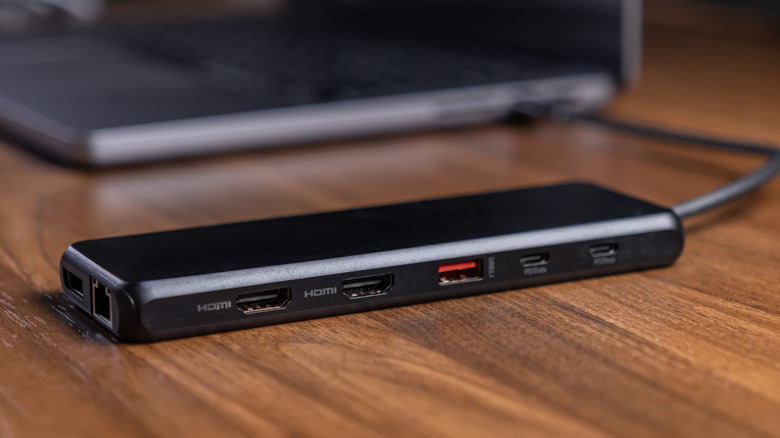
As soon as the connection goes beyond a simple HDMI cable — and involves hubs, docking stations, and adapters, especially in public or shared spaces — the equation changes. A USB hub can interact with your device in ways different from an HDMI cable, and can even handle other operations in the background, including data transfer.
It's best to avoid connecting to unknown hubs and adapters. If you still need to mirror your display in such situations, use your own cable. Or, if available, opt for a wireless connection. All of this applies to public spaces where there are chances of manipulation. Home and most office setups are usually a safe exception.
As for the idea of threat actors reconstructing your display from electromagnetic radiation, the concept is real, but it's not a common threat. If you still want to be careful, use shielded cables that reduce the emissions. Remember, HDMI isn't inherently unsafe: It's how and where you use it that matters the most.