

When Does NASA Think We'll Go To Mars? It's Sooner Than You Think
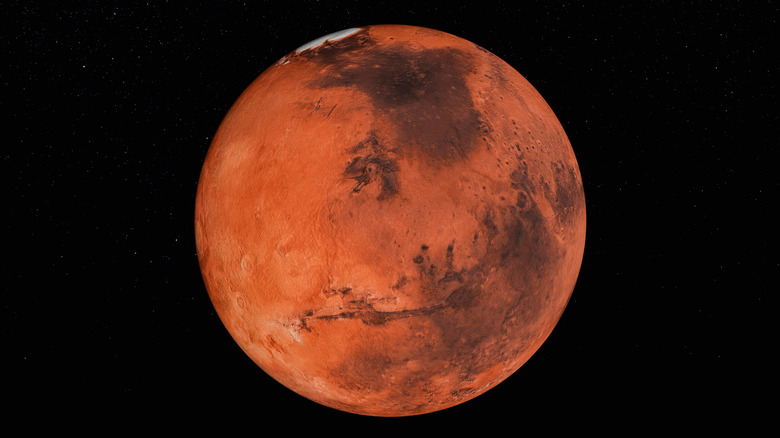
NASA has been working toward one of its most exciting and ambitious Mars missions – its goal of putting humans on the Red Planet – for years now. The space agency says that its path for humanity's exploration of the Red Planet began on the International Space Station, as the ISS is a proving ground for several research projects that could help prove the technologies and communication systems that we will need to have a working human civilization on another planet. But when exactly can we expect to finally see human boots on the surface of our neighboring planet? Potentially as early as the 2030s, but here's what we know.
While NASA has yet to share a concrete date of when it hopes to put humanity on Mars, we do have a bit of a timeline to work with. First, we know that the Artemis missions to the moon are part of an ongoing plan to prepare humans for longer space missions, like the ones that would be needed to carry us to Mars. Second, we know that NASA is working on at least six different technologies that it hopes to use to get humanity to the Red Planet.
When any of those technologies will actually be ready for operation, though, is another question. And solving the other problems that surround long-term space travel — such as the damage done to the human body during extended periods of low-gravity. Despite there seeming like so much to do, NASA says it hopes to put human boots on Mars surprisingly soon.
Why NASA's timeline is so vague
Saying something as broad as the 2030s is, of course, very vague. That's an entire decade to work with, after all. Before we can nail down a proper launch date for such a mission, though, we have to tick off some more boxes on the checklist that NASA has created for itself.
Chief among the items on this checklist is launching the first crewed mission back to the moon in years. While we first accomplished this feat in 1969, it has been over 50 years since humanity last touched the surface of the moon in person. The last mission to the moon, Apollo 17, left the moon's surface behind on December 14, 1972. Since then, technology has changed immensely, as has the expectations placed upon NASA and other space agencies, especially as safety has become a key point of contention in the push for more commercial space efforts. This means NASA has to ensure any flights it sends up into the great unknown with humans onboard is up to standards, and that they are ready for whatever comes their way. This is easier said than done, especially since we've seen studies that could kill changes of a manned mission to Mars.
That's why the timeline for NASA's first human-led mission to Mars is such a broad range right now, because we have no solid timeline of when such a mission will be realistically possible. There's also the possibility NASA might send AI astronauts to Mars first, which could help pave the way for future missions.
So, when is NASA going to Mars?
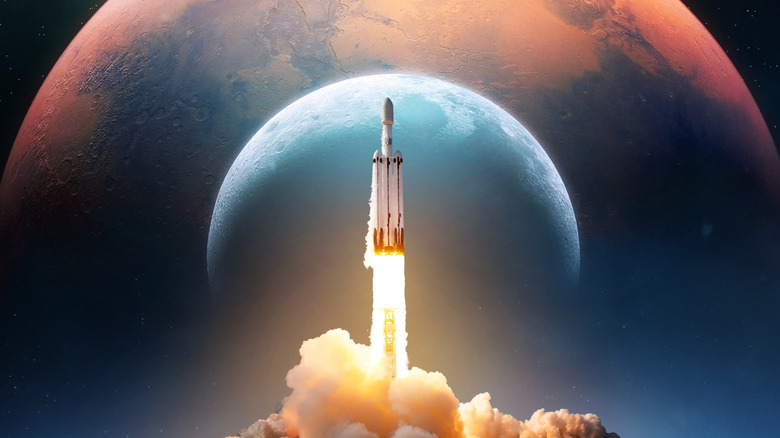
The short answer is nobody knows for certain. The long answer is when the agency can prove that getting humans there is not only possible, but realistically safe for the astronauts involved. The basic facts involved here suggest that putting human boots on Mars will require at least seven months of travel one way. That doesn't include the time they'll need to orbit to set up for landing, or the time that they'll spend on the planet itself.
Not only does this mean ensuring the safety of the astronauts on board, but it also means making sure they have all the supplies they need to survive that long of a trip into space. As it stands, the International Space Station receives new supplies several times per year. However, NASA has often aimed to keep at least six months of supplies onboard at all times — this includes air, food, water, and other essentials, such as toilet paper. So, it would likely need to be able to achieve even more than that to make a trip to Mars feasible.
There are also other logistical factors to consider, such as the weight of the fuel needed to power the rocket that would carry the astronauts to Mars, as well as the weight of the landing vehicles that would put them on the surface of the planet. Once NASA has figured all of these out, though, the agency will be able to take that broad 2030s timeline and narrow it down exponentially. Still, the thought of putting humanity on an entirely different planet which is on average 140 million miles away from Earth within the next 15 years is exciting and inspiring.