

Why There Is Simply No Need For A Budget Digital Camera Anymore
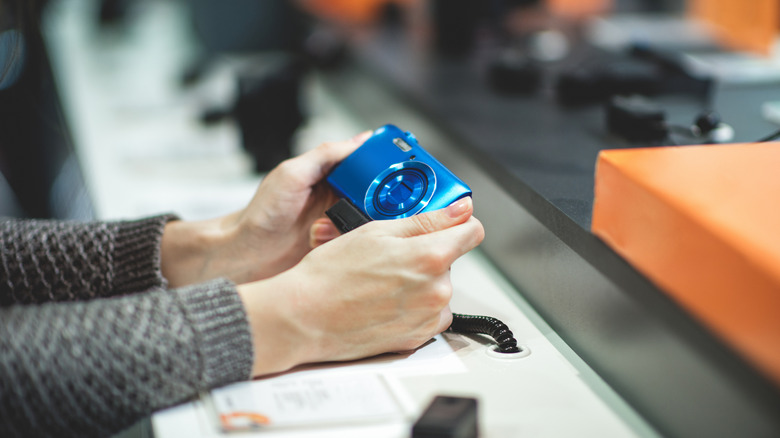
You still see some people using point-and-shoot cameras, even though we live in a time when almost everyone carries a capable camera in their pocket or bag: their smartphone. Anyone buying a mid-range or high-end smartphone should not consider spending any money on a budget digital camera. The device, even budget ones, can already produce high-quality photos and videos, thanks to advancements in hardware and software (including AI processing), offering performance on par with the cheaper digital cameras users may own. If you're considering paying over $100 on a budget camera, you should spend that money on a mid-range Android phone, which will help you take better photos and videos.
The more expensive the smartphone, the better its camera capabilities are, as the camera is one of the main selling points for smartphones. Phones like the latest iPhone 17, Google Pixel 10, or Samsung Galaxy S25 feature the best camera hardware and software innovations that Apple, Google, and Samsung can offer. Chinese smartphone vendors offer similarly capable camera hardware and software setups, and some of those companies have partnered with traditional camera makers to optimize photography performance. These phones can offer larger megapixel counts (up to 200MP for some cameras), at least two cameras on the back (if not three or four sensors), improved low-light photography, high-quality video recording, optical image stabilization (OIS), and computational photography software (AI).
Mid-range Android handsets also offer good camera performance, with Google's Pixel A-series being a good example. Even if you go to the lowest end of the spectrum, a cheap new smartphone will make more sense than a budget digital camera.
A low-cost Android phone can offer a decent camera experience
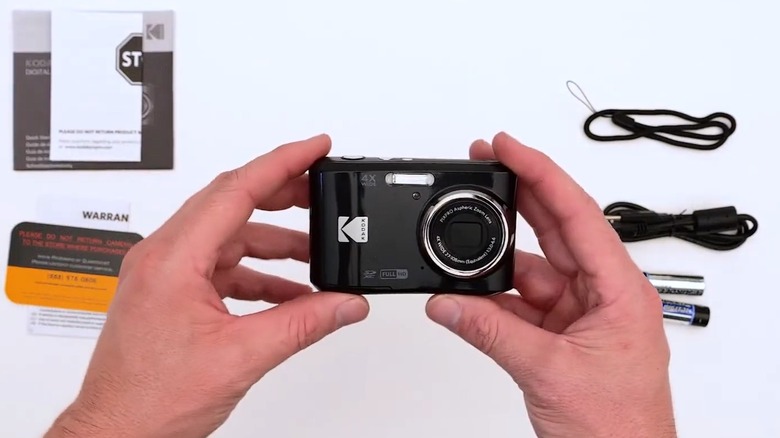
You can buy a 16.4-megapixel Kodak PixPro FZ45 digital camera from Best Buy for about $120, which features a single 1/2.3-inch sensor that supports 4x optical zoom and can record 4K video. It includes a 2.7-inch display on the back (without touch support) that helps you capture and view content. However, the camera needs two AA batteries to work, and you'll need to buy a separate 32GB SD card. The camera doesn't feature GPS support if you need to geotag your photos, and it won't connect to the web to store content in the cloud or share photos and videos with friends and family via social apps. For the same price, you can buy a smartphone with more features than just a camera.
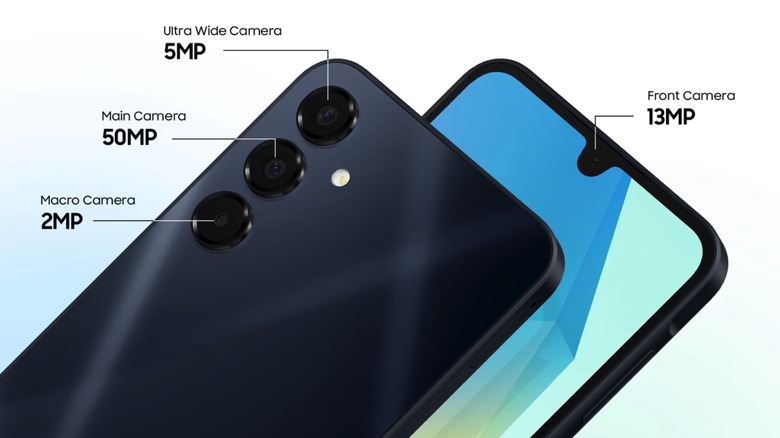
Launched in late 2024, the $199.99 Galaxy A16 is the best-selling Android smartphone of 2025 (via Counterpoint Research). The handset features four cameras in total: One on the front for selfies and three on the back. The main rear camera is a 50-megapixel wide sensor (f/1.8). It's joined by a 5-megapixel ultra-wide camera and a 2-megapixel macro camera. The selfie camera has a 13-megapixel sensor sitting at the top of a 6.7-inch display that becomes a large viewfinder when capturing content.
The phone comes with 128GB of built-in storage (expandable via microSD cards,) and a 5,000 mAh battery. The handset has GPS support, which means you can add location data to your images, and runs Android, which gives you access to plenty of apps, including cloud storage solutions for your content, social media apps (including chat apps), and additional camera apps.
Are budget digital cameras good for anything?
The Galaxy A16 is only one example, because of its popularity with consumers last year, but any other Android smartphone within that price range should offer decent camera features. You can perform similar camera comparisons between any budget digital camera and a smartphone. However, there may be one situation where the budget camera is preferable, but it's not about camera quality. Parents may want to give younger children who aren't allowed to use a smartphone a cheap point-and-shoot to capture photos and videos. In addition, digital cameras are becoming popular again due to their vintage appeal.
A point-and-shoot needs special care, but may appeal to those who want a chance to "disconnect." You need to have spare batteries and monitor storage space. You need to manually transfer content to a phone or computer to share photos and videos. There's no support for cloud backup, which a phone offers. Lose or damage the SD card, and you're unlikely to recover any captured memories on that card.
A cheap phone like the Galaxy A16 already works as a capable camera. It lets you capture selfies much easier than a point-and-shoot, and it offers generous storage space out of the box. The phone is usually kept charged, as you use it for all sorts of purposes in addition to taking photos, and it will generally be connected to the web (via 5G or Wi-Fi) to let you share the photos you've captured.