

5 Things You Should Know Before Installing Solar Panel Batteries In Your Home
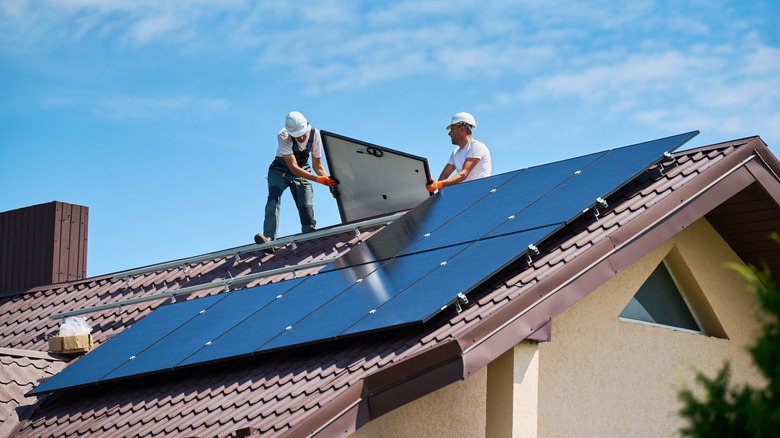
Switching to solar technology to power your home can be a rocky transition. Unfortunately, it's not as easy as flipping a switch. Powering your home with solar technology requires preparation, planning, and realism. Before going all the way to converting to a greener lifestyle, consider a few things, like whether your home can be sustained by it, and the reasons why you should commit. Surprisingly, installing and using renewable energy sources doesn't always save on energy bills. Some people don't realize that the financial costs of solar technology are still considered steep, and the high upfront costs don't always pay off until many, many years later.
When your plan is to use solar power, you have two choices. You can install solar panels, use solar batteries as a standalone source for converting solar energy into power, or you can use both; and in some cases, you need both. Solar batteries are often paired with panels, especially if you're trying to cut out grid electricity usage.
That's because solar batteries can store the excess energy generated by solar panel systems. Technically, you can use solar batteries without solar panels; they can be installed in off-grid or hybrid systems. In hybrid systems, you don't need to install solar panels. Instead, they can be charged directly from the electrical grid. Some people go this route because it provides a secure backup in case of an outage. But how you choose to set up solar batteries does matter, and here's why.
Know that solar technology is a long-term investment
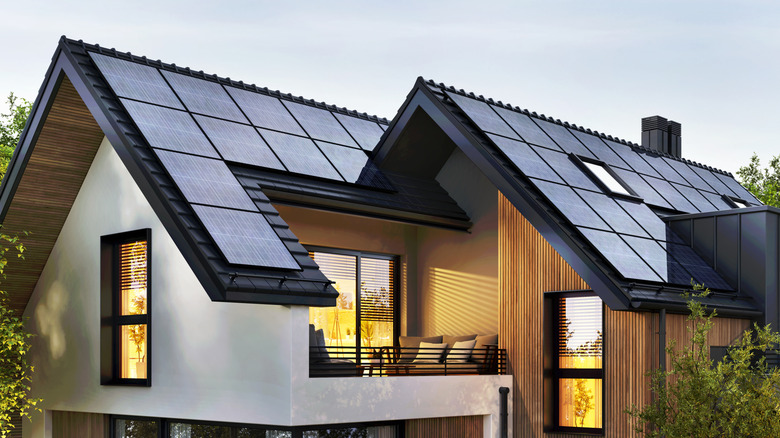
While solar panels and solar batteries have become more affordable, going green can still get expensive. That's why you should know exactly what it could potentially cost you before you commit to installing your full setup. A man in Ontario, Canada, for example, spent $50K on solar panels ($40K to install and $10K in repairs) only to find out they didn't save him any money in a reasonable time frame — he'd need to wait over 40 years to break even with his investment (via CTV News). He was also not covered by his insurance.
Looking back at his investment, he realized that it can also affect the resale of the home, since not all homebuyers will want to deal with solar panels. That's why looking ahead is important, even if you have just bought the panels and have yet to install them. In retrospect, you should always re-assess all the finances before deciding to go all in.
Naturally, the next step is adding solar batteries to your setup (since solar panels don't come with solar batteries). If you don't buy solar panel batteries outright, you'll need to make monthly payments to make owning them more affordable. Otherwise, expect to pay another few grand on top of everything else. On the bright side, outside of the short-term financial strain, once installed, most solar systems are easy to manage, so you don't need to worry about inferring additional costs to routinely maintain it. For your solar panel batteries, you'll want to take a state-of-charge reading semi-regularly, just to check that your batteries can still hold a charge.
Evaluate your current home's energy needs
Some people invest in solar technology to cut down on bills. They'll double up on solar panels with solar batteries to try to get the biggest bang for their buck, and while it may seem optional — for some setups, it is necessary to install both. It all depends on how much energy your home is consuming.
In the Homeowner's Guide to Solar, one question is always about financial viability, and also whether paying for all of it is truly worth it. Though the guide doesn't explicitly say, it does touch on factors like how much you could potentially save and how that all depends on your energy consumption, the solar energy system size, whether you bought or leased the system, and how much power it can generate. Large households with high energy needs also mean solar batteries need to be installed to keep up.
In some cities, the costs can even be considered competitive with those of the local electricity companies. But more importantly, going solar pairs well with energy efficiency upgrades. The guide mentions that using Energy Star appliances and other products in your home will require less solar energy to power it. So really, if you're looking to save on energy reliably, you also need to adjust your setup to be more energy-efficient. That means replacing energy-hungry appliances and electronics in your home.
Assess your bought solar battery capacity and power rating
As stated above, installing solar batteries in your home isn't cheap. Prices will vary by how many and the size. According to NRG Clean Power, the average can range between $9K-18K before incentives. Costs can vary by type, size, and how many you need to install. Everything you need is based on your energy consumption and how much you rely on the batteries to power your home. Some only use solar batteries as a mere energy backup, which means purchasing an elaborate setup isn't necessary unless the size of your home is already big.
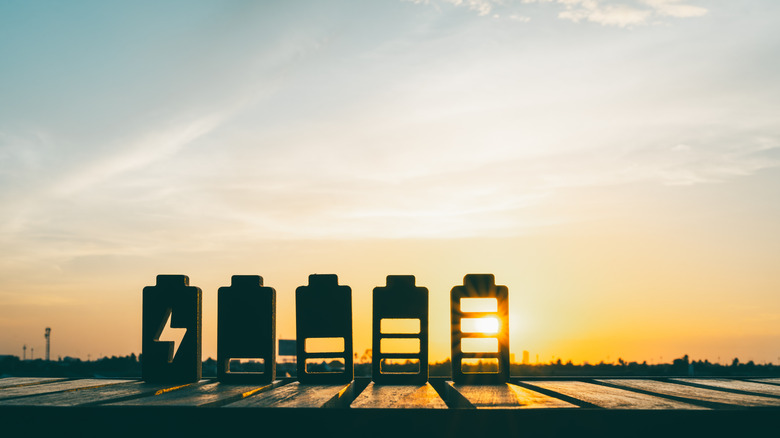
If you've already bought solar batteries, know that the capacity doesn't always reflect how much energy can be used and stored during its general lifespan. The Depth of Discharge (DoD) is the percentage of energy used relative to total capacity. What this tells you is the more DoD your battery has, the more electrical energy that can be pulled out of it in a single cycle (it's like how much the battery can get discharged).
Similar to any other battery, having deeper discharge-charge cycles will lead to faster battery degradation. Ideally, you want to keep your DoD at a consistent level so you don't have issues. Installing a solar battery monitor app should show you the State of Charge (SoC), which is the opposite of DoD. So, if your battery is at 75% SoC, then your DoD is at 25%.
Consider solar battery storage and the environment
You'll want to store solar batteries in a well-ventilated place. It should also be cool and dry and not be in a location where temperatures fluctuate. For reliable interior spacing for solar battery storage, consider garages (attached and detached are fine) and basements. They are generally well-insulated and easy to contain. However, if you need to keep solar batteries outside, they shouldn't be exposed to extreme weather conditions, or the batteries might get damaged.
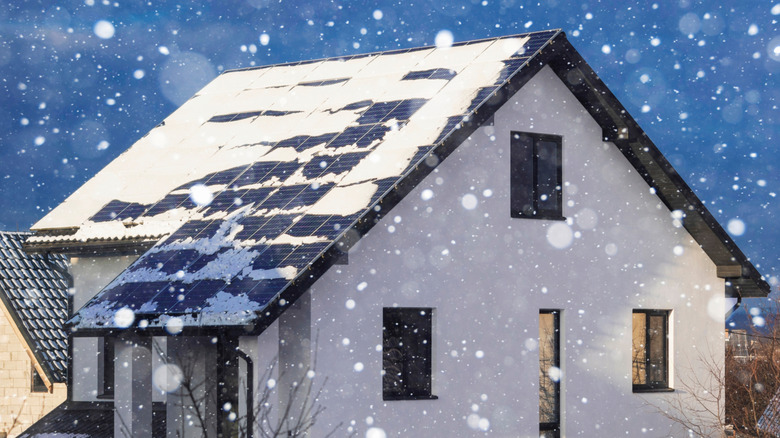
When purchasing your solar batteries for exterior use, review the enclosure rating. For example, if the batteries have an IP55 or higher rating, that means they can withstand some rain, snow, and wind, though the ratings aren't foolproof. You'll still gain moderate protection, but it doesn't mean you should keep your batteries submerged in water or poor conditions for long periods. The batteries degrade and will deteriorate, leaving you with no choice but to replace them. If you have a solar panel battery setup, worry not about your solar panels; they still work well in the winter.
Remember that it's not a green energy boost without a renewable source

When you use solar batteries without a panel, it's considered just another battery storage solution. Your batteries need to be charged somehow, using an energy source, and that source isn't guaranteed to be renewable. Electricity at home is generated by burning fossil fuels, and burning fossil fuels is a significant source of greenhouse gas emissions, which is why scientists and engineers have invested in developing renewable and sustainable solutions, like solar-powered tech, for years.
Charging your solar batteries from the grid (electricity) can take several hours, depending on the battery size. Batteries will need to be discharged, and you will need to continue charging after they're depleted. Some people continue to do that because it is a good way to save on costs: using the solar batteries during the day while charging them at night when electricity is cheaper. However, you are still using electricity to do this. If you bought solar batteries to go green, you'll want to eventually choose a more sustainable source to keep them charged.