

These Three Robots Might Be The Key To Living On The Moon
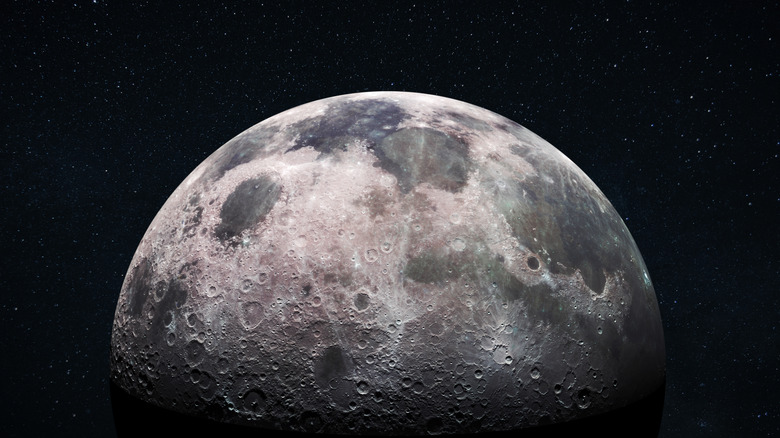
NASA is working hard to send astronauts back to the moon as part of its Artemis missions, and for good reasons. But to make the most of its plans to explore and perhaps even colonize the moon, NASA needs to find new ways for astronauts to dig deeper into the mysteries of the lunar surface. While we have seen NASA working hard to come up with the best next-generation moon rover design for its future missions, the agency has also been pushing companies to create new robots — including the cave exploring trio of SherpaTT, Coyote III, and LUVMI-X — that could help make lunar exploration much easier.
Some might believe that humanity's return to the moon is already doomed, but the fact that NASA continues to press forward is both inspiring and exciting. But if we're going to colonize the moon and put humanity on there for extended periods of time, we're going to need to understand it a bit better. One way that NASA believes we can do this is by understanding more about the ancient lava tubes that cover the moon. By sending potential robots into these tubes, we may be able to uncover key information about the moon.
But how do we do that safely? Surely it wouldn't be ideal to send human astronauts down into these tubes, especially considering how bulky space suits can be. Instead, NASA may turn to robots to do the dirty work.
These robots could make exploring the lunar surface much easier
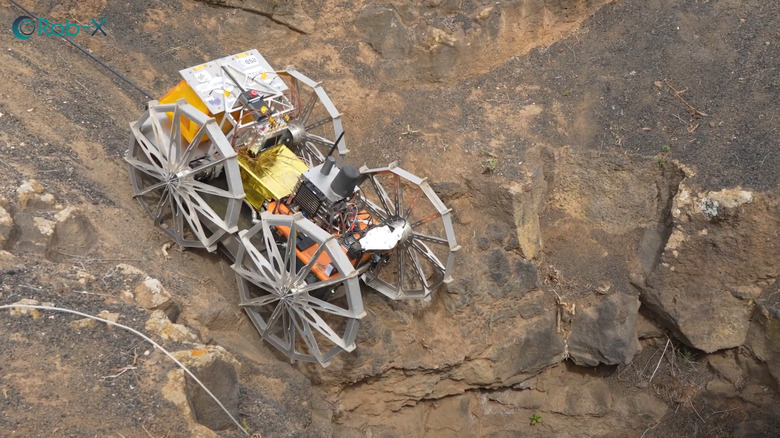
There are, of course, a number of different robots and rovers that we've seen over the years that could make lunar exploration more viable. But the primary robots that we want to talk about today are part of a multi-stage exploration plan that includes SherpaTT, Coyote III, and LUVMI-X. Each one of these serves a different purpose, with SherpaTT acting as a support robot for rappelling, while Coyote III will help with undersoil exploration thanks to its ground-penetrating radar. Finally, LUVMI-X will help with mapping and path planning for the others.
The first phase of the mission is set up to have the robots survey and map the terrain around a cave entrance. From there, they will utilize a sensor-covered payload cube, which will then be dropped into the cave from LUVMI-X to collect important environmental data. Next, during the third stage of the mission, a scout rover (Coyote III) will deploy mobility systems designed to help the it get around more easily. Finally, a fourth stage would actually see the robot exploring the tunnel and creating a map of the cave.
The entire setup between these three robots is all based on autonomous collaboration, and a field test on the volcanic island of Lanzarote has shown that they can operate without human intervention.
Why scientists care about these caves
One of the primary reasons that scientists care about exploring the lava tubes and other cave systems on the moon is because of the potential safety net they could offer. See, the surface of the moon is particularly dangerous; that's because unlike Earth, it doesn't have as much of an atmosphere to catches meteorites or space dust. NASA estimates that some of the dust, which they call micrometeorites, can even crash against the surface of the moon at around 70 kilometers a second (that's roughly 157,000 mph).
Obviously, having an astronaut and the containment buildings they reside in getting constantly pummeled by this kind of material at these speeds would not be ideal. So, why not use the natural cover that the lunar surface already provides? In fact, NASA has reportedly already been planning possible ways to construct buildings on the moon using these tubes as protection, even sharing plans to build houses on the lunar surface by 2040. However, these lava tubes and caves need to be explored and verified as being safe before such plans can actually move forward.
That's where these robots come into play. By putting the dangerous part of the exploration onto robots that have been designed to explore that kind of rugged terrain, astronauts would be able to not only verify the safety of those cave systems but also dig deeper than they could if they were forced to explore them manually themselves. Further, any successful exploration techniques used on the moon could likely be translated to exploring other planets, like Mars, which NASA has also set its sights on as a future mission location.