

This Cool New Space Tech Is Doing A Lot More Than Finding Water On Mars

For several decades now, one of the most enduring topics in space research has been finding consistent sources of water on the planet Mars. It has been confirmed that there is water on Mars, but if humanity could find it reliably and consistently, it could prove to be a lynchpin for crewed missions to the red planet in the far future. To aid in these endeavors, tech companies like Asterra have developed novel ways of spotting moisture from orbit, which are now proving their efficacy down here on Earth by spotting leaks in pipelines.
Asterra's satellite-based Recover system was ostensibly created to scan the surface and sub-surface of Mars for signs of water. In a partnership with consulting company Integrored, Asterra is using the Recover system to monitor Mexico's vital water delivery systems for potential leaks and illegal taps, all in an effort to better conserve water and ensure the country's populace can get consistent access to an otherwise heavily-strained resource. This partnership is both helping to preserve water accessibility throughout Mexico, and possibly establishing a blueprint for doing the same on a Martian space colony someday.
The Asterra Recover system detects underground moisture

Since it was originally developed to spot water on Mars, Asterra's Recover system needed to be able to operate without actually being on the planet it was monitoring. The solution to this was to build the system around satellites operating in orbit.
Asterra's satellites scan the surface of the planet using polarimetric synthetic aperture radar (PolSAR). This radar can detect ambient moisture rising up through the ground, even incredibly fine moisture that you wouldn't be able to see with the naked eye. With assistance from a custom algorithm, the satellites can narrow the presence of water down from the moisture data to an area of around 100 meters. Afterward, agents on the ground can check the area in question for water. Obviously, that part of the equation can't be put into practice on Mars just yet, as there's no one on Mars besides NASA's Perseverance rover, but the system does definitely work. The proof is the impressive volumes of water that have been successfully conserved in Mexican communities thanks to the partnership between Asterra and Integrored.
The system is spotting leaking and tapped pipes in Mexico
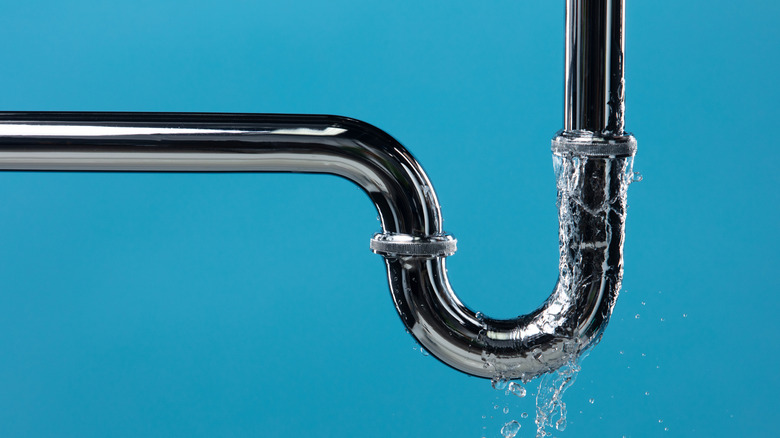
With Asterra's help, Integrored has been monitoring cities all over Mexico in an effort to preserve the overall health of the nation's water network, particularly in regions that are under-served by water infrastructure and rely more heavily on groundwater. Only a small percentage of Earth's water is potable, after all, so it's vital that everyone have consistent access to it.
Rather than merely determining whether water is present, the Recover system is also being used to see if water is flowing in places it shouldn't be. If moisture is detected above a known groundwater well or pipeline, that's normal — but if water is specifically flowing away from those confirmed channels, that could be a sign that it's leaking out from a damaged pipe or being drawn away by an illegal tap. This is an enduring problem for Mexican citizens, with a large portion of drinking water being lost to outdated, leaky infrastructure or bad actors tapping the lines where they shouldn't be.
Using data from the Recover system, Integrored deploys ground teams to the spots where improper water flow is detected, narrowing the trouble spot down further using vibration-detecting geophones. If a leak in a pipe is discovered, the team can send word to local municipal agencies to have it patched, or contact authorities if there's an illegal tap. In the city of Irapuato, Guanajuato alone, this setup has managed to successfully identify 793 leaks, as well as over 2,000 illegal taps, in a span of just three months.