

5 Uncomfortable Truths About Using Ring Cameras
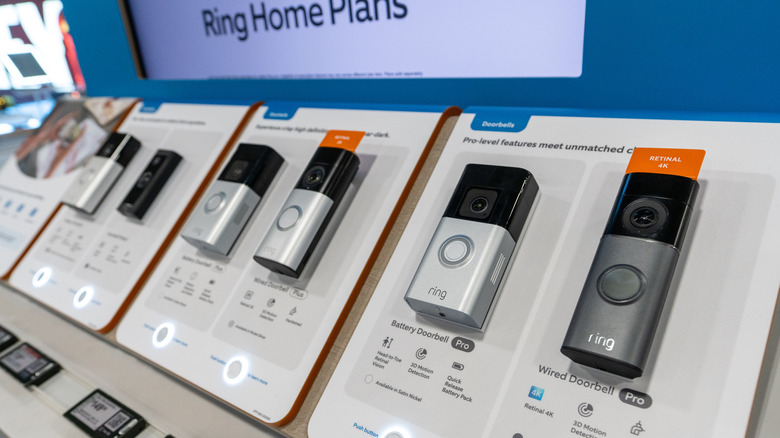
The Ring Video Doorbell, originally released in 2014 and later known as Amazon Ring, was supposed to be a simple means of connecting your front doorbell to your smartphone and letting you see who's at the door or catch deliveries. Over a decade later, Ring has become one of the banner-holders of the emergent video doorbell sector, with Amazon's backing turning it into quite the juggernaut. However, with this rapid advancement and expansion came greater concerns about Ring's footage-recording and face-recognizing features, both from owners and their neighbors.
Ring has had no shortage of controversies since its founding, facing consistent complaints and criticisms about endangering the privacy of users and anyone caught on camera. Ring cameras definitely have their perks, from the aforementioned smartphone link to security services to catching potential burglars. Unfortunately, like most surveillance tech, these perks come with some major tradeoffs, which you should consider very carefully before investing in a Ring Doorbell yourself.
Using a Ring camera automatically enrolls you in Neighbors
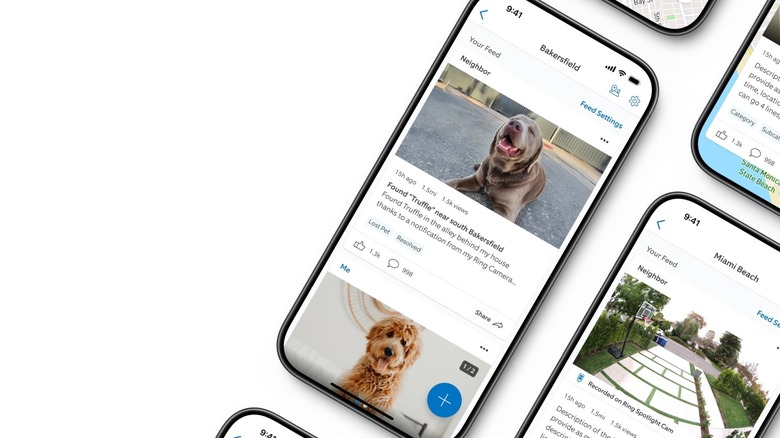
A major part of the Ring Video Doorbell package is Neighbors, a community message board for Ring users in the same general vicinity. Through Neighbors, users can share video footage, snapshots, and text posts about the things going on in the neighborhood that have been captured by their Ring cameras. Ostensibly, Neighbors is meant to better facilitate vital information sharing in the event of serious situations like missing pets and children or dangerous conditions like fires.
The concerning part is that Neighbors' integration is not an optional aspect of Ring. The moment you first activate your Ring video doorbell, you are automatically enrolled in the Neighbors service, which means all of your neighbors can get updates about whatever your camera has captured in their activity feeds if you choose to share. This can be disabled, but you would have to do so manually in your Ring settings. Not everyone wants to be a part of a community if they're just installing a video doorbell, especially if they don't regularly communicate with their neighbors.
Ring has integrated biometrics
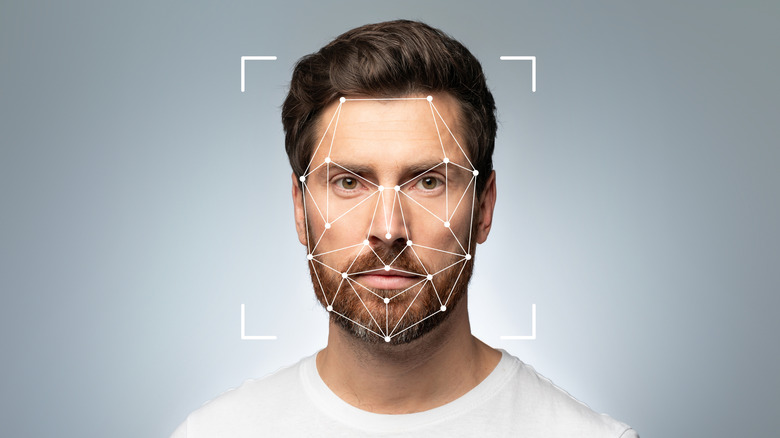
One of Ring's more advanced features is called Familiar Faces, an AI-powered facial-recognition system that allows your camera to gradually attune to the faces of consistent visitors. When a familiar visitor like a friend or family member is recognized by your Ring camera, you receive a notification on your paired smartphone that they're at the door — and their name, if you choose to register it.
Of course, to facilitate this, everyone who visits your home is automatically being subjected to biometric scanning processes, which not everyone is comfortable with. Granted, you need to opt into Familiar Faces to use it, but anyone visiting you is not given any choice, which presents some understandable ethical concerns. Additionally, this biometric data can be stored by Amazon for up to 180 days from when it's initially gathered, with the only silver lining being that Amazon told EFF it does not use this data to train its algorithms.
As this system is AI-powered, it is naturally fallible. There have been incidents in recent years where AI-powered cameras have incorrectly identified individuals as someone completely different, which has led to wrongful accusations and incarcerations.
Police can solicit footage from Ring users

In addition to general privacy concerns that come with Amazon storing usage and biometric data from Ring cameras, grievances have arisen with law-enforcement integrations that have been added to Ring's systems. In 2025, Amazon partnered with law-enforcement technology company Axon to add Community Request to the Ring setup, a feature that allows law enforcement agencies to send requests to users in a Neighbors group for video footage in order to aid with an ongoing investigation.
There are two major concerns about this particular feature. Firstly, police soliciting footage in this manner is a potential violation of U.S. citizens' Fourth Amendment rights, as searching private property would normally require a formal warrant. Police can instead bypass proper procedure and get footage directly from nearby users' cameras. This leads to the second concern, that soliciting footage from users directly in this manner could play into unconscious biases and lead investigations astray. Not everyone in a particular neighborhood is guaranteed to be on the same page, as one neighbor who merely dislikes another could send the police footage of them, claiming that they're a suspicious individual and potentially endangering their safety and privacy.
Ring cameras can be hacked

As with just about any device that connects to the internet in order to function, Ring cameras are vulnerable to hacking by malicious actors. In fact, Ring cameras only received end-to-end encryption in 2022. They have become more difficult to penetrate since then, but it's still not impossible. If a hacker can connect to your network with a stolen password, logging into your Ring system would be quite simple, after which they could steal recorded video and monitor your camera feed.
Admittedly, this is less a concern with Ring cameras specifically and more with using Wi-Fi-connected cameras in general, but it is still a factor worth considering before you integrate a Ring camera into your smart home setup. Considering the biometric data being registered by the Familiar Faces feature, it's definitely not the kind of device you want falling into the control of a bad actor.
New functions can be added to Ring cameras, whether you like it or not

Amazon is always developing new features and forming partnerships for Ring hardware and software, some of which users may not find to their liking. One of the most prominent recent examples of this was Amazon's partnership with Flock Safety, a security tech company that makes and sells its own security cameras. These cameras are equipped with proprietary recognition software that can identify things like license plate numbers tied to known criminals or pinpoint the location of nearby gunshot noises.
In October of 2025, Flock Safety announced that its partnership with Amazon would bring these same functions to Ring cameras, integrating them with the existing Community Request feature to supply information to law enforcement. In February of 2026, the Ring-Flock Safety partnership was ultimately scuttled, with Amazon claiming the process would've taken more time and resources than it initially anticipated. Coincidentally, this announcement came after Amazon experienced severe backlash to an ad that aired during Super Bowl LX, followed by some users returning their Ring cameras, though the company neither confirmed nor denied whether this backlash was a contributing factor.
Even though the partnership with Flock was cancelled, the pain point remains: it is solely on Amazon's discretion what kinds of features are added to Ring cameras and their associated apps in future updates, as well as whether you can opt out.