

3 Wi-Fi Extenders Worth Buying (And 2 To Avoid), According To Consumer Reports
We may receive a commission on purchases made from links.
Consumer Reports is a trusted source of buying advice for all manner of tech, from high-end hardware to Wi-Fi extenders and everything in between. If you're looking for the right Wi-Fi extender to improve your home network, you can rely on CR's thorough testing and in-depth reviews to steer you toward exactly the right product while guiding you away from what might just be a waste of money.
Keep in mind that the main purpose of a Wi-Fi extender is to specifically boost signal range and eliminate dead zones; if you're dealing with slow internet, there are better ways to improve Wi-Fi speeds around the house. An extender is a supplemental device that picks up the signal from your main router and rebroadcasts it. The best ones will maintain strong performance even when you're far from the router.
Netgear and TP-Link dominate the Wi-Fi extender market, but these manufacturers don't create all their products equally. Some are excellent devices that make a real difference in your home network, while others are little more than a waste of an outlet socket. That's why it's important not to simply buy the first extender you see, even if it comes from one of these prominent brands. We scoured Consumer Reports' Wi-Fi extender ratings and delved into their product reviews to narrow down the list to three that are worth buying, and two you should avoid at all costs.
Buy Netgear AX1800 EAX15
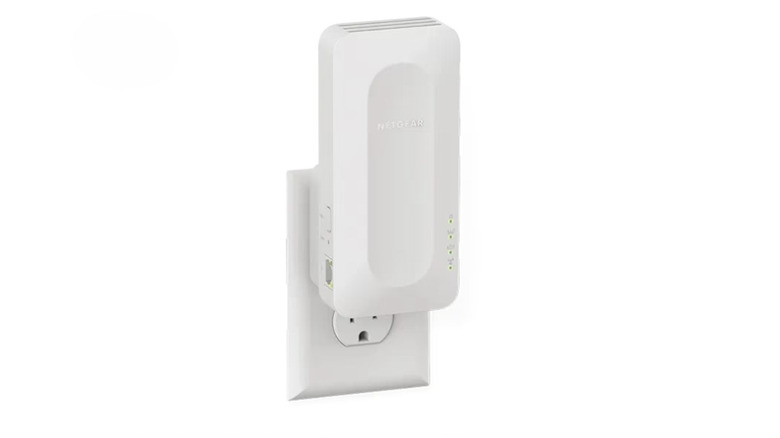
The Netgear AX1800 EAX15 is an all-around great buy among Wi-Fi extenders. With a $99 MSRP, it outperforms other extenders at higher price points. The "AX1800" in the product name indicates that it's a Wi-Fi 6 device with a combined maximum throughput of 1,800 Mbps (1.8 Gbps) across two bands.
Testing from Consumer Reports confirmed that the EAX15 does a great job of maintaining a high throughput, not just at mid-range, but far range as well. This dual-band extender is also compatible with Netgear's Smart Roaming feature, which means that your devices will seamlessly switch connections with the extender and other Netgear routers based on which one will provide the best signal moment-to-moment.
The biggest drawback to the EAX15 is a relative lack of versatility. It only has one Ethernet port, and sits directly at the power outlet. A reliable Wi-Fi mesh system can provide more options and more control over your network coverage. However, the EAX15 simply can't be beat as a simple plug-and-play extender.
Buy TP-Link AX1500 RE505X
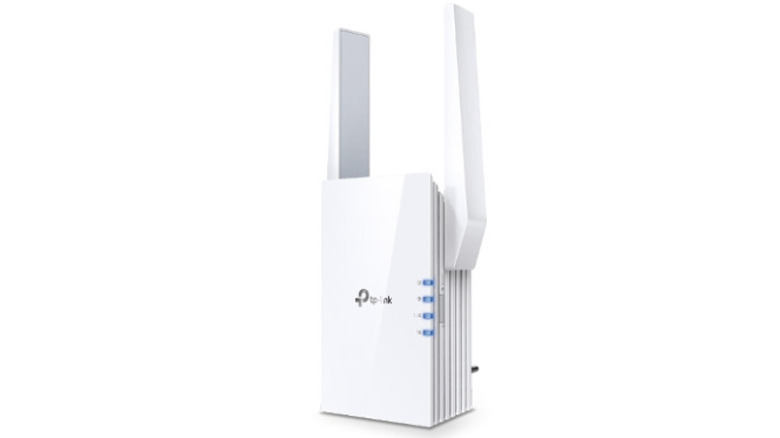
The TP-Link AX1500 RE505X is a highly capable Wi-Fi extender that frequently goes on sale for $60 or less, making it a great budget-friendly option. It's a Wi-Fi 6 extender that can theoretically maintain a throughput of 1,500 Mbps across its two bands, but Consumer Reports' testing shows that its signal strength starts to fall off at mid-range.
Even so, the RE505X earns points for consistency; its 5 GHz signal remains robust enough to be perfectly usable at a far range. The RE505X is another outlet-bound extender with only one Ethernet port.
Its versatility takes a small hit compared to Consumer Reports' other recommended extenders because its 2.4 GHz band exhibits middling performance, especially in environments with many obstructions. However, the RE505X is compatible with TP-Link's OneMesh technology, making it a natural choice if you already use other TP-Link devices in your home or office.
Buy Netgear Nighthawk EXS18
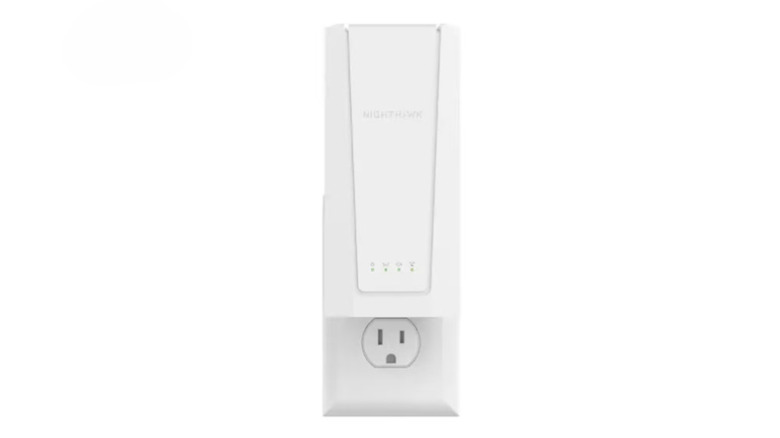
The Netgear Nighthawk EXS18 is a more premium option among Wi-Fi extenders, with a price of around $125 on Amazon. What makes it worth buying is its compatibility with the Wi-Fi 7 standard. This means that the EXS18 can use cutting-edge Wi-Fi 7 features like multi-link operation (MLO), which allows connected devices to access the 2.4 GHz and 5 GHz band simultaneously.
This addresses certain reliability and latency issues that sometimes occur when connecting to Wi-Fi through an extender. What's more, the Wi-Fi 7 standard allows for greater bandwidth; Netgear boasts a maximum combined throughput of 3.6 Gbps for the EXS18.
Despite the higher cost for the EXS18, Consumer Reports points out that it faces many of the same issues as most other extenders. Namely, it only has a single Ethernet port and is bound to the outlet. It's also worth mentioning that, even though the EXS18 is Wi-Fi 7 compatible, you'll also need a Wi-Fi 7 router to fully take advantage of its advanced features.
Avoid TP-Link AC2600 RE650
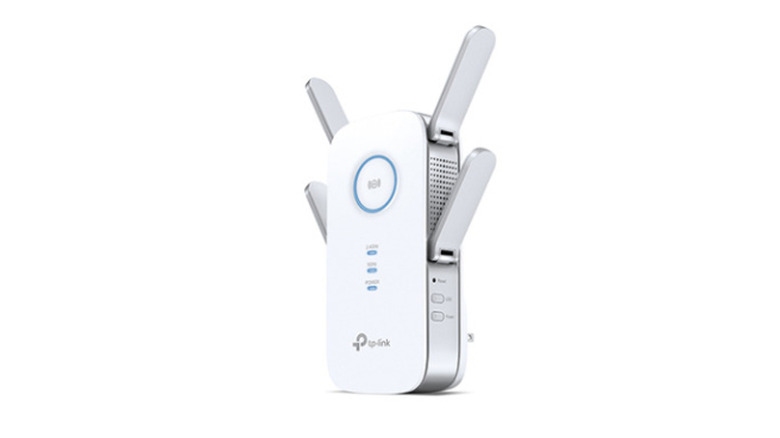
The TP-Link RE650 AC2600 has the worst throughput results out of all Wi-Fi extenders on Consumer Reports' current ratings list. While it might get the job done at extending your signal to an extra room in the house, its low throughput means that you'll likely experience noticeably slower speed when connecting through the RE650.
The "AC2600" in the name means that it's a Wi-Fi 5 device with a combined maximum throughput of 2,600 Mbps across its two bands. This is only a theoretical maximum, though, and CR's testing shows that real-world use falls far short of the mark.
On the other hand, Consumer Reports assigned a decent versatility rating to the RE650. This is because it makes use of four exterior antennae, along with beam-forming and MU-MIMO technology, to support many devices at once. While this sounds like a huge positive in the RE650's favor, the relatively poor quality of its signal locks it in as a Wi-Fi extender to avoid.
Avoid Netgear AC1200 EX6120
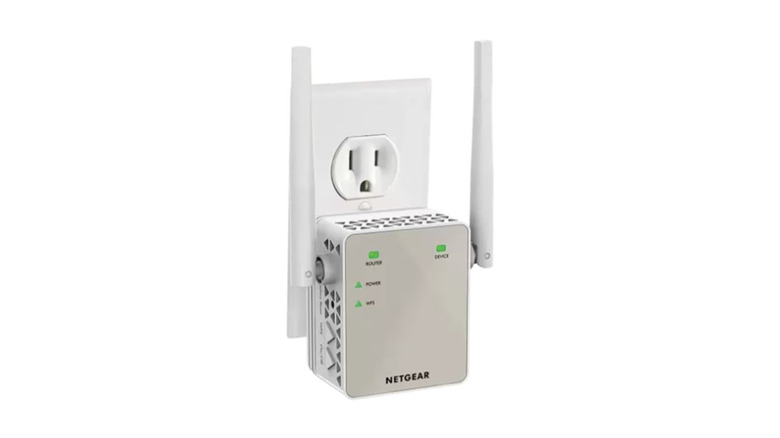
The Netgear AC1200 EX6120 is a cheap Wi-Fi extender, and one you should avoid at all costs. The testers at Consumer Reports found that it provides a weak signal at mid-range, and a barely usable signal at far range. This leads to one of the worst versatility ratings among all Wi-Fi extenders on CR's current ratings list.
The signal from the EX6120 is simply too weak for many modern use cases. Even in situations where it could get the job done, it would only support a very small handful of devices before reaching its bandwidth limit.
The poor performance of the EX6120 is a perfect example of why Wi-Fi mesh systems give faster internet than extenders in most situations. Even if you just need your signal to reach a few feet further, it's worth spending more to get a better extender backed by Consumer Reports' recommendation.